Renaissance Masters in the Desert
There is something almost impossible about finding a Canaletto in El Paso. The great Venetian master's luminous cityscapes belong in the grand museums of London, Vienna, or New York -- not in a mid-sized Texas border city 250 miles from the nearest major metropolitan area. Yet here, in a sleek building on Arts Festival Plaza, hangs one of the 57 European masterpieces that make the El Paso Museum of Art one of the most surprising cultural institutions in the American Southwest. The collection exists because of Samuel H. Kress, the five-and-dime store magnate who believed that great art should not be hoarded in coastal capitals but shared with communities across the nation.
The Kress Legacy
Samuel Kress built his fortune on variety stores, but he spent it on Renaissance paintings. Beginning in the 1920s, he assembled one of the largest private collections of European art in American history. Unlike other Gilded Age collectors who concentrated their treasures in single institutions, Kress had a different vision. He distributed his collection to museums across the country, particularly in cities that lacked access to major art. El Paso received its share in 1961: 57 works spanning seven centuries of European art. The gift transformed a modest municipal museum into a destination. Suddenly, visitors in far West Texas could stand before works by Filippino Lippi, Lorenzo Lotto, Francisco Zurbaran, and Anthony van Dyck without traveling to the great museums of the East Coast or Europe.
Seven Centuries of Genius
The Kress Collection spans from the 12th to the 18th century, offering a survey of European artistic achievement that few regional museums can match. Italian Renaissance masters dominate: the Crivelli brothers, Giovanni di Paolo, Sano di Pietro. Spanish Baroque painting is represented by Bartolome Esteban Murillo and the haunting religious works of Zurbaran. Most remarkably, the collection includes a painting by Artemisia Gentileschi, one of the few women artists of the Baroque period to achieve fame in her own lifetime. Her presence in El Paso is a reminder that even in the 17th century, artistic genius could transcend the constraints of gender -- and that even in the 21st century, that genius can be found in unexpected places.
Art of the Borderlands
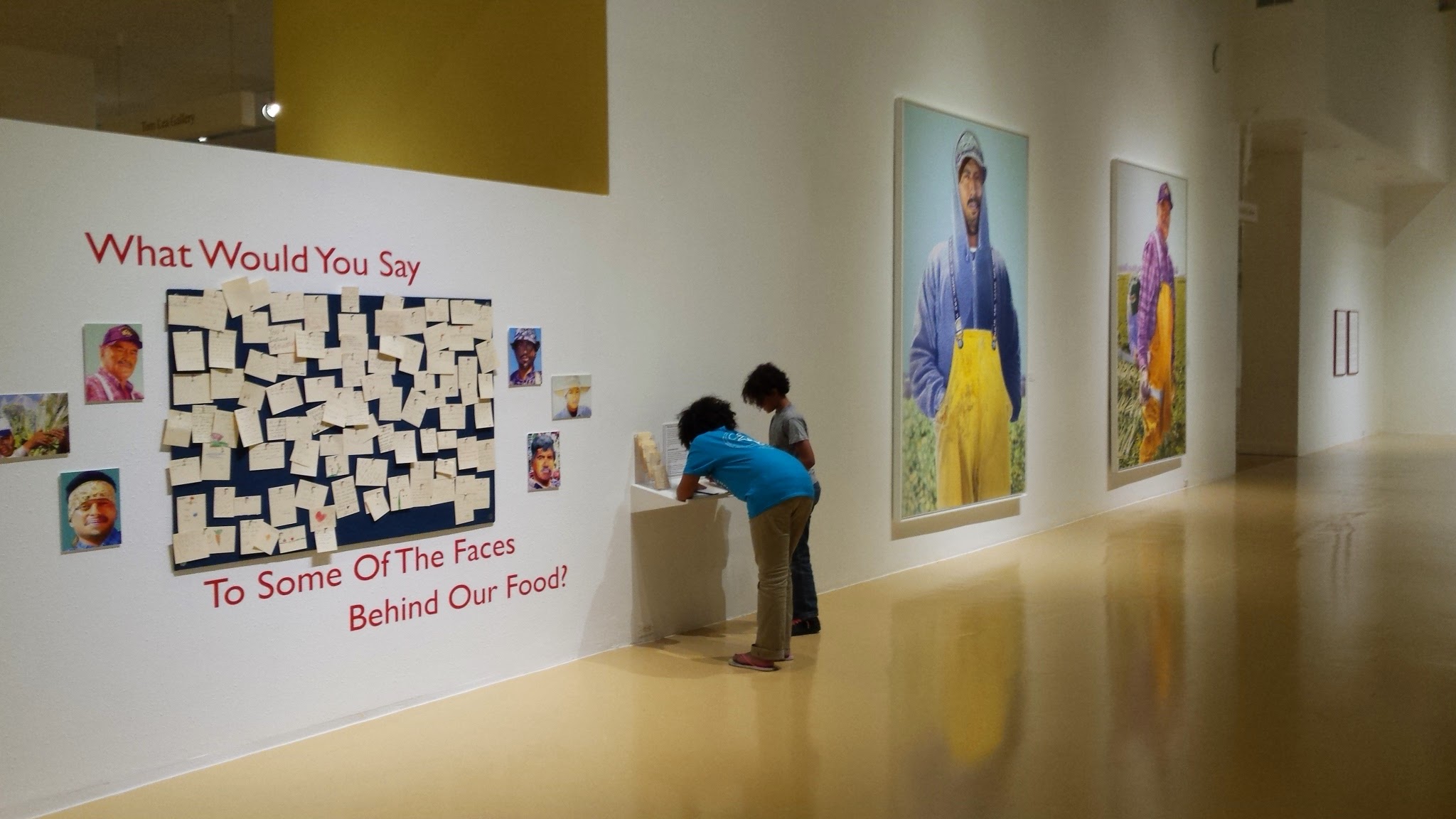
The El Paso Museum of Art has not rested on its Kress inheritance. Over the decades, it has built what may be the finest collection of contemporary Southwestern and Mexican border art in the United States. The roster reads like a who's who of the region's artistic voices: Luis Jimenez, the sculptor whose fiberglass horses and cowboys became icons of the New West; Donald Judd, the minimalist master who made the Texas desert his canvas; Carmen Lomas Garza, whose intimate scenes of Mexican-American life transformed folk memory into fine art. The museum has become a vital institution for artists working in the borderlands, a place where the cultural traditions of Mexico and the American Southwest meet and merge.
A New Home
The museum outgrew its original quarters and in 1998 moved into a striking new building on Arts Festival Plaza in downtown El Paso. The facility was designed to showcase both the historical collection and rotating exhibitions of contemporary work. Today, the museum draws approximately 100,000 visitors per year, making it one of the most visited cultural institutions in the region. It offers art classes, film series, lectures, and concerts to a community that spans three cities in two nations -- El Paso, Ciudad Juarez, and the smaller communities of southern New Mexico. For a region often defined by its divisions, the museum serves as a reminder of what border cities share: a hunger for beauty that transcends lines on maps.
The Only One for 250 Miles
The El Paso Museum of Art holds a distinction that speaks to both its importance and its isolation: it is the only accredited art museum within a 250-mile radius. To the east lies the empty expanse of West Texas; to the north, the mountains of southern New Mexico; to the south and west, the Chihuahuan Desert. In this vast and sparsely populated landscape, the museum serves as a cultural anchor for millions of people who might otherwise have no access to original works by European masters or contemporary American artists. Samuel Kress understood that geography should not determine who gets to experience great art. Six decades after his gift arrived in El Paso, the museum he helped create continues to prove him right.
From the Air
The El Paso Museum of Art is located at approximately 31.76N, 106.49W in downtown El Paso, Texas. From the air, it sits within the compact downtown core visible along the northern bank of the Rio Grande. The museum building on Arts Festival Plaza is part of a cultural cluster that includes the Plaza Theatre and the El Paso Convention Center. Downtown El Paso is immediately recognizable from altitude by its grid of streets terminating at the international bridges crossing to Ciudad Juarez, Mexico. Fort Bliss military reservation dominates the northeastern horizon. El Paso International Airport (KELP) lies approximately 7 miles northeast of the museum. The Franklin Mountains, rising to over 7,000 feet, form a dramatic backdrop to the north and west.