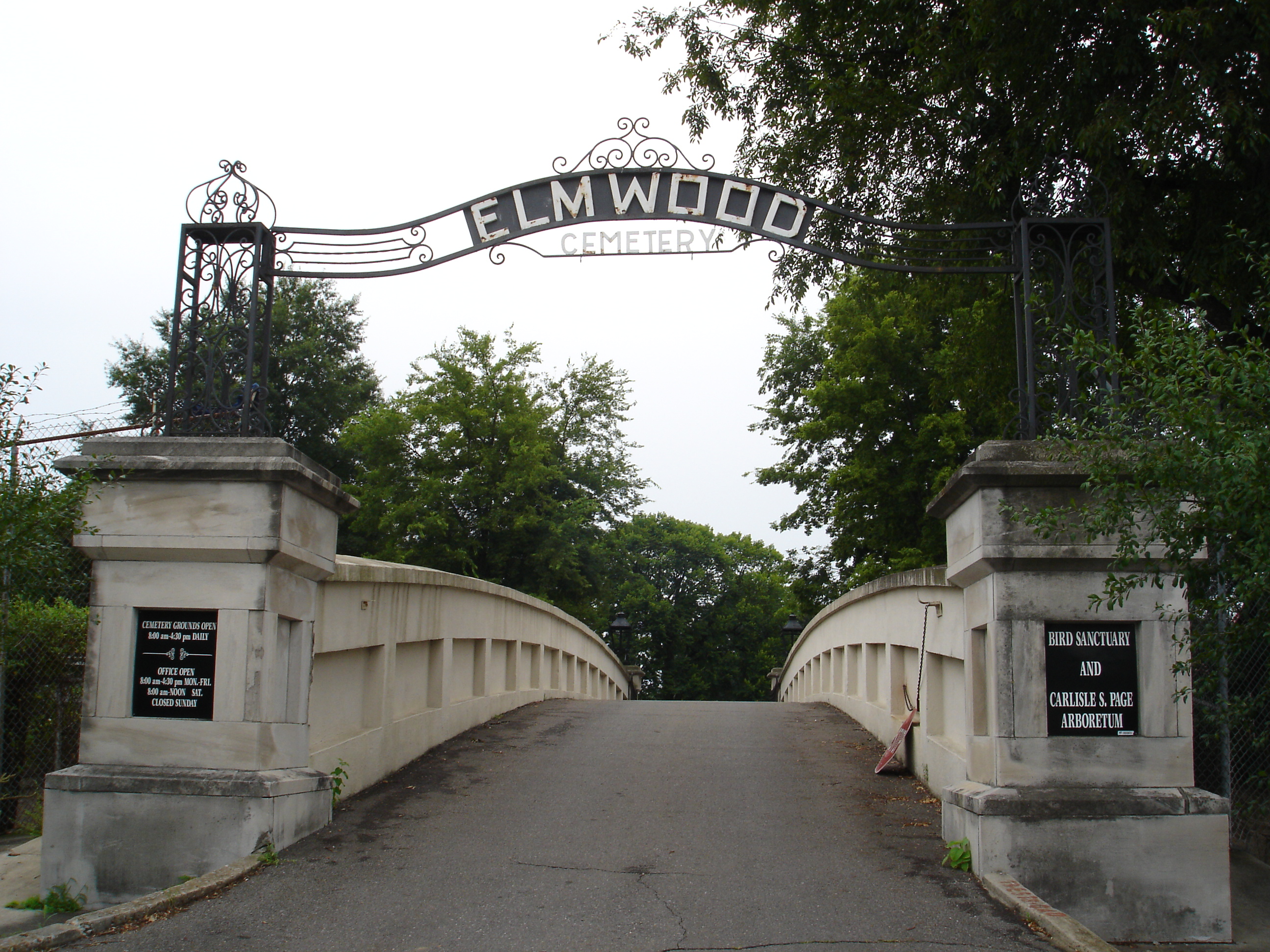
Elmwood Cemetery (Memphis, Tennessee)
They drew the name from a hat. In August 1852, fifty prominent Memphis citizens each contributed $500 to purchase land for a new cemetery, envisioning a park for the living as well as the dead. Several proposed names went into a hat, and "Elmwood" emerged -- to general satisfaction, followed by mild embarrassment. There were no elm trees in Memphis. The founders hurriedly ordered some from New York to plant among the native oaks. That improvised beginning set the tone for a cemetery that would spend the next 170 years accumulating the whole sprawling story of Memphis: its wars, its epidemics, its music, its politics, and its persistent refusal to fit neatly into anyone's expectations.
A Park for the Living and the Dead
Elmwood was established as part of the Rural Cemetery Movement that swept American cities in the mid-nineteenth century, a reaction against overcrowded urban churchyards. The idea was revolutionary: a garden cemetery with sweeping vistas, shady knolls, ancient trees, and elaborate monuments where families could picnic and children could play among the graves. The first burial took place on July 15, 1853, when Mrs. R.B. Berry was laid to rest. Since then, more than 75,000 people have been interred at Elmwood, with space for about 15,000 more. The grounds encompass the Carlisle S. Page Arboretum, and beneath the canopy of oaks, magnolias, and those imported elms lie veterans of every American war from the Revolution to Vietnam. Governors, senators, mayors, blues singers, suffragists, civil rights leaders, outlaws, and millionaires share the soil with ordinary citizens whose names mark the real texture of a city's history.
Soldiers Rest
About 1,000 Confederate soldiers and veterans lie in Confederate Soldiers Rest in the cemetery's Fowler Section. The first burial there was William Thomas Gallagher on June 17, 1861, and the last was John Frank Gunter on April 1, 1940 -- a span that bridges the war itself and the long twilight of its veterans. Confederate generals James Patton Anderson, Colton Greene, Preston Smith, and William Henry Carroll are buried here, along with Isham G. Harris, Tennessee's Confederate-era governor, and Thomas Battle Turley, who served as both a CSA private and a U.S. Senator. Union soldiers were also buried at Elmwood in the 1860s, but almost all were removed in 1868 and reinterred at Memphis National Cemetery. Civil War historian Shelby Foote, famous for his three-volume, 3,000-page narrative of the conflict, chose to be buried at Elmwood beside the family plot of Confederate General Nathan Bedford Forrest -- who was himself originally buried here before his remains were moved to a Memphis city park in 1904.
The Fever Dead
Memphis was ravaged by multiple yellow fever epidemics in the 1870s, but the catastrophe of 1878 nearly destroyed the city entirely. Over 5,000 people died in Memphis alone, with 20,000 fatalities along the Mississippi River Valley. The city's population plummeted from 47,000 to 19,000 as those who could flee did so. Memphis was so devastated that it lost its city charter. Some 2,500 of the Memphis victims are buried in four public lots at Elmwood. Among them are doctors, ministers, nuns, travelers, and sex workers who died while nursing the sick -- people from every station in life brought together by the democracy of epidemic disease. The yellow fever burials remain among the most poignant sections of the cemetery, a testament to the courage of those who stayed to tend the dying when every instinct urged flight.
Stories Under the Canopy
The range of lives represented at Elmwood defies easy summary. Robert Reed Church, born into slavery, became the first African American millionaire in the South. E.H. Crump, the political boss who dominated Memphis for decades, lies nearby. Mae Glover, known as "The Mother of Beale Street," rests here alongside Benjamin Hooks, the civil rights leader who led the NAACP. Alice Mitchell, a notorious teenage murderer whose 1892 case shocked the nation, is buried not far from Napoleon Hill, a Memphis businessman. A funeral scene from the 1993 film The Firm was shot among the monuments. The cemetery itself, one of the oldest nonprofits in Tennessee since the 1870s, remains an active burial ground, open daily from 8:00 am to 4:30 pm. Walking its paths is less a visit to the dead than an immersion in the living history of a city that has always been more complicated, more resilient, and more surprising than its reputation suggests.
From the Air
Located at 35.122°N, 90.029°W in Memphis, Tennessee, approximately 1.5 miles south of downtown Memphis along South Dudley Street, south of Crump Boulevard. The cemetery's extensive tree canopy and park-like layout make it visually distinctive from altitude amid the surrounding urban grid. Memphis International Airport (KMEM) is approximately 8 nm southeast. The Mississippi River is about 2 nm west. Best viewed at 1,500-3,000 feet AGL where the cemetery's garden layout, mature tree cover, and monument groupings are visible.