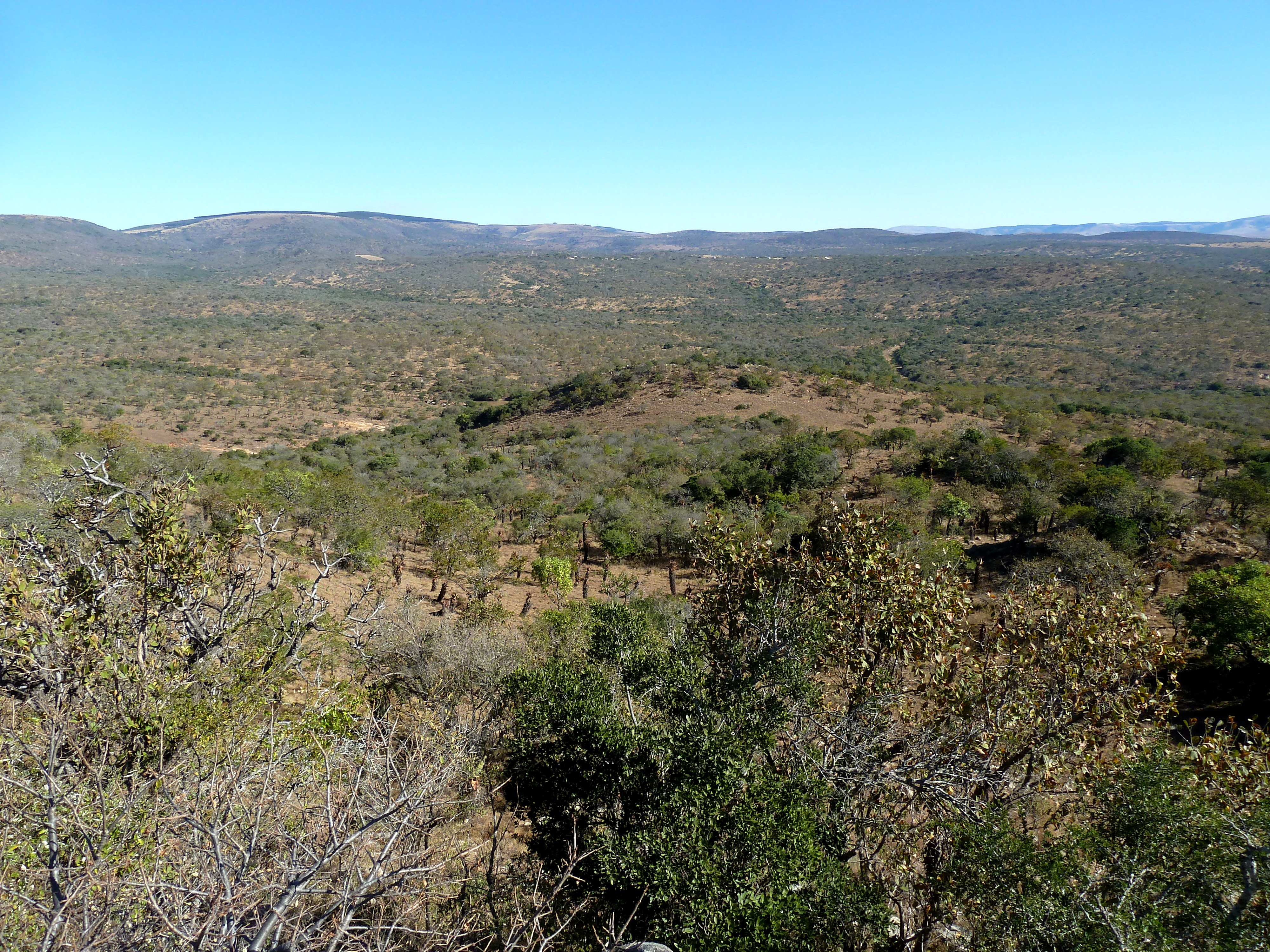
EMakhosini Ophathe Heritage Park
Seven Zulu kings lie buried in this valley. The name says it plainly: eMakhosini means "place of the kings" in isiZulu, and for the Zulu nation this stretch of land along the White Mfolozi River, roughly 10 kilometres south of Ulundi in KwaZulu-Natal, is sacred ground. The 24,000-hectare eMakhosini Ophathe Heritage Park was established in 2006 to protect both the royal burial sites and the surrounding landscape, merging the Ophathe Game Reserve with heritage land administered by Amafa aKwaZulu-Natali, the provincial conservation agency. Its ambition is remarkable: to restore, as far as possible, the valley as it existed during the reign of King Shaka.
Where a Kingdom Was Forged
In 1818, the Battle of Gqokli Hill was fought within what is now the heritage park. King Shaka, facing a numerically superior force under Inkosi Zwide of the Ndwandwe, deployed innovative military tactics that secured a decisive victory and established Zulu dominance across the region. The battle's significance extended far beyond this valley. Two of the warriors who fought there went on to reshape vast swaths of southern Africa: Soshangane later founded the Gaza Empire in Mozambique, and Mzilikazi established the Matabele Kingdom in present-day Zimbabwe. From this single engagement on a KwaZulu-Natal hillside, three kingdoms trace their origins.
Ambush in the Gorge
Twenty years after Gqokli Hill, another conflict played out in the park's landscape. On 27 December 1838, following the Battle of Blood River eleven days earlier, a Voortrekker commando pursued Zulu forces into the Ophathe gorge to recover captured livestock. At Mthonjaneni, a Zulu man named Bongoza told the Voortrekkers they could find their cattle deeper in the gorge. It was a deception. As the commando descended into the narrow passage, they found themselves in an ambush, and a running battle erupted between the two forces. The gorge itself, steep-sided and thick with bush, remains much as it was that December day, a landscape that tells its own story of tactical cunning.
Martial Eagles and Hidden Worlds
Beyond its human history, the park protects a living landscape of considerable ecological value. The White Mfolozi River borders it to the north and east, and several tributaries thread through the reserve before joining the main channel. The Ophathe section forms part of a Northern Interior ecological corridor that could eventually connect with Hluhluwe-iMfolozi Park some 35 kilometres downstream. Martial eagles patrol the skies overhead, listed under South Africa's Threatened or Protected Species Regulations. Orange-breasted bushshrikes, crowned hornbills, and emerald-spotted wood doves inhabit the bush. A 2007-2008 survey recorded 268 spider species in 47 families within the Ophathe section alone, a measure of biodiversity that underscores the conservation value of this savanna landscape.
Guarding the Sacred Ground
The park is being considered for World Heritage Site status, a nomination that would place it alongside South Africa's uKhahlamba Drakensberg Park and iSimangaliso Wetland Park. But the challenges facing this heritage landscape are real. Poaching pressure targets rhinoceros populations. Illegal hunting with dogs, theft of boundary fencing, and encroachment by livestock from neighbouring communal lands all strain the park's resources. Some activities near the royal burial sites have required better management to maintain the dignity of the area. For visitors, the park offers walking trails, game drives, and a 4x4 route through mountainous terrain in the south-western sector, though facilities remain modest compared to larger KwaZulu-Natal reserves. Local guides are recommended to interpret the layered cultural and natural history of a valley where kings still rest.
From the Air
Located at 28.42S, 31.30E in the eMakhosini Valley south of Ulundi, KwaZulu-Natal. Elevation roughly 400-700m. The White Mfolozi River is a prominent landmark curving along the park's north and east boundaries. Accessible via the R34 road linking Vryheid and Melmoth. Nearest significant airport is Richards Bay (FARB), approximately 130km to the southeast. Ulundi has a small airstrip (FAUL). The valley landscape is visible from medium altitude, with distinctive river corridors and savanna terrain.