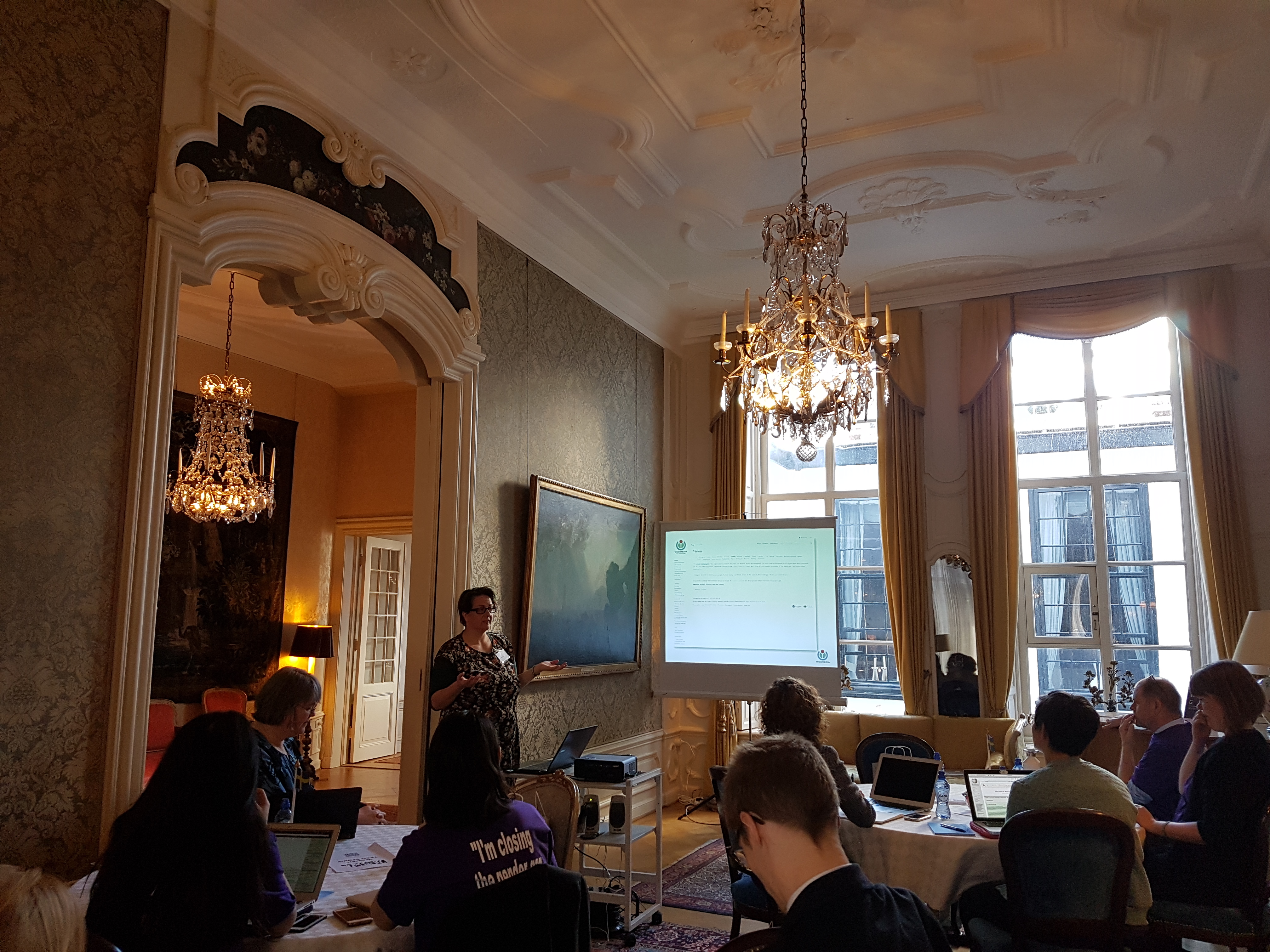
Embassy of Sweden, The Hague
April 1614. Gustav II Adolf of Sweden, nineteen years old and already at war on three fronts, ratified a peace and friendship treaty with the Dutch and sent a diplomat named Jacob van Dijck to The Hague. Van Dijck had Dutch roots, knew the city, and had a single urgent task: raise the cash to pay off the Alvsborg Ransom, the debt Sweden owed Denmark for the return of a single castle. He succeeded at the loan and then failed at the repayment, which got him recalled in 1620. But the post itself outlasted him, and outlasted everyone since. Sweden's mission in The Hague is the oldest permanent embassy Sweden has ever maintained. Four hundred and ten years later, it is still there, still reporting back to Stockholm, still housed, when receiving guests, in a red-brick baroque facade on Lange Voorhout.
Diplomats in Trouble
The early Swedish envoys lived in a state of near-permanent financial panic. Nils Lillieroot, posted in the 1690s, was reassigned from Paris when Sweden suddenly switched alliances from France to its enemies; he had to renegotiate the very policies he had spent years defending. Emanuel de Geer in the 1770s ran a household so lavish that he ruined himself and resigned from ill health and exhaustion. Gustaf Johan Ehrensvard, sent in 1779, requested leave after a year and was told instead to travel to Paris, then countermanded, then left stranded. The post was prestigious in name and gruelling in practice. The Dutch climate, repeatedly described in correspondence as ruinous to Swedish constitutions, did the rest. More than one envoy went home sick.
From Politics to Trade and Back
When Swedish foreign policy turned inward during the Age of Liberty (1719-1772), the post lost its political weight. It became something more interesting: a listening station for technology. Joachim Fredrik Preis, the resident envoy, sent home detailed reports on Dutch fisheries that shaped Swedish regulations in the 1750s, and forwarded descriptions of the new steam engines being used to pump water out of English mines. Emanuel Swedenborg, the Swedish mystic and engineer, almost certainly compared notes with Preis on a visit to the Netherlands in the 1720s. Two centuries later the embassy regained its diplomatic weight from an unexpected source. When the Permanent Court of International Justice was established in The Hague after the First World War, the mission needed a minister with serious credentials in international law. In 1921 the position, which had been merged with Brussels since 1869, was split off and given its own minister.
The House on Lange Voorhout
In 1929, the Swedish state paid 120,000 kronor for a house at Lange Voorhout 28 in the old centre of The Hague. The location was as good as Dutch real estate gets. Lange Voorhout is the long, tree-lined plein where the Mauritshuis stands a few paces away, where ambassadors had promenaded for centuries, where the Dutch royal family had once kept its winter palace. The facade is red brick, baroque, with clear borrowings from Louis XIV's France: stucco ceilings, marble pilasters, an oak staircase climbing to a skylit hall hung with plaster medallions of famous 18th-century Swedes. Since 1967 the building has been a Dutch national heritage site. In 1962, Sweden expanded the property by purchasing numbers 30 and 32 next door, adding a 600 square metre garden between the houses and Kazernestraat behind. Careful renovations in 1993, 2006, 2013, and 2015 modernized the kitchens, the heating, and the wine cellar, while leaving the staircase and the stucco where they belonged.
A Quiet Mission in a Busy City
The chancery itself, where the actual embassy work happens, moved several times over the years and is now at Johan de Wittlaan 7, in the leafy Zorgvliet quarter near the international zone. The staff is modest: an ambassador, a minister counsellor, three first secretaries, a defence attache, a trade secretary, and locally hired support. They monitor Dutch politics for Stockholm, help Swedish companies enter the market, work with Business Sweden and the Swedish Chamber of Commerce in Amsterdam, and step in when a Swedish citizen loses a passport or runs into trouble. The post was elevated from a legation to a full embassy in October 1956, when ambassador Sven Dahlman presented his credentials to Queen Juliana at the Huis ten Bosch palace. The relationship that started with a teenage Swedish king and a loan he could not repay had outlasted, by then, every other diplomatic friendship Sweden had ever made.
From the Air
The Swedish ambassador's residence at Lange Voorhout 28 sits in the old centre of The Hague at 52.093 N, 4.285 E. From cruise altitude in clear weather the Lange Voorhout is identifiable as a broad green axis of trees north of the Binnenhof parliamentary complex; the international zone, where the chancery actually operates, lies a kilometre to the west. Nearest airports: Rotterdam The Hague (EHRD) about 15 km southeast, Amsterdam Schiphol (EHAM) about 35 km northeast. North Sea coastal weather is highly changeable; visibility good in summer high pressure, marginal in winter.