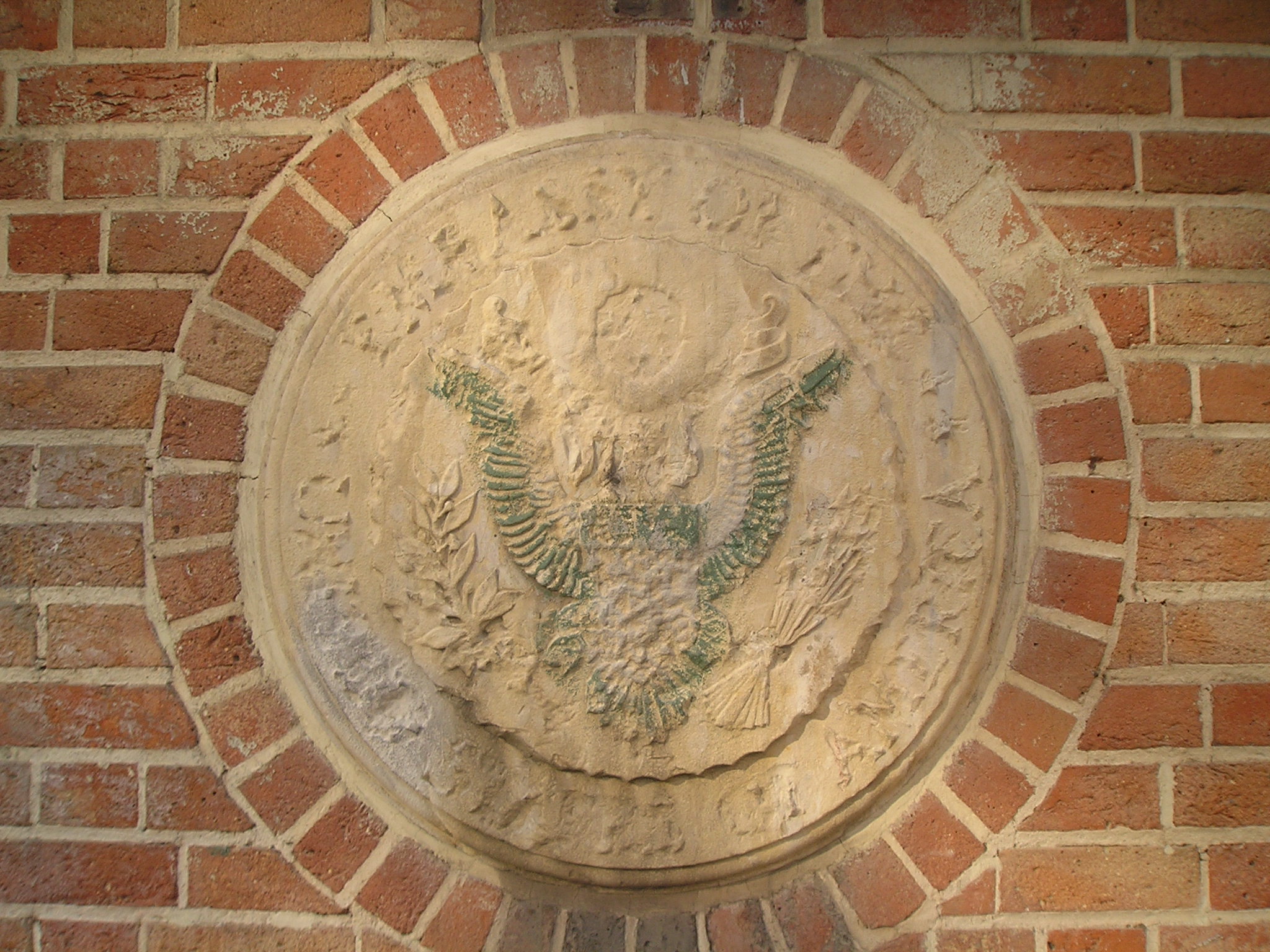
Embassy of the United States, Tehran
The staff called it Henderson High. Designed in 1948 by architect Ides van der Gracht, the long, low, two-story brick building on Taleghani Avenue looked like it could have been lifted from any American suburb -- the kind of mid-century institutional architecture found in high schools across the Midwest. The nickname honored Loy W. Henderson, who became America's ambassador to Iran just after the building was completed in 1951. Three decades later, the building became the most famous embassy in the world, though not for anything Henderson could have imagined.
444 Days
On November 4, 1979, months after the Iranian Revolution toppled the Shah, a group calling themselves the Muslim Student Followers of the Imam's Line stormed the compound. They seized the embassy and took its staff hostage. The crisis lasted 444 days, consuming the final year of Jimmy Carter's presidency and reshaping American foreign policy in the Middle East. Diplomatic relations between the United States and Iran were severed entirely. They have never been restored. The brick walls of the compound, spanning an entire city block, were soon covered with anti-American murals commissioned by the Iranian government -- Statue of Liberty skulls, flag-draped fists, and slogans that remain there to this day.
The Shredded Secrets
Before the embassy fell, staff scrambled to destroy classified documents. They fed papers through shredders, but the machines could not keep pace with the crisis. The student occupiers collected the fragments and, over the months and years that followed, painstakingly reassembled them by hand -- strip by strip, page by page. The reconstructed documents were published in a series of books titled Documents from the US Espionage Den. The volumes contained telegrams, correspondence, and reports from the State Department and the CIA, some of which remain classified by the United States government to this day. The shredded-and-rebuilt documents became powerful propaganda, offered by Iran as proof that the embassy had operated as a center for American intelligence operations.
Den of Espionage
The compound never returned to American hands. After the hostage crisis, the Islamic Revolutionary Guard Corps used it as a training center and continues to maintain the grounds. Part of the embassy has been converted into the Den of Espionage Museum, which opened to the public. Visitors can view reconstructed soundproof rooms, spying equipment, and the reassembled shredded documents. The decorative Great Seal of the United States still hangs above the building's entryway, badly damaged but visible -- an artifact of a relationship that vanished overnight. Several Iranian university student organizations now maintain offices inside the complex. The compound that once represented American power in Iran has been deliberately repurposed as a monument to its expulsion.
Diplomacy Through Proxies
With no embassy of its own, the United States appointed Switzerland as its protecting power in Iran. The US Interests Section of the Swiss Embassy handles limited consular services for American citizens but cannot process visas or immigration matters. Meanwhile, in Washington, the US State Department seized the former Iranian Embassy at 3003-3005 Massachusetts Avenue in retaliation. Iran's interests in the United States are handled through the Pakistani Embassy. Two nations, each holding the other's diplomatic property hostage, each channeling communication through third parties -- a geopolitical standoff frozen in architectural form across two continents.
From the Air
Located at 35.708N, 51.424E along Taleghani Avenue in central Tehran. The compound occupies an entire city block and is identifiable from altitude by its perimeter walls and large footprint amid the dense urban grid. The anti-American murals on the exterior walls are visible at lower altitudes. Nearest major airport is Tehran Mehrabad International (OIII), approximately 9 km west. Tehran Imam Khomeini International Airport (OIIE) is about 50 km south. Best viewed at 2,000-4,000 ft AGL.