Emperor Norton's San Francisco
Joshua Abraham Norton lost everything in late 1852 when his attempt to corner the rice market went catastrophically wrong, leading to bankruptcy in 1856. Three years later, he walked into the offices of the San Francisco Bulletin and handed the editor a proclamation: he was now Norton I, Emperor of the United States. The newspaper printed it. And San Francisco, that most peculiar of cities, decided to go along with the joke that wasn't quite a joke. For the next 21 years, Emperor Norton patrolled the streets in a blue military uniform with gold epaulets, issued decrees abolishing Congress and ordering a bridge built across the bay, and dined free at the city's finest restaurants. His self-printed currency was accepted by merchants. Police officers saluted him. When he died in 1880, some 10,000 people came to view his body before the funeral, which newspapers called the largest the city had seen. The city that embraced a delusional homeless man as its sovereign tells you everything about San Francisco's character.
The Proclamation
Norton's September 17, 1859 proclamation was magnificently absurd: 'At the peremptory request and desire of a large majority of the citizens of these United States, I, Joshua Norton... declare and proclaim myself Emperor.' He cited 'corruption and dishonesty' in government as justification. The newspapers printed his increasingly elaborate decrees: dissolving the Republic, abolishing Congress, ordering the Army to clear the legislative halls. None of it happened, of course. But his decree ordering a bridge built between San Francisco and Oakland was prescient - the Bay Bridge would eventually span exactly where Norton commanded.
The Daily Rounds
Emperor Norton walked the streets daily, inspecting the condition of sidewalks and public property, attending church services (different denominations on alternating weeks), and holding court at his favorite restaurants. He wore a blue uniform, sometimes with a beaver hat adorned with peacock feathers. Restaurant owners seated him without charge; theaters reserved balcony seats. When his uniform grew threadbare, he received replacements - though whether from city government or Army officers at the Presidio remains debated. His 'imperial bonds' and currency, printed at his own expense, were accepted throughout the city. The joke had become an institution.
The Edicts
Norton's decrees ranged from the practical to the deranged. He ordered bridges built and attempted to dissolve the Democratic and Republican parties. He issued proclamations on international cooperation and arbitration. A popular legend credits him with banning the word 'Frisco' under penalty of a $25 fine, though historians have found no contemporary evidence of this particular decree. When the Civil War broke out, he ordered both sides to appear before him and settle their differences. They did not comply, but his heart was in the right place.
The Death of an Emperor
On January 8, 1880, Emperor Norton collapsed on California Street on his way to a lecture at the Academy of Sciences. He died on the sidewalk, penniless. But San Francisco would not let their emperor be buried in a pauper's grave. The Pacific Club, a businessman's organization, funded an elaborate rosewood casket. Newspapers ran front-page obituaries. The Chronicle reported some 10,000 people viewed the body before the funeral - the largest San Francisco had ever seen. His grave in Woodlawn Cemetery was later moved to Colma; a stone marks him 'Norton I, Emperor of the United States and Protector of Mexico.'
Visiting Emperor Norton's San Francisco
Emperor Norton's San Francisco haunts still exist. The Embarcadero, where he walked daily, connects his favorite spots. His 'palace' was a series of boarding houses on Commercial Street. The Old Mint at 5th and Mission operated during his reign. His grave in Colma's Woodlawn Cemetery features a rose granite headstone with gold-leaf lettering, placed by the Pacific-Union Club in 1934. Plaques mark several locations, including 524 Commercial Street. The area around Montgomery Street was his financial district beat. Emperor Norton Day is celebrated January 8. SFO is the main airport; the Montgomery Street BART station puts you in the heart of his empire. His likeness appears on a plaque at the corner of California and Montgomery.
From the Air
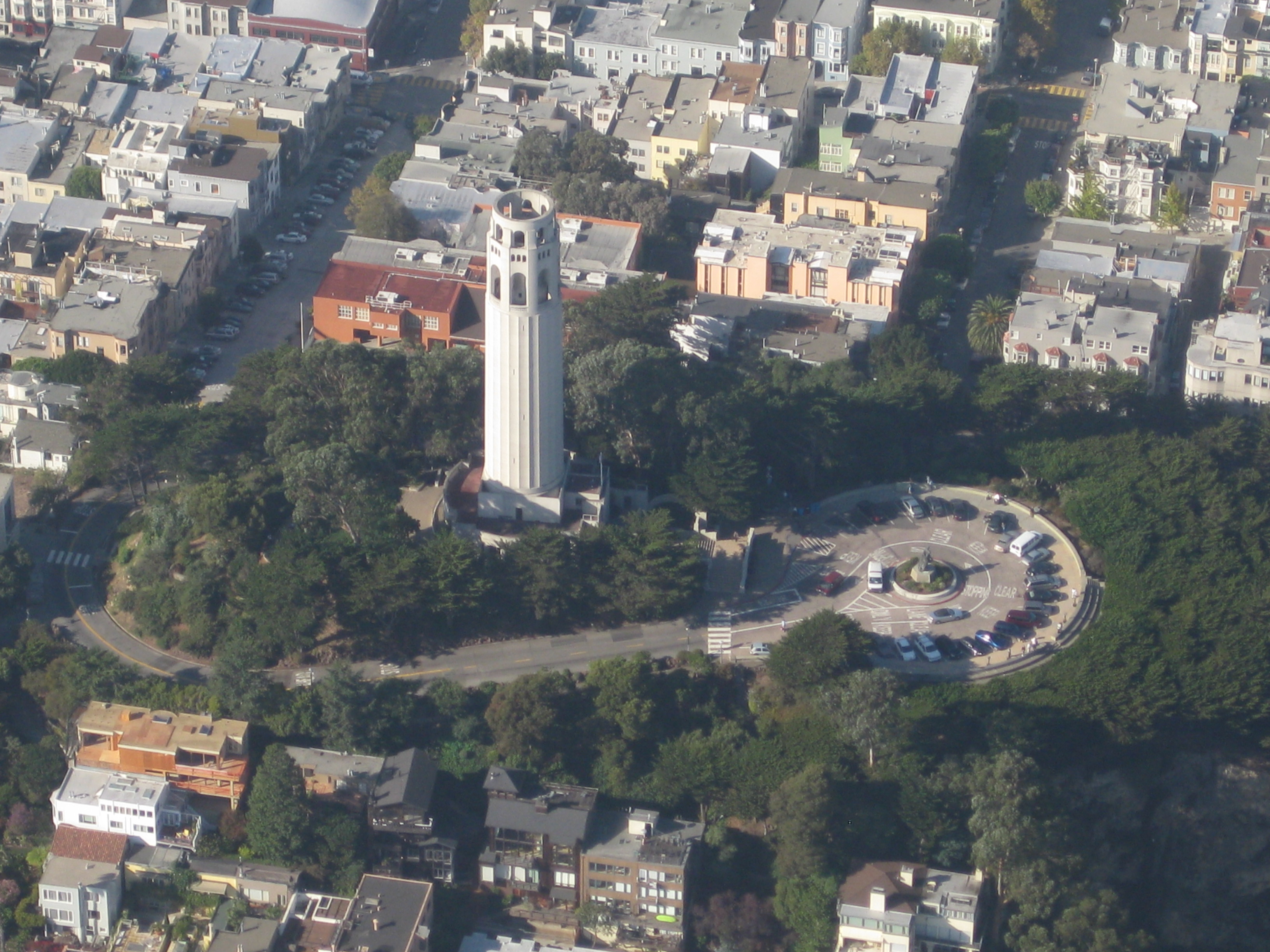
Located at 37.79°N, 122.40°W in downtown San Francisco. From altitude, the Financial District where Emperor Norton held court is visible south of the Transamerica Pyramid. The Embarcadero waterfront where he walked daily curves along the northeastern shore. The Bay Bridge - which he decreed in 1872 - spans to Oakland exactly as he commanded. Colma, where he's buried, lies south of the city. SFO is 13 miles south.