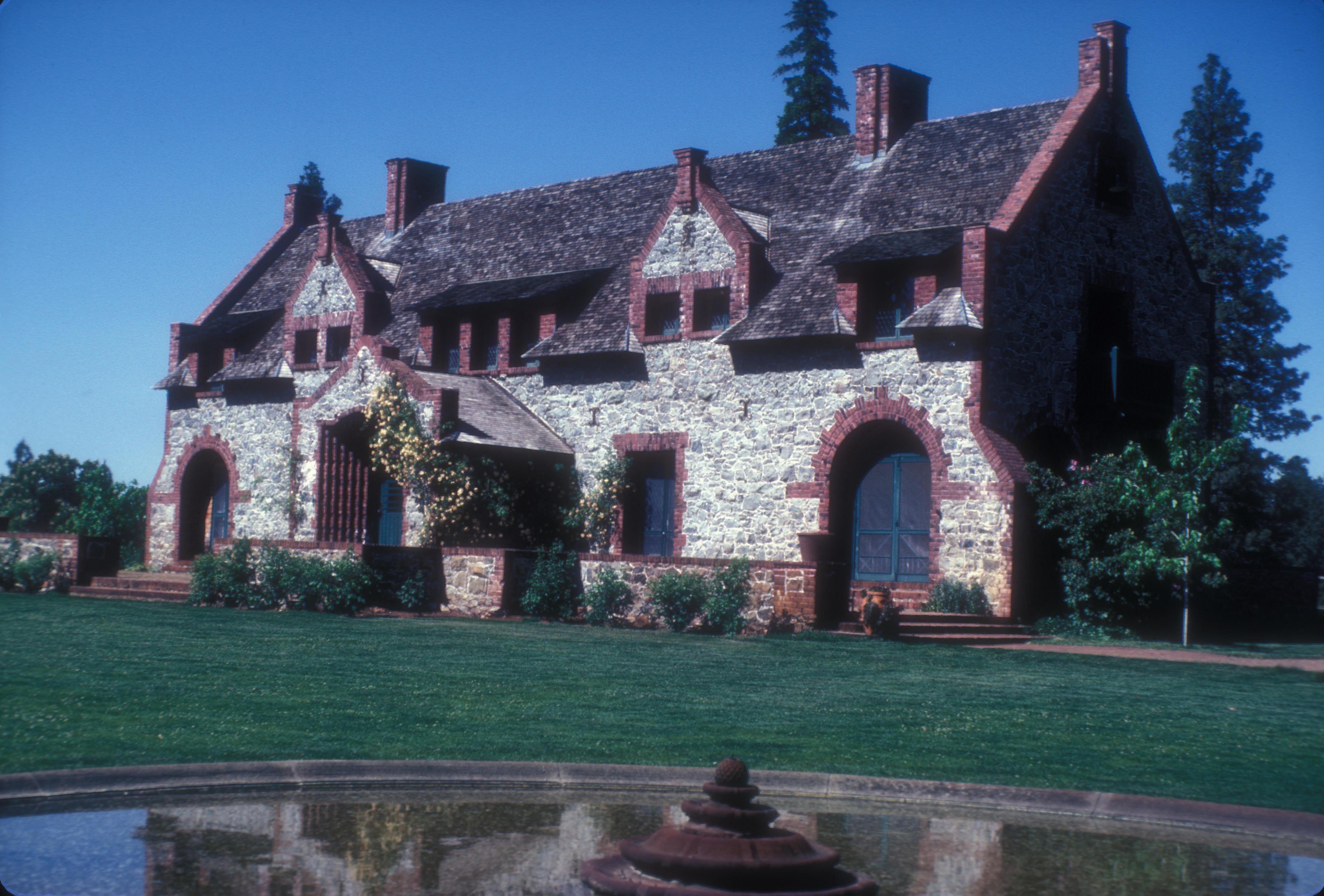
Empire Mine State Historic Park
George Roberts sold his claim for $350. That modest sum, exchanged in 1851, transferred ownership of what would become California's richest gold mine - a property that would ultimately yield 5.8 million ounces of gold, worth billions in today's currency. The Empire Mine in Grass Valley operated for 106 years, burrowing 367 miles of tunnels beneath the Sierra Nevada foothills and transforming hard rock mining technology along the way. Today, the mine's headframe still stands against the sky, a skeletal reminder of the fortune extracted from beneath these pine-covered hills.
Cornish Expertise Underground
When word spread that hard rock gold had been found in California, skilled miners from the tin and copper mines of Cornwall, England, made the journey to share their expertise. They brought with them the Cornish engine, a steam-powered pump that could empty the constantly flooding mine shafts at a rate sufficient to keep work progressing in the depths. This wasn't placer mining, the relatively simple panning and sluicing that defined the early Gold Rush. Hard rock mining required engineering precision, industrial machinery, and men who understood how to follow a vein of ore through solid granite. The Cornish contribution transformed the Empire from a promising claim into an industrial operation that would set the standard for gold mining worldwide.
The Bourn Dynasty
William Bourn Jr. and his cousin George W. Starr turned the Empire Mine into a legend. Beginning in 1869, the Bourn family controlled the mine for sixty years, and under George Starr's management starting in 1887, it became famous for its mining technology and productivity. Starr lived in the Ophir Cottage on the property until fire destroyed it in 1935. The Bourn family's Empire Cottage still stands, built in 1897 from the mine's own waste rock - a structure they modestly called a cottage to distinguish it from their other, grander homes. The estate included formal gardens, a greenhouse that cultivated plants still growing on the grounds today, and the Empire Clubhouse, built in 1905 to entertain guests in a style befitting California's most successful mining operation.
Machinery Frozen in Time
When the Empire Mine closed in 1956, the complexity of its machinery became its preservation. The Machine Shop's equipment, powered by a Pelton water wheel connected to an intricate system of belts, proved too difficult to disassemble for resale. What frustrated buyers became a gift to history. Today, visitors walk through workshops where lathes still function during scheduled demonstrations, where the Refinery Room once cast 89-pound gold bars destined for the San Francisco Mint, and where the Assay Office weighed the day's production. The Blacksmith Shop, rebuilt as a near-exact replica by a volunteer group called the Over-the-Hill Gang, operates as one of the park's few active exhibits, with craftsmen forging tools during all hours of operation.
Into the Depths
A scale model in the park's museum reveals what visitors cannot see: the vast underground labyrinth stretching 367 miles beneath the Sierra foothills. The Empire and North Star mines, merged in 1929, created a complex so extensive that engineers needed a dedicated office just to plan its expansion. The Shaft Viewing Area allows visitors to peer into the darkness where ore carts once descended, though the tunnels themselves remain closed. Above ground, the partially standing headframe - its upper portions removed for safety over seventy years - marks the entrance to this hidden world. In the Hoist House, a replica shows what the complete structure looked like when it raised and lowered workers and ore through more than a century of continuous operation.
Living History on Ophir Hill
On weekends from May through October, volunteers in Edwardian clothing guide visitors through the Bourn Cottage and demonstrate mine operations, bringing the 1890s back to life. The park spreads across 856 acres of forested Sierra foothills, offering hiking trails through the backcountry alongside its industrial heritage. The Visitors Center, housed in the former Carriage and Automobile house, contains the 'Secret Room' - a map revealing the full extent of the underground workings. California State Parks has administered the site since 1975, preserving not just buildings and machinery but the story of how immigrant expertise, industrial ambition, and Sierra Nevada geology combined to create one of the most productive gold mines in American history.
From the Air
Empire Mine State Historic Park lies at coordinates 39.204N, 121.043W in the Sierra Nevada foothills near Grass Valley. Best viewed at 2,000-3,000 feet AGL. The historic mine buildings and headframe are visible from the air against the forested hillside. Nearest airport: Nevada County Air Park (GOO), approximately 4 nm northwest. Auburn Municipal Airport (AUN) is about 20 nm south. Clear weather recommended for best visibility of the historic structures among the pine forests.