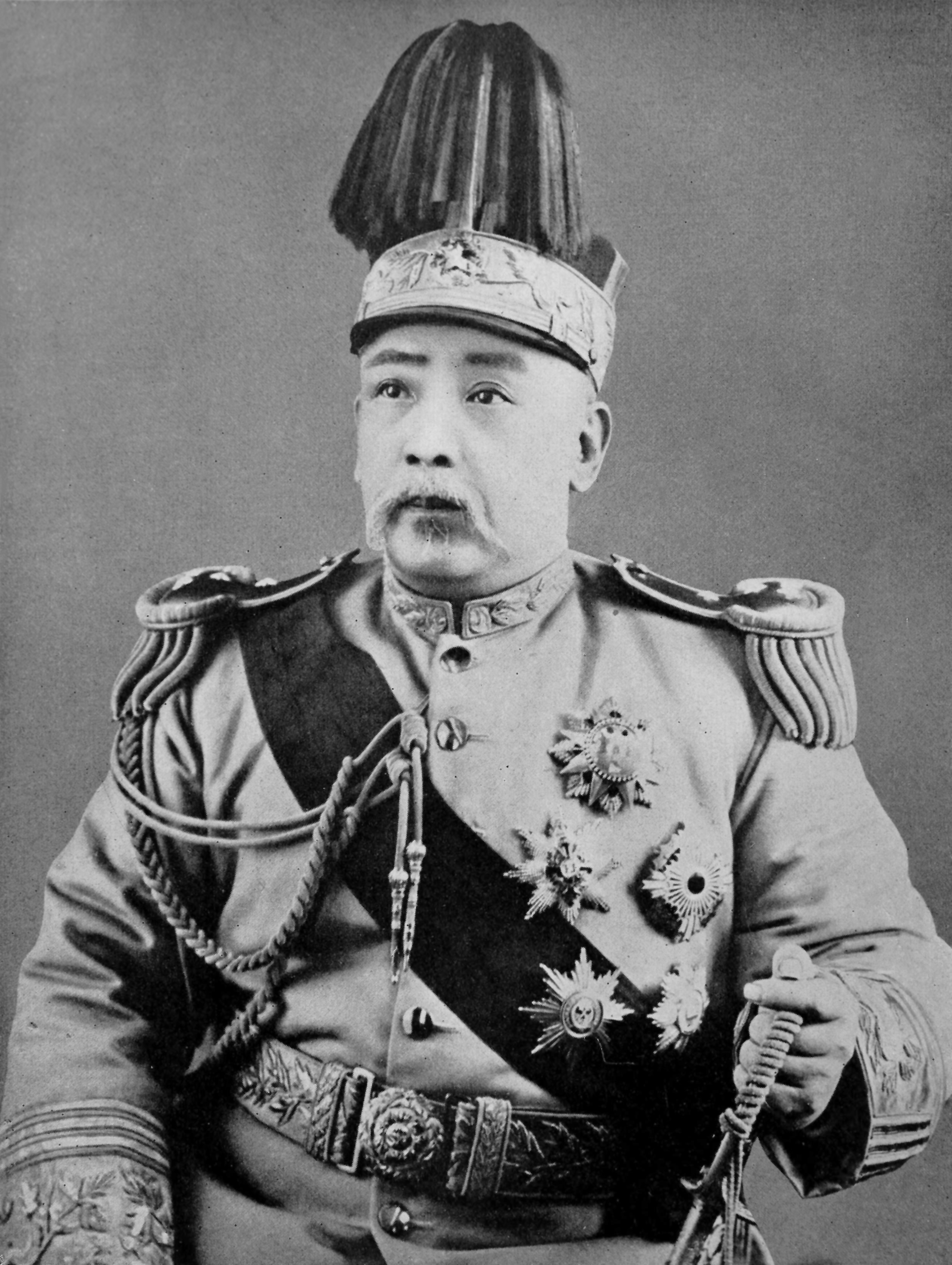
Empire of China (1915-1916)
The vote was unanimous. On December 11, 1915, all 1,993 representatives of China's National Congress approved the restoration of the monarchy. Not a single dissent. Yuan Shikai, the president of the Republic of China, ceremonially declined the honor. When the assembly petitioned again that afternoon, he relented. The next day he declared himself the Great Emperor of the Chinese Empire, taking the era name Hongxian -- "Promote the Constitution." It was, by any measure, one of the most elaborately staged power grabs in modern history. It lasted 83 days.
The President Who Would Be Emperor
Yuan Shikai was not a dreamer. He was a military strongman who had played kingmaker during the fall of the Qing dynasty in 1912 and maneuvered himself into the presidency of the new republic. By 1915, he had cultivated the intellectual justification for what he really wanted. An American constitutional consultant named Frank Goodnow, arranged through former Harvard president Charles Eliot, published a paper arguing that China's people were not ready for republican government. Yang Du, one of Yuan's key advisors, pressed the case further: only a constitutional monarchy could save China from the instability of contested presidential elections. The argument had a certain internal logic -- the republic was indeed fragile. But Yuan's solution was himself, which rather undercut the philosophical foundations.
A Unanimous Farce
The path to Yuan's coronation was paved with petition groups, orchestrated lobbying, and the transparent theater of refusal. When supporters first proposed changing the state system in September 1915, Yuan publicly counseled caution -- even as his allies organized a "National Petition Federation" to manufacture popular demand. The National Congress that convened in December had been elected under conditions that left little room for genuine opposition. The result -- unanimous approval, followed by Yuan's scripted reluctance and scripted acceptance -- fooled nobody who was paying attention. Yuan's son Yuan Keding supported the effort enthusiastically. Even the deposed Qing imperial family, still living in the Forbidden City, was reported as approving the arrangement and proposing a marriage between Yuan's daughter and the former Emperor Puyi.
Eighty-Three Days of Empire
Yuan declared the new era on December 12, 1915, but delayed his formal accession until January 1, 1916. He attempted to reinvent imperial aesthetics, removing Manchu-style clothing from court culture and reviving Han dress with modifications. One dress rehearsal was reportedly sabotaged by his Korean concubine. The year 1916 was designated Hongxian Year One rather than Republic Year Five. Yuan handed out titles of peerage -- princes, dukes, marquesses, counts, viscounts, and barons -- to military commanders and political allies whose loyalty he hoped to purchase. The list reads like a roster of the warlords who would tear China apart in the coming decade. Even the national symbols reflected the halfhearted nature of the enterprise: while the country's Chinese name changed to Empire of China, it continued to be officially called the Republic of China in English.
The Collapse and Its Aftermath
Opposition was swift and fierce. Provincial military governors who had not been adequately rewarded, reformers who genuinely believed in republican government, and opportunists who sensed weakness all moved against Yuan. The National Protection War erupted as southern provinces declared independence. Japan, which had extracted the humiliating Twenty-One Demands from Yuan's government earlier in 1915, withdrew support. By March 1916, Yuan abandoned the monarchy. He died on June 6, 1916, likely of kidney failure, though some historians suspect the stress of his political collapse hastened his end. His attempt to restore imperial rule had lasted less than three months, set back the republican cause by years, and fractured China into competing warlord fiefdoms that would not be reunited until the late 1920s.
From the Air
The events of the Hongxian monarchy centered on Beijing at 39.900N, 116.383E, particularly the government buildings near Tiananmen and the Forbidden City. The National Congress met in central Beijing. Nearest airports: ZBAA (Beijing Capital International, 25 km NE) and ZBAD (Beijing Daxing International, 46 km S). Best viewed in context of the broader Beijing cityscape at 5,000-10,000 ft AGL.