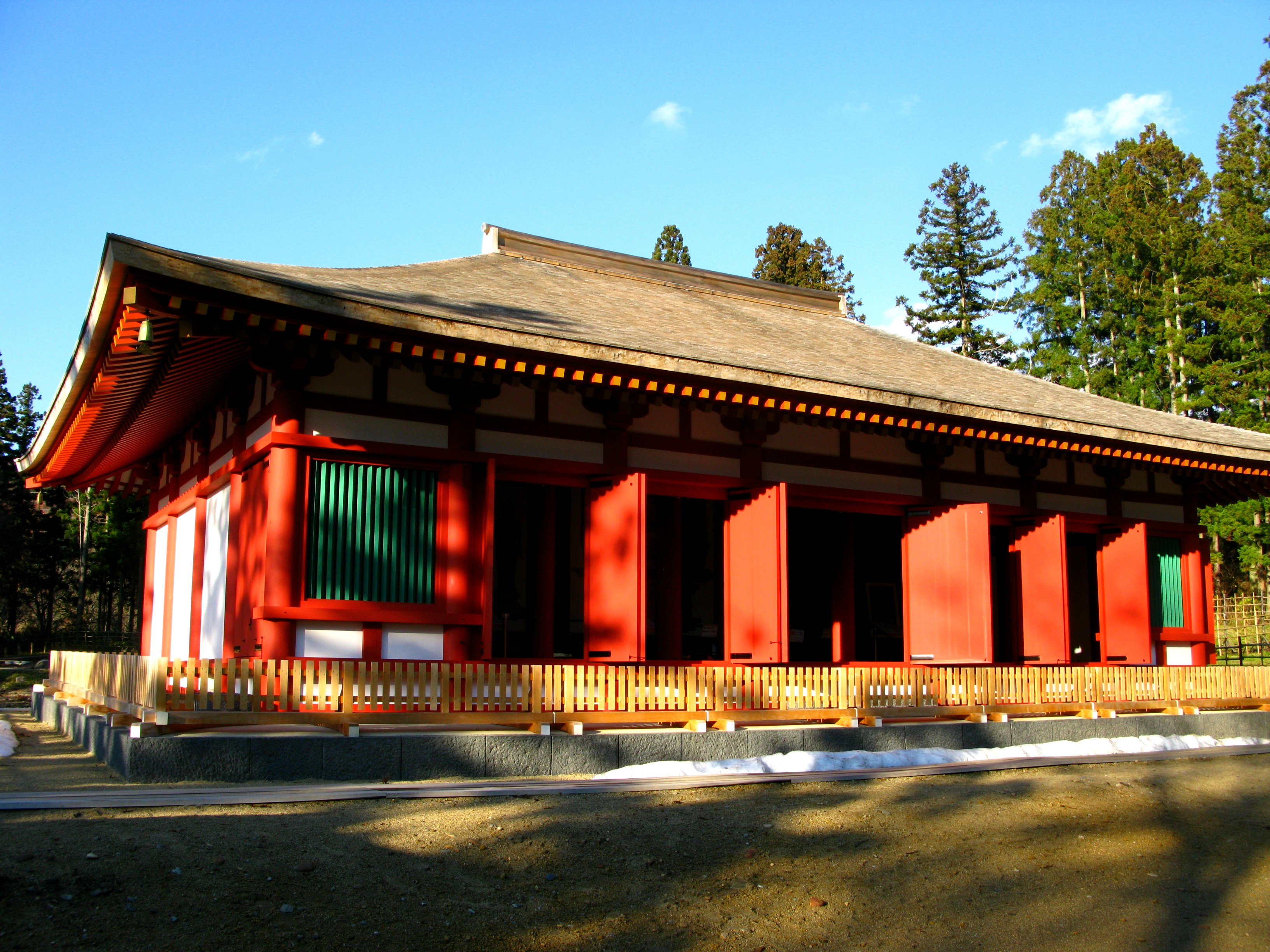
Enichi-ji
In 807 AD, a scholar-monk named Tokuitsu walked north from Nara into the mountains of Aizu, carrying with him the teachings of the Hosso sect and an ambition that would reshape the spiritual landscape of northern Honshu. The temple he founded at the foot of Mount Bandai, Enichi-ji, grew into something no one could have predicted: a religious superpower with 300 resident monks, thousands of warrior-monks, and more than 3,500 sub-temples stretching across provinces. For three centuries, Enichi-ji was not merely a place of worship but a political and military force that chose sides in Japan's civil wars and paid dearly for backing the wrong one.
An Empire in Saffron Robes
Tokuitsu arrived in Aizu at a time when Buddhism's rival schools were fighting for dominance across Japan. He carved out territory for the Hosso sect by outmaneuvering followers of both the Tendai and Shingon traditions, establishing Enichi-ji as the supreme religious authority in the region. By his death in 842, the temple had achieved the status of a shichido garan -- a complete seven-hall complex -- the gold standard of Buddhist architecture. But Enichi-ji's ambitions extended far beyond prayer halls. The temple accumulated landholdings deep into neighboring Echigo Province, forged an alliance with the powerful Taira clan, and maintained a standing force of several thousand sohei, the fearsome warrior-monks who blurred the line between devotion and combat.
Blood at Yokotagawa
When the Genpei War erupted between the Taira and Minamoto clans in 1180, Enichi-ji did not hesitate. The temple dispatched its warriors to fight alongside the Taira forces in Shinano Province against the rebel general Kiso Yoshinaka. It was a catastrophic miscalculation. At the 1181 Battle of Yokotagawa, Yoshinaka's forces killed the temple's leading general, Jotan-bo, and scattered the monk-soldiers. Enichi-ji's military arm never recovered. The temple entered a long decline that would last through much of the medieval period, its vast network of sub-temples gradually shrinking as political winds shifted and new powers arose in the north.
Date Masamune's Fury
The Sengoku period brought a brief resurgence. Enichi-ji rebuilt much of its former prosperity, only to stumble into yet another losing battle. After the 1589 Battle of Suriagehara, the temple opposed Date Masamune, the one-eyed warlord who was consolidating power across northeastern Japan. Masamune's retribution was swift and nearly total. His soldiers razed the compound, sparing only the Kondo -- the main hall. Even that lone survivor burned in 1626. Although monks rebuilt it, Enichi-ji limped along as a shadow of its former self until the Meiji Restoration delivered the final blow: the government's Shinbutsu-shugo policy of separating Buddhism from Shinto effectively dismantled the temple. Not until 1904 was it restored, this time as a modest Shingon temple.
What Endures
Today Enichi-ji is a quiet place, its grounds dotted with the excavated footprints of buildings that once stretched across the hillside. Archaeologists have dug here multiple times, uncovering artifacts that fill a small museum on the temple grounds. The ruins were designated a National Historic Site of Japan in 1970. The temple's most prized possession, a cupronickel vajra -- a ritual thunderbolt scepter used in Shingon ceremonies -- dates to the Heian period and is registered as an Important Cultural Property of Japan. The vajra is not kept at Enichi-ji itself but resides on display at the museum in Aizuwakamatsu Castle, a 40-minute drive south. It is a fitting arrangement: the temple's greatest treasure, like its greatest days, exists somewhere beyond its own walls.
From the Air
Located at 37.569N, 139.982E in the town of Bandai, Fukushima Prefecture, nestled in the highlands south of Mount Bandai. The temple ruins sit in a forested area that is not prominently visible from altitude, but the nearby volcanic profile of Mount Bandai (1,816m) serves as an unmistakable landmark. Nearest airport: Fukushima Airport (RJSF) approximately 50km to the southeast. Aizuwakamatsu, with Tsuruga Castle visible from the air, lies about 20km to the south-southwest. Expect variable mountain weather; visibility can deteriorate quickly in this terrain.