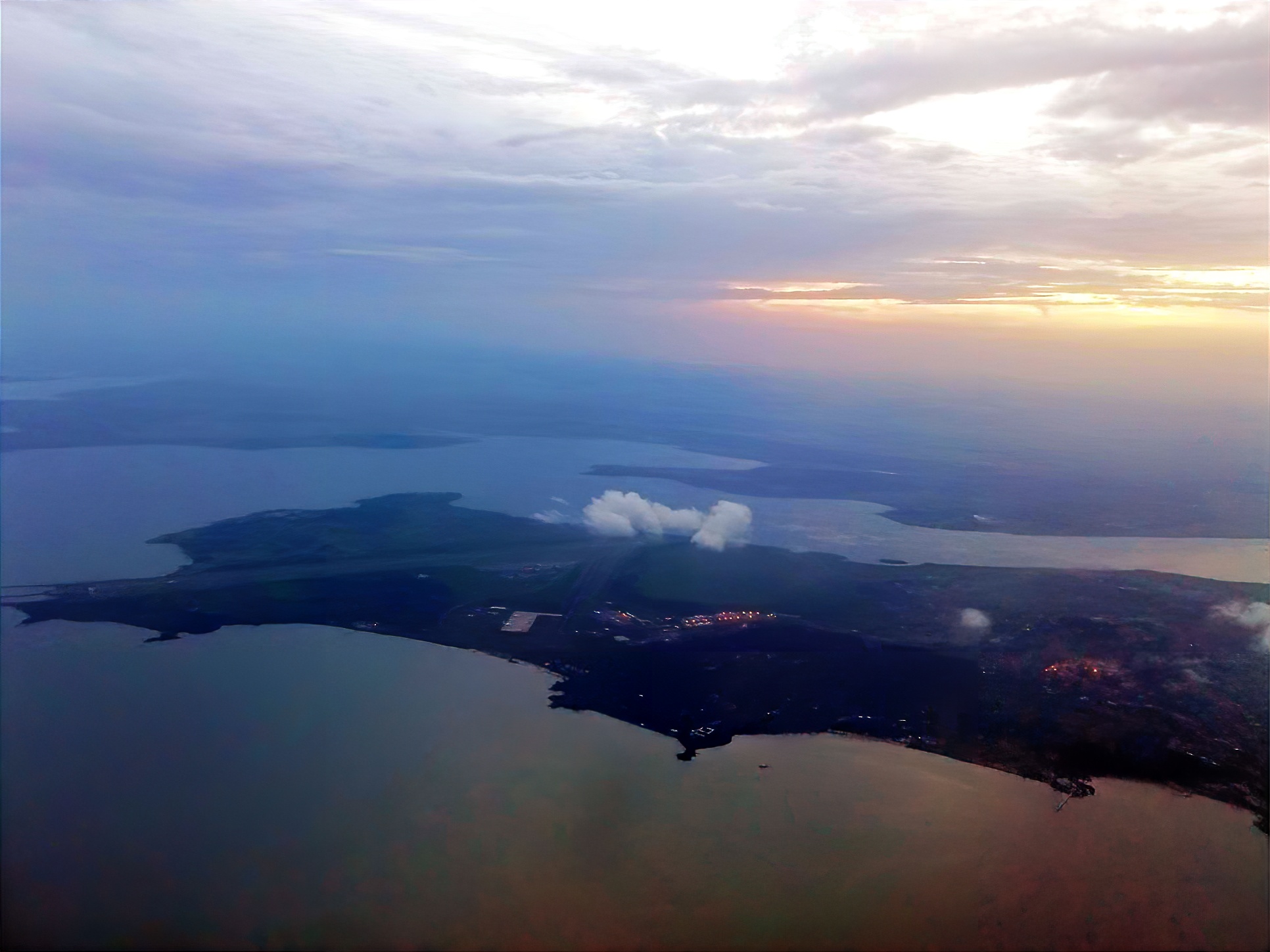
Entebbe
The word "boda-boda" comes from the bicycle taxi drivers who once ferried passengers across the no-man's-land between East African border posts, shouting "border to border!" to attract the weary. In Entebbe, the bicycles have given way to motorcycles, but the name stuck, and so did the spirit of the thing: a place defined by transit, by arrivals and departures. This town on a peninsula in Lake Victoria has served as Uganda's point of entry since the colonial era, and its international airport remains the country's only one. But Entebbe is more than a layover. Its botanical gardens, lakeside calm, and a single dramatic night in 1976 have written it into a story much larger than its modest size would suggest.
Ninety Minutes at the Old Terminal
On June 27, 1976, two members of the Popular Front for the Liberation of Palestine and two German revolutionaries hijacked Air France Flight 139, carrying 248 passengers from Tel Aviv to Paris via Athens. The plane was diverted to Entebbe, where Uganda's president, Idi Amin, gave the hijackers shelter rather than resistance. Non-Israeli hostages were released over the following days, but more than a hundred, mostly Jewish passengers and the French crew who refused to leave them, remained captive in the old airport terminal. On July 4, Israeli commandos flew more than 4,000 kilometers to Entebbe in a fleet of Hercules transport planes, landed in darkness, and stormed the terminal. Within ninety minutes, the hostages were freed, seven hijackers were killed, and over 40 Ugandan soldiers died in the firefight. Three hostages and the operation's commander, Yonatan Netanyahu, were also killed. The raid became a defining moment in the history of counter-terrorism and fixed Entebbe permanently in global memory.
Equatorial Cool
For a town sitting almost precisely on the equator, Entebbe defies expectation. Its elevation above Lake Victoria keeps daytime temperatures around 26 to 27 degrees Celsius, well below the sweltering heat of equatorial cities like Guayaquil or Singapore. Humidity runs high, but the air feels clean compared to Kampala, 35 kilometers to the north. The old colonial botanical gardens still stand along the lakeshore, their canopy of tropical trees sheltering pathways where grey crowned cranes and marabou storks stalk the lawns. The lake itself stretches to the horizon, the largest in Africa by surface area, its waters shared by Uganda, Kenya, and Tanzania. Entebbe occupies a peninsula that juts into this freshwater sea, giving the town a surrounded-by-water quality that accounts for much of its tranquility.
The Matatu System
Getting around Entebbe involves a choice between three modes of transport, each with its own character. The boda-bodas are fastest and most harrowing, their riders weaving through traffic and pedestrians with a fatalism that accounts for most of Entebbe's hospital admissions. Matatus, the licensed minibuses, are slower but sociable. They depart from the park behind the 7Seasons Hotel when full, their conductors hanging from the sliding doors and shouting destinations at passersby. Each van is licensed for fourteen passengers but routinely carries more, along with their belongings. Ugandan passengers will often intervene if a conductor tries to overcharge a visitor, and they have been known to collectively abandon a matatu in protest if the driver handles the vehicle recklessly. The third option, the special-hire taxi, offers comfort and negotiation. Meters are rare, and haggling is expected. Most destinations within town cost between 10,000 and 15,000 Ugandan shillings.
Lakeside and Beyond
The Uganda Wildlife Education Centre, locally known as "the Zoo," occupies a stretch of the lakeshore where visitors can see animals that include chimpanzees brought from Ngamba Island, a sanctuary accessible by boat on Lake Victoria. The lake offers fishing trips and excursions to the island's chimp community, run by organizations like Wild Frontiers. But Entebbe's appeal is quieter than its attractions list suggests. The town is safe by Ugandan standards, its streets walkable, its pace unhurried. It absorbs the tension of international travel and returns something gentler. UN peacekeeping operations use the airport compound as a staging depot for Central African missions, loading heavy equipment onto Antonov cargo planes behind guarded perimeters. Alongside this machinery of global crisis management, Entebbe's fishermen push boats into the same lake at dawn, and the botanical gardens open their gates to morning walkers, and the town continues doing what it has always done: receiving people, and letting them go.
From the Air
Located at 0.05°N, 32.46°E on a peninsula extending into Lake Victoria. Entebbe International Airport (HUEN) is Uganda's primary international airport and is immediately adjacent to the town. The airport is clearly visible from altitude, with Lake Victoria dominating the landscape in all directions. The Kampala-Entebbe Expressway is visible running north. Recommended viewing altitude: 3,000-5,000 feet AGL for the peninsula and lake shoreline. UN compound and military areas visible on the airport perimeter.