Entsu-in (Matsushima)
Open the doors of the mausoleum at Entsu-in temple, and the seventeenth century stares back in a way you do not expect. There, amid the gold leaf and intricate lacquerwork of a young lord's memorial shrine, you find spades, hearts, diamonds, and clubs. Roses bloom alongside chrysanthemums. Crosses mingle with Buddhist motifs. This is the Sankeiden, the resting place of Date Mitsumune, who died at just nineteen years old in 1645. His grandfather, the legendary one-eyed warlord Date Masamune, had sent envoys to the Pope in Rome and opened his domain to Western contact. Those foreign encounters left their mark here, in one of the most unexpected fusions of East and West hidden in plain sight along Japan's Pacific coast.
Where Pine Islands Meet the Sacred
Entsu-in sits in Matsushima, one of Japan's Three Most Scenic Spots, a bay scattered with roughly 260 pine-clad islands sculpted by centuries of wind and waves. The temple was founded in 1647 as a Rinzai Zen monastery belonging to the Myoshin-ji branch, positioned next to Zuigan-ji, Matsushima's most important temple. Its purpose was specific and solemn: to serve as the memorial temple for Date Mitsumune, the grandson of Date Masamune, the powerful feudal lord who had unified much of the Tohoku region. Masamune himself lies in the ornate mausoleum of Zuihoden in Sendai, but his grandson's resting place carries a different kind of distinction, one that speaks to a remarkable moment of cultural openness in an age of increasing isolation.
Playing Cards in a Samurai's Tomb
The three-bay Tamaya, designated an Important Cultural Property, is decorated in the Namban art style that emerged from Japan's contact with Portuguese and Spanish missionaries and traders during the late Sengoku period. The Date clan had been particularly receptive to Western influence. Masamune dispatched the Keicho Embassy in 1613, sending his retainer Hasekura Tsunenaga across the Pacific and Atlantic to meet King Philip III of Spain and Pope Paul V. Though the diplomatic mission ultimately failed, the cultural exchange left deep impressions. The mausoleum's interior reflects that encounter directly: playing-card suits rendered alongside traditional Japanese decorative motifs, and what is believed to be the oldest Japanese depiction of a rose. These symbols were included deliberately, a private tribute to the clan's cosmopolitan ambitions during what would become Japan's final years of open contact with the West.
Four Gardens, Four Worlds
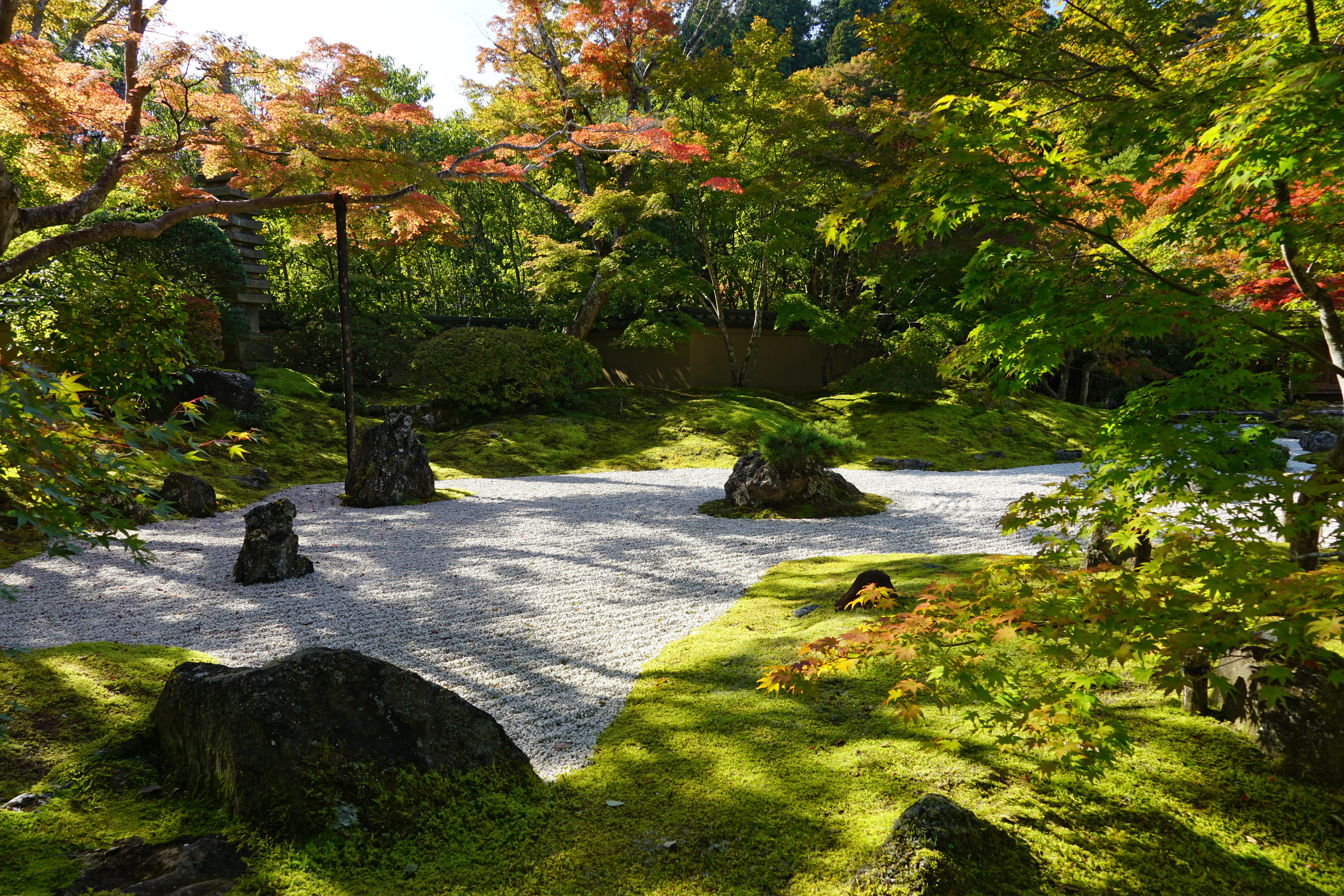
Beyond the mausoleum, Entsu-in's gardens unfold in four distinct areas, each with its own character. A karesansui dry rock garden evokes the sea and mountains through raked gravel and carefully placed stones. A moss garden surrounds a pond shaped like the kanji character for heart, attributed to the renowned garden designer Kobori Enshu. A rose garden pays tribute to the Date clan's connection with Christianity and Western culture. And a natural grove of cryptomeria trees provides a quiet canopy of ancient green. In autumn, the temple becomes a destination for momiji viewing, when the maples ignite in reds and golds and the temple sometimes hosts evening illuminations that set the foliage ablaze against the darkness.
Endurance Through Catastrophe
The Main Hall, called the Daihitei, carries its own quiet history. Originally constructed in Edo, it was dismantled, transported, and reassembled here in Matsushima. Its thatched hip roof shelters a gilded Muromachi-period statue of Kannon, the bodhisattva of compassion, carved from Japanese cypress using the yoseki-zukuri joinery technique and finished in gold leaf over lacquer. The temple also serves as the first station on the Sanriku 33 Kannon pilgrimage route, linking it to a network of sacred sites along the Pacific coast. When the 2011 Tohoku earthquake and tsunami struck, the Tamaya mausoleum suffered damage, a reminder that even the most carefully preserved treasures remain vulnerable along this seismically active coastline. The temple was repaired and endures, its fusion of cultures still quietly astonishing visitors who open those mausoleum doors.
From the Air
Located at 38.37N, 141.06E along Matsushima Bay. From the air, look for the distinctive scattering of 260 pine-covered islands across the bay, one of Japan's most recognizable coastal landscapes. The temple grounds are nestled among trees just inland from the bay, adjacent to Zuigan-ji. Sendai Airport (RJSS) lies approximately 30 km to the south-southwest. Matsushima Air Base (RJST) is roughly 5 km to the west. Best appreciated at 2,000-4,000 feet AGL for the full bay panorama.