Esplanade, Penang
Captain Francis Light had a problem. He had just claimed Penang Island for the British East India Company in July 1786, but the land was dense tropical forest, and his small party lacked the labor to clear it. His solution was characteristically audacious: he ordered his ships' cannons loaded with silver coins and fired them into the trees. Immigrants rushed in to collect the money, hacking through undergrowth as they went. The gambit worked. The patch of cleared land became the Esplanade -- the open field and seafront promenade that remains the civic heart of George Town more than two centuries later.
Silver Coins and Cleared Ground
The spot where Light stepped ashore on 17 July 1786 was the northeastern tip of Penang Island, which he renamed Prince of Wales Island. Fort Cornwallis rose immediately east of the clearing, while the field itself -- called the Padang, a Malay word for an open playing field -- served first as a military parade ground. Sepoys from India, deployed by the East India Company, disembarked from transport vessels directly onto this ground. For decades, the Padang's purpose was strictly martial: a place where soldiers drilled, formations assembled, and the empire's authority was performed in the tropical heat. The layout was deliberate. British colonial planners replicated this template across Southeast Asia -- the Padang in Singapore and Merdeka Square in Kuala Lumpur follow the same design logic, a grand open field flanked by government buildings, churches, and clubs, all facing the sea.
From Parade Ground to Playing Field
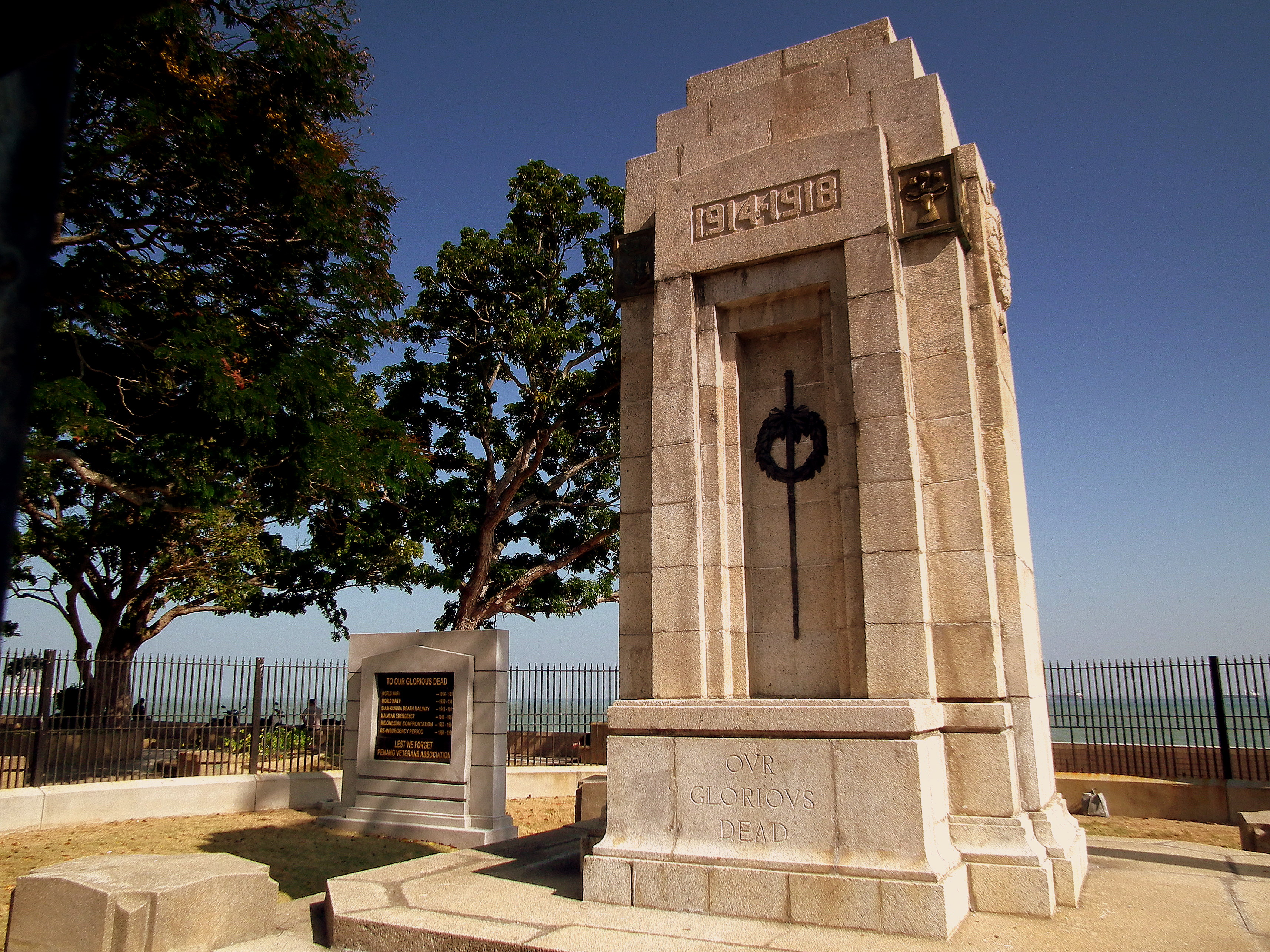
By the mid-19th century, the Esplanade's identity shifted from military to recreational. A bandstand appeared, donated by local businessman Cheah Tek Soon, and music bands performed there for the public in the evenings. Cricket took over the Padang. In 1908, the Penang Cricket Club built a two-storey pavilion designed by the firm Wilson & Neubronner, and their rivals at the Penang Recreational Club erected a similar structure for their own supporters. The rivalry between the two clubs animated the social life of colonial Penang -- membership was divided along racial lines, and match days drew crowds that crossed those boundaries to watch. A Cenotaph was built along the seafront promenade to commemorate Allied personnel killed in World War I, adding a solemn note to an otherwise festive stretch of waterfront.
Where Penang Gathers
Today, the Esplanade is where Penang comes together. A portion of the field has been designated Malaysia's first Speakers' Corner -- a nod to the Hyde Park tradition -- making it a rare space for open public discourse in the country. Every first Saturday of the month, the 'Esplanade in Action' cultural performances showcase Penang's layered heritage: Malay, Chinese, Indian, and Peranakan traditions share the same stage. On Friday, Saturday, and Sunday evenings between 5pm and midnight, a night market fills the promenade with the smell of char kway teow and satay. During Chinese New Year, crowds gather at the waterfront to throw mandarin oranges into the Strait of Malacca, a tradition where unmarried women toss the fruit hoping for a good match. The City Hall building faces the Padang, its colonial facade watching over the same field that Francis Light's silver coins first carved from the forest.
A Field That Outlasted Empires
What makes the Esplanade remarkable is not any single monument but the continuity of its purpose. The same patch of ground has served as a beachhead, a parade ground, a cricket pitch, a war memorial, a speakers' platform, and a night market -- each layer of use reflecting a different chapter of Penang's history. The British are gone. The sepoys are gone. The cricket clubs have faded. But people still gather on the Padang at dusk, drawn by the same thing that has drawn them here for generations: an open field beside the water, cooled by sea breezes, with room enough for whatever a city needs its public spaces to be. George Town earned UNESCO World Heritage status in 2008, and the Esplanade remains the geographic and symbolic center of that designation -- the place where colonial ambition, immigrant energy, and multicultural identity converge.
From the Air
Located at 5.4222N, 100.3419E on the northeastern tip of Penang Island. From the air, the Esplanade appears as a large green field bordered by the Strait of Malacca to the north and the colonial-era buildings of George Town to the south. Fort Cornwallis sits immediately to the east. Penang International Airport (WMKP) is approximately 16 km to the south. Best viewed at 2,000-3,000 feet on approach from the north, with the Penang Bridge visible to the southeast.