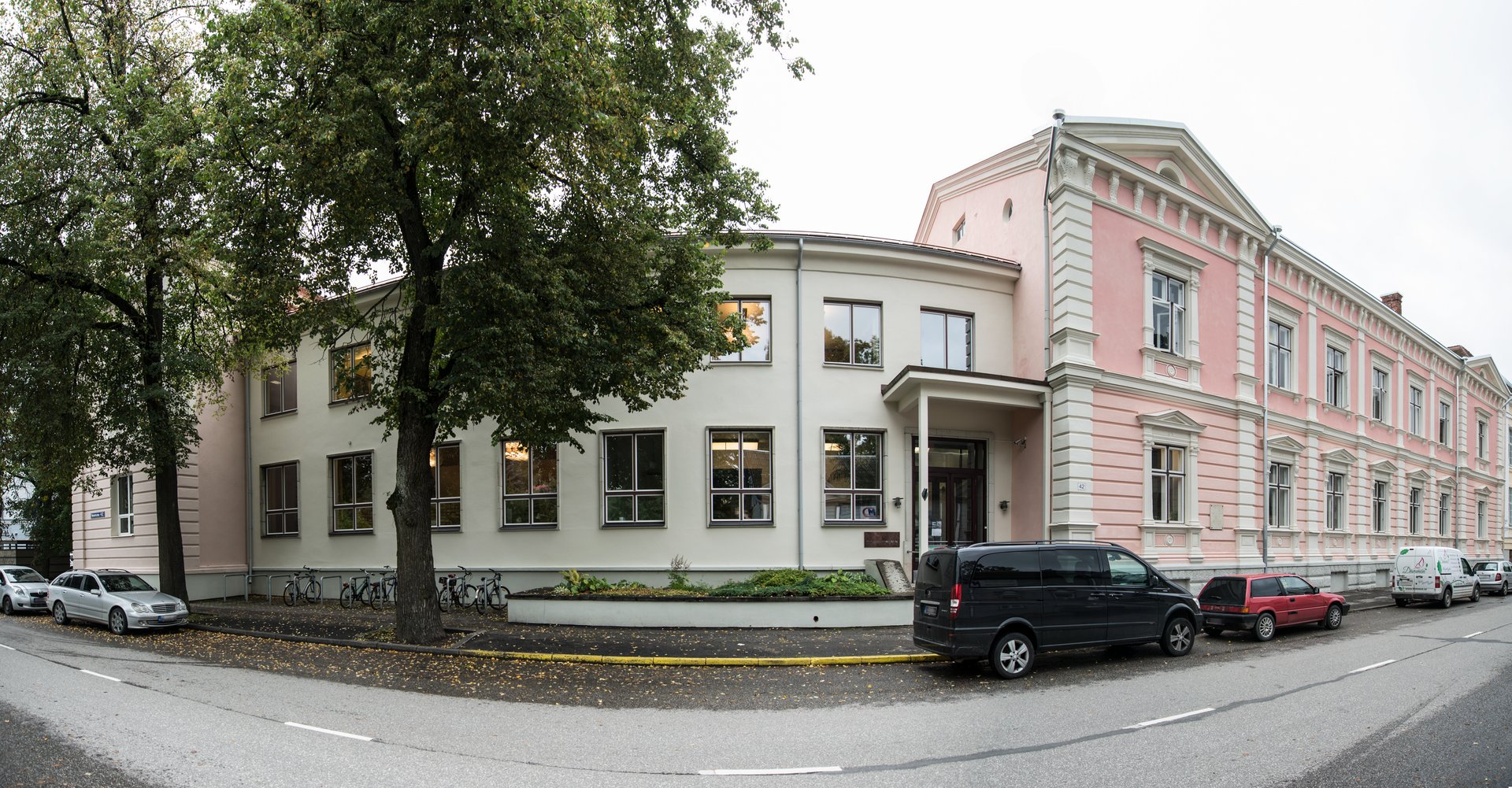
Estonian Literary Museum
When Estonian villagers in the late nineteenth century recited a runic song around a winter fire, they were carrying a strophic verse form that had been passed down orally for at least two thousand years. The same trochaic meter shows up in the Finnish Kalevala and in the Karelian and Ingrian song traditions. By the 1890s a generation of Estonian collectors realized this oral inheritance was disappearing fast under the pressures of Russification, industrialization, and the spread of literacy. They began writing the songs down. Their notes, expanded over the next century by thousands of contributors, are now stored in a building on Vanemuise Street in Tartu, in archives that hold the largest single collection of runic songs in the world and one of the more remarkable national memory projects in any small country.
From One Library to Four Departments
The Estonian Literary Museum, called ELM in English and Eesti Kirjandusmuuseum in Estonian, traces its origin to 1909, when the Estonian National Museum's Archive Library was founded in Tartu with 10,000 Estonian-language volumes. In 1924 the National Museum bought a private house on Aia Street, since renamed Vanemuise Street, to store its growing archives. That building, expanded with three later additions, is still the museum's main facility. Today the institution operates four integrated departments. The Archival Library has grown to roughly 809,000 books, periodicals, pamphlets, and maps. The Estonian Folklore Archives, founded in 1927, holds the songs, customs, dances, and texts collected from the Estonian countryside, along with significant collections of Finno-Ugric, Baltic German, Russian, and Jewish folklore from the same region. The Estonian Cultural History Archives, founded in 1929, brings together the manuscripts and monographs of the older academic societies, plus extensive photo, art, film, and audio collections. The Department of Folkloristics, founded in 1947, publishes academic journals and runs the folklore.ee web server.
The Folklore Archives
The Estonian Folklore Archives are the heart of the institution. Established by the philologist Oskar Loorits in 1927, the archives systematized decades of voluntary collection work and made it the responsibility of a national institution. By the 1930s, paid fieldworkers and a network of correspondents were sending in folktales, songs, proverbs, riddles, customs, and beliefs from every parish in Estonia. The collection survived the Soviet period despite ideological pressure to subordinate folklore to Marxist-Leninist categories. Independence in 1991 allowed the archives to expand their scope and digitize their holdings. Today the archives include the work of the Friedrich Reinhold Kreutzwald Memorial Days conferences, held every December since 1957. Kreutzwald was the nineteenth-century writer who compiled the Estonian national epic Kalevipoeg from oral fragments, and the conferences in his memory have been one of the longer-running scholarly traditions in Baltic folkloristics.
Why a Small Country Builds Big Archives
Estonia is a country of about 1.3 million people. Estonian as a written language is roughly 500 years old and as a national literary language only about 200. For most of the period covered by the museum's collections the Estonians were a peasant majority under German-speaking landowners, then under Russian imperial rule, then under brief independence, then under Soviet occupation, then under independence again. The archives were not built to serve a confident national elite. They were built to preserve the cultural memory of a people who had reason to fear that what was not written down would be lost. Folklore collection in Estonia has always been understood as a form of national survival. The Estonian Literary Society, founded by Baltic Germans in 1842, did much of the early work; the Estonian Learned Society, founded in 1838, did more. After 1909 the work passed to ethnic Estonian institutions. By the time the Soviets arrived in 1940 the collection was substantial enough that even hostile new authorities found it more practical to preserve than to destroy.
Kivike and the Database Era
Most of what the museum holds is now searchable through a digital file repository called Kivike, which means small stone in Estonian. As of the most recent count Kivike holds 335,668 items totaling 34 terabytes, drawing material from about fifty specialized databases the museum has built since the 1990s. There is a database of Estonian runic songs. There is a database of Estonian graffiti. There is a database of Estonian droodles, the linguistic riddles in which a simple drawing is captioned with an unexpected description. By 2016 the museum's total digital holdings had reached 65 terabytes, and the long-running project Development of the Estonian Literary Museum to an International Center for Digital Humanities aimed to push that to 130 terabytes by 2020. Most of the materials in Kivike are free for research and teaching. The museum also publishes selected materials on the European Meta-Share platform, which already includes a database called 1001 Children's Games from the Year 1935, drawn from a folklore collection campaign that asked Estonian schoolchildren to describe the games they actually played.
A Building, a Discipline, a Practice
The main building on Vanemuise Street, with its three modern extensions, sits in central Tartu near the university quarter. Tartu has been the intellectual capital of Estonia since the founding of its university in 1632 and remains the home of Estonian humanities scholarship. The museum has been led by a long sequence of directors, most of them folklorists or literary scholars. Mart Lepik ran it through the German occupation from 1940 to 1945. Eduard Ertis kept it functioning through the Soviet decades from 1954 to 1989. Krista Aru oversaw the post-independence transformation in the 1990s. Piret Voolaid took the directorship in January 2023. To walk past the museum on a winter evening with the windows lit, with the snow on Vanemuise Street and the linden trees bare, is to walk past one of the smaller buildings in Tartu and one of the more important institutions in Estonia. Inside, somewhere on a shelf or in a server, a song that an old woman sang to a folklorist in 1932 is still being preserved. The next time someone needs to hear it, it will be there.
From the Air
The Estonian Literary Museum is at 58.374°N, 26.718°E in central Tartu, on Vanemuise Street near the university quarter. Tartu Airport (EETU) is about 9 km southeast. From the air, look for the Emajõgi River curving through Tartu and the cluster of academic buildings on the west bank. Tallinn Airport (EETN) is about 165 km northwest. Recommended viewing altitude 1,500 to 3,000 ft AGL. Tartu is a compact university city and individual buildings are best identified in winter when leaves do not obscure the rooflines.