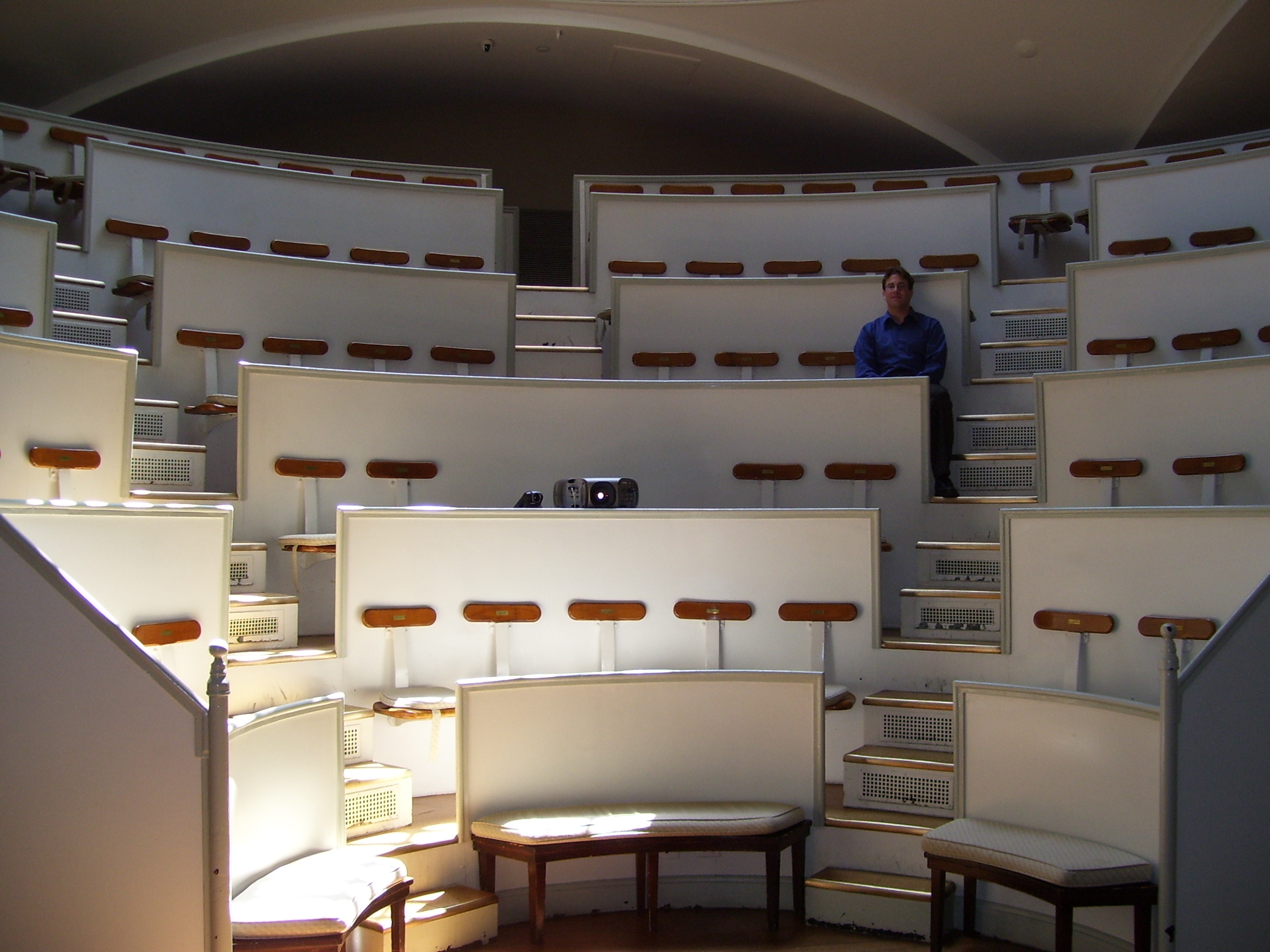
Ether Dome
"Gentlemen, this is no humbug." With those five words, spoken to a gallery of skeptical physicians on October 16, 1846, surgeon John Collins Warren announced that the world had changed. Moments earlier, a young printer named Edward Gilbert Abbott had been rendered unconscious by inhaled ether -- administered by a Boston dentist, William Thomas Green Morton, through a handblown glass device he had invented days before -- and Warren had painlessly removed a tumor from Abbott's neck. When Abbott woke and reported feeling nothing more than "a scratching sensation," the audience understood: the era of surgical agony was over. The room where it happened, a skylit operating amphitheater atop the Bulfinch Building at Massachusetts General Hospital, would become known simply as the Ether Dome.
Before the Silence
Surgery before anesthesia was a nightmare performed in daylight. Operating rooms sat on the top floors of hospitals to capture as much natural light as possible, but the placement served a second purpose: it muffled the screams of patients from those on the floors below. Speed was the surgeon's only mercy. Ninety seconds was considered a respectable time to amputate a limb. Patients were held down, sometimes tied to operating chairs upholstered in red velvet -- a fabric chosen because it hid bloodstains. Alcohol or a sharp blow to the jaw were the best pain relief available. Into this world of controlled violence stepped Horace Wells, a Hartford dentist who in 1844 recognized the pain-killing properties of nitrous oxide. In January 1845, Wells traveled to this very room in Massachusetts General Hospital to demonstrate his discovery. The patient groaned. The audience shouted "Humbug!" Wells left in disgrace. His career spiraled: he abandoned his family, moved to New York, was arrested for throwing acid on people, and killed himself in jail.
The Demonstration That Changed Medicine
Morton, once Wells' business partner, had been quietly refining the idea. Working with Harvard chemistry professor Charles T. Jackson, he shifted from nitrous oxide to diethyl ether, a more potent and reliable agent. On October 16, 1846, with the help of MGH surgeon Henry Jacob Bigelow, Morton was granted his chance. The patient, twenty-one-year-old Edward Gilbert Abbott, was an orphan and printer who had carried a vascular tumor on his neck since birth. Morton held the glass mouthpiece of his newly built etherizer to Abbott's lips and told him to breathe deeply and slowly. Within three to four minutes, Abbott fell into an unconscious, sleeplike state. Warren made the incision. Abbott did not flinch. During the surgery, Warren noted the patient's blood appeared unusually dark and speculated the ether might work by carbonizing the blood -- a remark that drew applause from the gallery. When Abbott awoke, he confirmed: no pain. Bigelow rushed to publish the results, and within weeks the news had crossed the Atlantic.
The Bitter Feud for Credit
The discovery of anesthesia should have been a triumph. Instead, it became a tragedy worthy of Greek drama. Four men claimed credit: Morton the dentist, Jackson the chemist, Wells the nitrous oxide pioneer, and Crawford Long, a Georgia surgeon who had quietly used ether during an operation in 1842 but never published his findings. Morton and Jackson locked into a legal battle and pamphleteering war that consumed twenty years. In 1868, Morton read a newspaper article crediting Jackson. He became feverish, threw himself into a pond in Central Park, and died -- likely from a stroke -- shortly afterward. Jackson suffered a severe mental breakdown and died at McLean Asylum in Belmont, Massachusetts. Wells had already taken his own life in 1848. Only Crawford Long, who had never sought fame, died peacefully. The irony is that while these men destroyed each other fighting for recognition, the thing they fought over -- the conquest of surgical pain -- remains one of the most consequential gifts in the history of medicine.
The Dome's Oldest Resident
The most unexpected witness to Ether Day arrived twenty-three years before the demonstration. In 1823, Massachusetts General Hospital received an Egyptian mummy, complete with painted wooden coffins, as a gift from a Dutch merchant named Jacob Van Lennep who was trying to impress his New England in-laws. The hospital's trustees accepted what they called "an appropriate ornament of the operating room" and put the mummy on display, charging visitors twenty-five cents -- making him the first complete Egyptian mummy exhibited in America. He then embarked on a year-long tour of the East Coast to raise funds for the fledgling hospital before being installed in the Ether Dome, where he silently witnessed more than 6,000 surgeries. Not until 1960 did anyone learn his name: Padihershef, meaning "He whom the god Hershef has given," a tomb prospector from Thebes who lived during Egypt's 26th Dynasty, around 663 to 525 BC. A full-body CT scan in 2013 revealed he was between twenty and thirty years old at death, suffered from arthritis, and had been so ill as a child that his growth temporarily stopped.
A Room That Still Teaches
The Ether Dome has lived many lives since surgeons last operated under its glass ceiling in 1867. It served as a storage room, a dormitory, a dining hall for nurses, and finally, beginning in the 20th century, the teaching space and historic shrine it is today. A plaster cast of the Apollo Belvedere stands in the room, donated by statesman Edward Everett in 1845 -- a copy of the Vatican sculpture that Napoleon had looted and the Louvre had cast in plaster for sale. The snake coiled at Apollo's feet carries the ancient symbolism of healing, and Apollo himself was invoked in the original Hippocratic Oath. A teaching skeleton hangs nearby, visible in daguerreotypes from 1847 showing the administration of ether. The dome's architecture -- amphitheater seating arranged around a central stage, light flooding in from above -- established the template still followed by modern operating theaters, though today glass separates spectators from surgeons, and electric light has replaced the sun. The room sits on Boston's Cambridge Street, a quiet landmark amid the sprawling modern hospital, holding the memory of the afternoon when a dentist, a glass inhaler, and a young printer's willingness to breathe deeply ended thousands of years of surgical suffering.
From the Air
The Ether Dome is located at 42.364N, 71.068W inside the Bulfinch Building of Massachusetts General Hospital, on the banks of the Charles River in Boston's West End. The hospital campus is visible from the air as a large complex between Cambridge Street and the river, just west of the Zakim Bridge. Best viewed at 1,500-2,500 feet AGL. Nearest airport: KBOS (Boston Logan International), approximately 3nm east across the harbor. The golden dome of the Massachusetts State House on Beacon Hill provides an orientation landmark to the south.