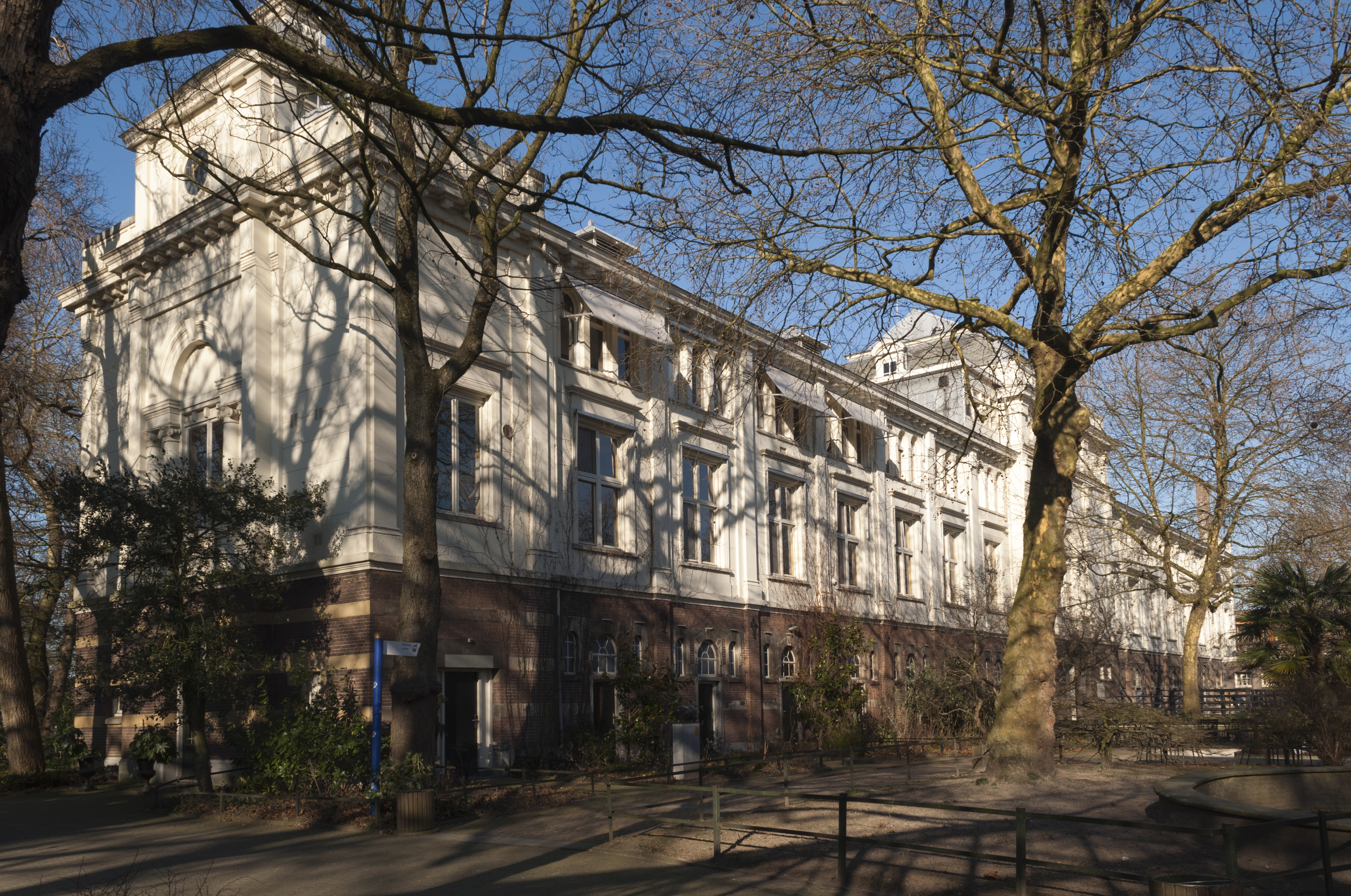
Ethnographic Museum Artis
Imagine an Amsterdam zoo, and now imagine that the zoo also exhibits people. Or rather, the things people make. In 1838 the Royal Zoological Society 'Natura Artis Magistra' opened just east of the city center, and almost from the start its mission spilled past the cages. The Society wanted to display creation itself - all of it. Live exotic animals, yes, but also their skeletons and preserved bodies. Minerals from the earth. And from the human side of creation, the artifacts of peoples the Dutch Empire had reached: weapons, masks, garments, models of factories and ships. The Ethnographisch Museum Artis was the third ethnological museum in the Netherlands, and the first to be founded as a public museum. It existed for just over twenty years under that name. The things it gathered are still on display in Amsterdam - they just live somewhere else now.
A Museum Inside a Zoo
The collection started in the same building as the animal skeletons. From 1851 the Society's natural history and ethnographic holdings were displayed together in what was called the Great Museum at Artis. The arrangement made a kind of nineteenth-century sense - this was the era when European museums often treated colonial cultures as natural-history specimens rather than human ones. As both collections grew, the ethnographic objects were peeled off into the nearby building of Society Amicitiae, which became the Little Museum. By the 1880s even that was bursting. On the occasion of the zoo's fiftieth anniversary in 1888, the ethnographic collection was given its own dedicated home in the Volharding building - the name means "perseverance," which was a fitting word for an institution that had moved twice already and would not stay long where it was.
Where the Objects Came From
The collecting was driven by a mix of motives that the museum's later inheritors have spent decades trying to reckon with honestly. Some objects arrived through scientific expeditions - the Etna expedition to Dutch New Guinea, for instance, brought back pieces that anthropologists genuinely wanted to study. Some came from individual missionaries, government officials, and travelers in the Dutch colonies, who collected what interested them with little oversight or consent from the communities those objects came from. Some came from the 1883 World Exhibition in Amsterdam, the colonial showcase that brought visitors from across Europe to look at the empire on display. Companies and scientific societies contributed too. The collection's reach widened beyond Dutch territories - to China, Korea, Japan, across Africa, into Oceania. The linguist Herman Neubronner van der Tuuk, who had spent decades studying Indonesian languages, was a major donor. From 1887 to 1902 the collection was managed by curator Cornelis Marinus Pleyte, who wrote its guide. Pleyte's father, the Egyptologist Willem Pleyte, was on the board of Brill Publishers, the academic press that to this day publishes much of the world's scholarship on the cultures the museum once cataloged.
What the Collection Said and Didn't Say
The Ethnographic Museum Artis was smaller than the Rijksmuseum or the Wereldmuseum, but it was not unimportant. It held over 11,000 objects from across the inhabited world. Its weaknesses were the weaknesses of its century. The nineteenth-century Korean material, for instance, included an extensive collection of jackets, belts, slippers, hats, and women's undergarments - the kind of gendered collecting that thought it was documenting a culture while in fact documenting an outside observer's curiosity. The objects told one story, but they could not tell the stories of the people who had made them, used them, mourned with them, danced with them. That is the unresolvable problem of nineteenth-century ethnography: the things outlived the contexts, and the contexts have to be reconstructed from outside. The objects in the Artis cabinets came from real lives - artisans in Java, weavers in West Africa, potters in Korea - and the museum gave them labels rather than voices.
Where They Went Next
The museum closed officially in 1910. The Volharding building had become too small, and its presentation methods felt outdated. The entire collection was eventually donated to the Vereeniging Koloniaal Institute, which ran a separate Colonial Museum nearby. That Colonial Museum is what eventually became the Tropenmuseum on Linnaeusstraat - one of Amsterdam's major institutions for the cultures of the formerly colonized world. The Tropenmuseum took possession of the Artis collection in 1926. Time and storage took their toll. Of the original 11,000-plus objects, a substantial number decayed past saving. But what remained still forms one of the core collections of the Tropenmuseum, and a significant number are permanently on display. The Tropenmuseum today works to recontextualize what it inherited - to ask whose objects these are, whose stories they carry, and how to present them in a way that respects the cultures that made them. The Ethnographisch Museum Artis itself no longer exists, but its question keeps being asked.
From the Air
The former museum building sits at 52.366 N, 4.919 E inside the Artis Zoo complex on the eastern side of central Amsterdam. Geohash u173z. From the air the zoo is recognizable as a green island just east of the canal belt, with the Plantage neighborhood around it. The Tropenmuseum, which inherited the collection, is about 600 m to the east at the edge of Oosterpark and shares the Linnaeusstraat axis. Schiphol Airport (EHAM) is 14 km southwest. Approach routes from the south overfly this area at moderate altitudes.