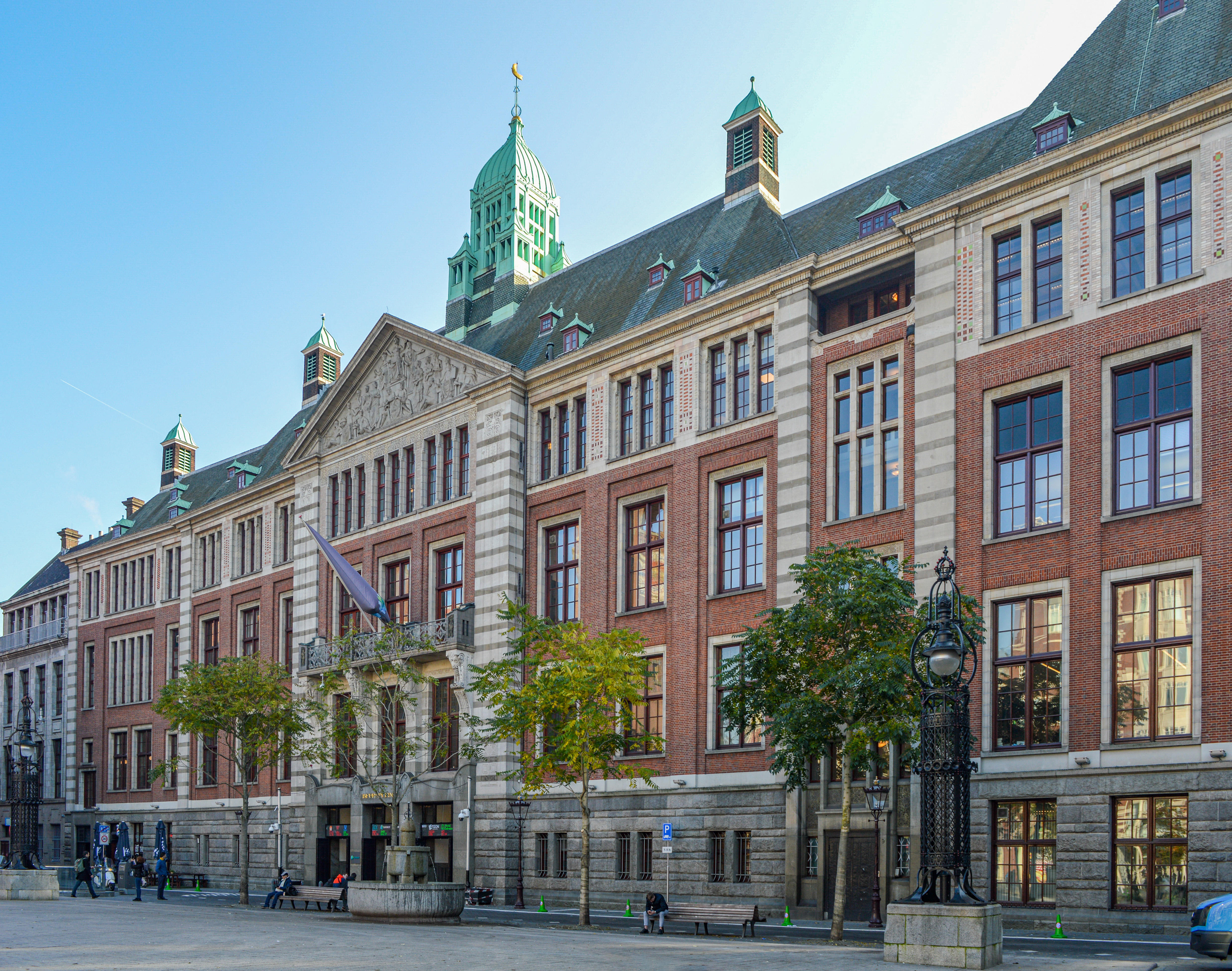
Euronext
The word Euronext does not appear in any history book before the year 2000. The exchanges that built it - Paris, Amsterdam, Brussels - had been competing for the better part of four centuries. Then the euro arrived, and the question became unavoidable: if Europe was going to have one currency, why should it have seventeen different markets in which to trade it? The answer turned out to take twenty-five years, three attempted megamergers, one trip through the New York Stock Exchange, and a takeover that European regulators eventually blocked. The exchange in Amsterdam, registered at Beursplein 5, is what survived.
A Merger Built From Survivors
The 1998 announcement came from London and Frankfurt. The London Stock Exchange and Deutsche Boerse said they would form an alliance to fend off American competition. By April 1999, six other bourses had signed a memorandum in Madrid agreeing to join in. Six months later, only three were still talking: Paris, Amsterdam, and Brussels. Zurich, Madrid, and Milan stepped back. On 22 September 2000, the three who remained announced that they had merged their exchanges into a single Dutch holding company called Euronext. The choice of jurisdiction was not random. Dutch corporate law was familiar to all three parties. The Amsterdam exchange could trace itself back to 1602. If you needed a neutral capital for a pan-European market, the city that had effectively invented stock trading was a reasonable candidate.
The American Detour
By 2006 Euronext was large enough that two rivals wanted to buy it outright. NYSE Group offered eight billion euros in May. Deutsche Boerse came back the next day with eight-point-six. The bidding looked likely to drag for months, but the run-up in NYSE's stock price during late 2006 made the New York offer increasingly attractive, and Deutsche Boerse dropped out in November. On 19 December 2006, Euronext shareholders approved the NYSE deal with 98.2 percent of the vote. The merger closed in April 2007 and created NYSE Euronext, a transatlantic exchange headquartered in New York with its trading platform in Paris. The plan was to build the world's first continuous global market, twenty-one trading hours a day. It did not last. In 2011 NYSE Euronext and Deutsche Boerse announced an even bigger merger, this one approved by US regulators. The European Commission killed it in February 2012, calling the combined entity a quasi-monopoly in European financial derivatives. Two years later, the American chapter ended too: Intercontinental Exchange bought NYSE Euronext for eight billion dollars and spun the European piece back out, on its own, in 2014.
Buying the Continent's Stock Exchanges
Spun off and freshly listed, Euronext began doing what its name had always promised: acquiring the rest of Europe's bourses. The Irish Stock Exchange became Euronext Dublin in 2018. The Oslo Stock Exchange followed in 2019. Then came the larger prizes. In 2020 Euronext bought 66 percent of Nord Pool, the Nordic power exchange, and a controlling stake in the Danish central securities depository. The biggest acquisition came in April 2021 when Euronext closed on Borsa Italiana for 4.4 billion euros, picking up the Milan exchange and its MTS fixed-income platform from the London Stock Exchange Group as part of LSEG's purchase of Refinitiv. Four years later, in November 2025, Euronext secured 74.3 percent of the Athens Stock Exchange through a voluntary exchange offer. Eight national markets, one order book, one technology platform called Optiq. The market capitalization of listed companies passed six trillion euros.
What Gets Traded, and Where
Euronext is not just equities. It is the largest center for debt and fund listings in the world. It runs commodity markets for milling wheat, rapeseed, and rapeseed oil, electricity through Nord Pool, even seafood through a small exchange called Fish Pool. Post-trade clearing is handled in Rome by Euronext Clearing. Settlement runs through Euronext Securities in Copenhagen, Milan, Oslo, and Porto. Eighty percent of the listed market capitalization sits in Paris. The corporate headquarters are at La Defense, a short Metro ride from the Palais Brongniart, the neoclassical pile where the Paris Bourse used to ring its opening bell. Amsterdam keeps the registered office because Dutch law makes it administratively convenient and because, frankly, the city's claim on this business is older than anyone else's.
A Bourse Built on Old Bones
Visit any of the cities Euronext absorbed and you will find the original exchange building, almost always still standing, almost always no longer used for trading. The Beurs van Berlage in Amsterdam hosts concerts. The Palais Brongniart in Paris stages corporate events. The Bourse Palace in Brussels is a beer museum. The Palazzo Mezzanotte in Milan keeps a working trading floor, but the actual matching happens on Optiq's servers somewhere quieter. The buildings preserve a centuries-old memory of what an exchange used to look like - all stone columns and echoing halls and human voices crying offers across a crowded floor. The trading itself has long since moved into fiber and code, a continent-wide market running through racks of servers, branded with a single name.
From the Air
Euronext's registered office at Beursplein 5 sits at 52.369 N, 4.901 E in central Amsterdam, adjacent to Dam Square. Operational headquarters are in La Defense, Paris, 470 km southwest. From the air, the Amsterdam canal ring is the unmistakable landmark - a half-circle of concentric waterways enclosing the medieval core. Nearest major airport is Schiphol (EHAM), 14 km southwest. Class A airspace; busy approach corridors. Best viewing altitude for the canal ring is 2,000-4,000 feet on a clear day.