European External Action Service
Charles Grant, director of the Centre for European Reform, once described the problem this way: without a single diplomatic service, the EU's foreign-policy chief would be 'like having a conductor without an orchestra, or rather, a conductor trying to conduct two separate orchestras at the same time.' The two orchestras were the Council's foreign-policy machinery and the European Commission's external-relations directorate, each playing its own score, each insisting it knew the music best. The European External Action Service was created on 1 December 2010 to fuse them into one body. Its first head was Catherine Ashton, a British peer with no prior experience as a foreign minister, handed a department that did not yet exist and asked to build it.
An Idea Born of the Constitution
The EEAS was first proposed in the doomed European Constitution of 2004, which voters in France and the Netherlands rejected the following year. The single foreign-affairs department was meant to support a single High Representative who would chair the Foreign Affairs Council, sit as a vice-president of the Commission, and finally give the EU one voice abroad. When the Constitution failed, most of its institutional ideas were quietly transplanted into the Treaty of Lisbon, which came into force on 1 December 2009. The treaty's Article 27 became the legal basis for the EEAS. Ashton was named High Representative in late 2009 and given roughly a year to design and stand up an entire diplomatic service. The Service was formally launched on 1 December 2010, exactly one year after the Lisbon Treaty's entry into force.
Ashton's First Test
On 12 January 2010, an earthquake devastated Port-au-Prince. Ashton chaired a meeting of foreign-policy actors across the Commission, the Council, and member-state capitals to coordinate the European response. She declined to describe it as the first operation of the External Action Service, which did not technically exist yet. But she made a point: this was the first time all the EU's foreign-policy actors had coordinated a single disaster response under one chair. It set the template for what the Service would try to do. Throughout the first half of 2010, Ashton fought to extract a workable agreement from the Council, the Parliament, and the Commission. The Commission wanted to keep as much external-relations turf as possible: trade, development, enlargement, the network of overseas delegations. The Parliament wanted maximum oversight, scrutiny of senior appointments, scrutiny of the budget, access to classified documents. Each compromise was hard-won.
The Day Staff Walked In
On 1 January 2011, the first permanent staff transfers happened. From the Commission's old External Relations DG, which ceased to exist, came 585 people. From the Commission's Development DG, 93 more. From the Commission delegations abroad, 436. From the Council's General Secretariat, 411. Add 118 brand-new posts, and 1,643 people walked into the EEAS on its first day. They came from rival institutions with rival cultures and rival working styles, asked to function as a single foreign ministry from morning one. They were also drawn from 27 different national diplomatic services, seconded temporarily, each carrying the diplomatic habits of Paris or Berlin or Warsaw or Athens. Welding them into a coherent corps was a multi-year project. Some observers think it is not finished yet.
Embassies, Renamed
One of the EEAS's quietest and most consequential changes was the renaming and upgrading of the European Commission's overseas representations. On 1 January 2010, all former Commission delegations became 'European Union delegations.' Each was gradually transformed into something closer to an embassy, with the head of mission carrying the title of EU Ambassador, appointed by the High Representative. The first delegation upgraded was in Washington, where João Vale de Almeida became the first joint ambassador, with the authority to speak for both the Commission and Council presidents on common positions. The EU delegations took over coordination functions previously held by whichever member state held the rotating Council presidency. France, characteristically, announced it would maintain its own network of national embassies indefinitely. Other member states quietly began closing smaller missions and routing their representation through the EU delegations instead.
The Triangle on Schuman
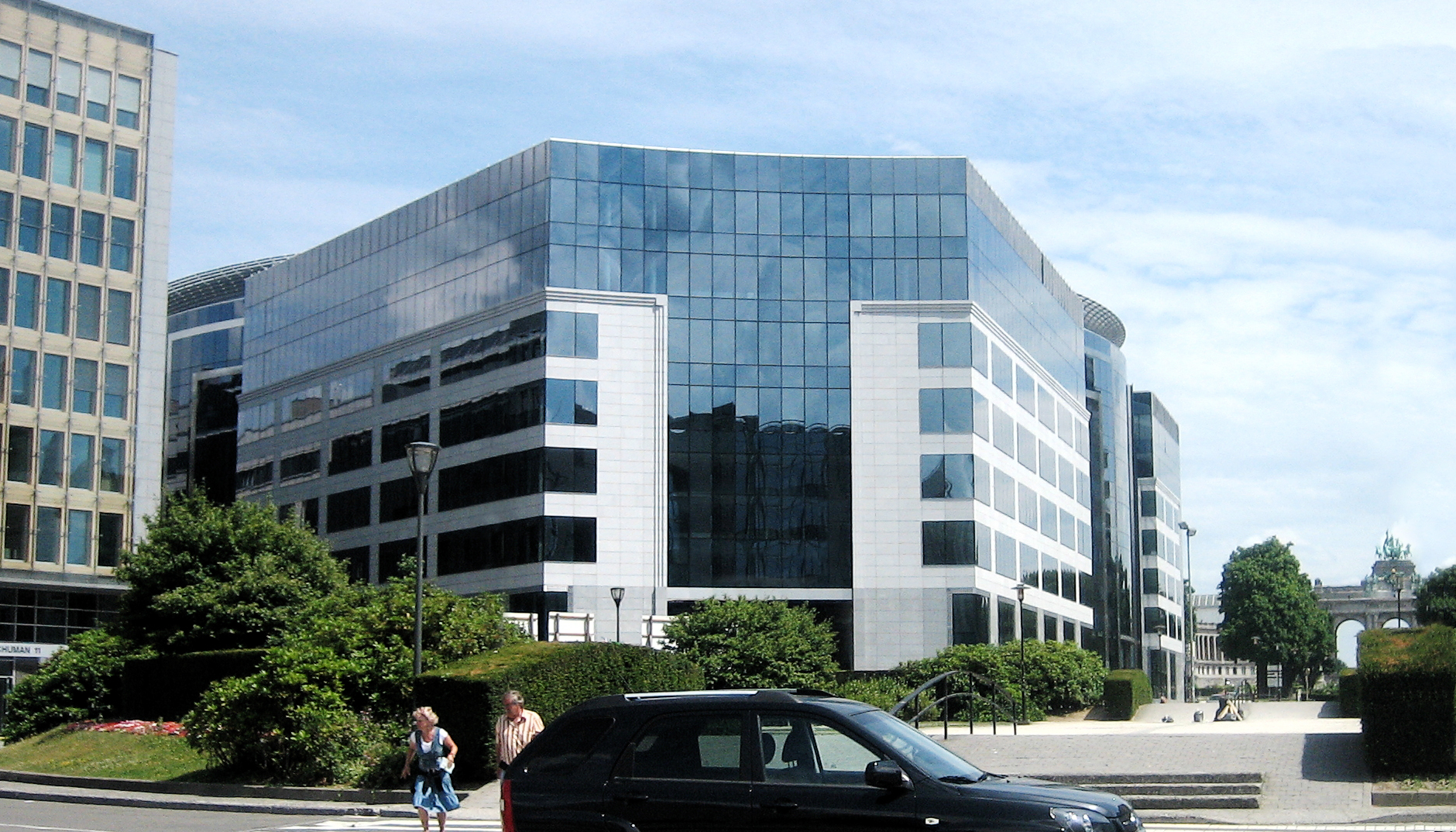
The EEAS settled into the Triangle building, also known as the Capital or Axa building, on Brussels' Schuman roundabout, in the heart of the EU Quarter. Ashton chose it in October 2010, after lengthy debate. The original preferred site, the Lex building on Rue de la Loi, had been the home of the now-defunct External Relations DG, but it was too small and its existing staff did not want to move. The Triangle's lease costs 12 million euros a year, but before the consolidation, EEAS staff had been scattered across eight separate buildings at a cost of 25 million annually. The High Representative also holds authority over the European Defence Agency, the EU Institute for Security Studies, and the EU Satellite Centre, though all three remain operationally autonomous. The EEAS and the European Defence Agency together form the secretariat of Permanent Structured Cooperation, the structural integration in defence launched by 25 EU member states in December 2017 (with Denmark joining as the 26th in 2023).
From the Air
Located at 50.8425 N, 4.3856 E on the Schuman roundabout in Brussels' European Quarter. The Triangle building sits across the roundabout from the Berlaymont (Commission HQ) and adjacent to the Justus Lipsius (Council). Recommended viewing altitude 2,500-4,000 feet. Visual landmarks include the Berlaymont's curved glass facade, the rectangular Justus Lipsius, and the Parc du Cinquantenaire arch to the east. Nearest major airport: Brussels Airport (EBBR), 10 km northeast.