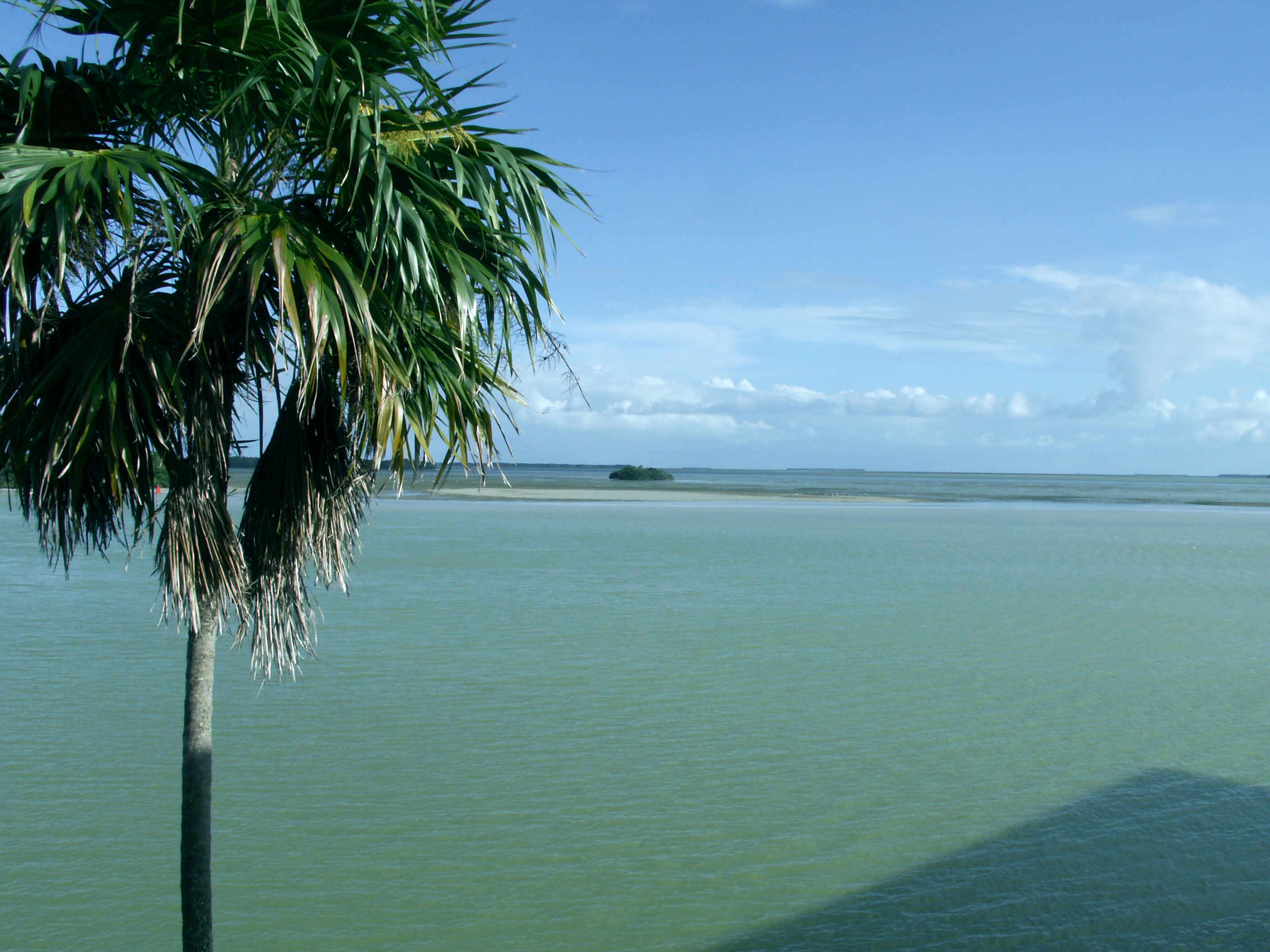
The Everglades: The River of Grass That Almost Died
The Everglades was never a swamp. It was a river - a 60-mile-wide sheet of water flowing imperceptibly southward from Lake Okeechobee to Florida Bay, so shallow you could wade across it, so slow you couldn't see it move. Marjory Stoneman Douglas named it 'the River of Grass' in 1947, the same year the National Park was established. By then, the river was already dying. Canals drained water for agriculture and development. The Everglades shrank to half its original extent. Pollution from sugar farms poisoned what remained. Now the largest environmental restoration project in history is trying to replumb South Florida, undoing a century of drainage to save what Marjory Douglas taught us to value.
The System
The Everglades began as rainfall on central Florida, draining into Lake Okeechobee, overflowing the lake's southern rim, and spreading across the peninsula in a sheet flow 60 miles wide and inches deep. The water moved south at roughly 100 feet per day - invisible current through sawgrass prairie, mangrove forest, and the unique 'sloughs' that provided deeper channels for wildlife. The flow sustained one of the world's most productive ecosystems: millions of wading birds, the only place on Earth where alligators and crocodiles coexist, and endemic species found nowhere else.
The Drainage
Florida's development demanded water control. Beginning in the early 1900s, canals diverted Lake Okeechobee overflow east and west to the ocean rather than south through the Everglades. The Central and Southern Florida Flood Control Project (1948) expanded the system, building 1,000 miles of canals, hundreds of structures, and massive pumping stations. The goal was flood control and agricultural development. The cost was the Everglades: by 1990, the original wetland had shrunk by half, water flow had been disrupted completely, and wading bird populations had crashed by 90%. The engineering worked as designed; the ecosystem collapsed as a result.
The Restoration
The Comprehensive Everglades Restoration Plan (CERP), authorized in 2000, is the largest environmental restoration project in history - over $10 billion, spanning 30+ years, attempting to replumb South Florida to restore more natural water flow. The plan removes canals, builds water storage, and reengineers flood control to let water flow south again. Progress has been slow; bureaucracy, politics, and competing water demands complicate every decision. The restoration cannot recreate the original Everglades - too much land has been developed - but it might save what remains. Success is not guaranteed. Nothing about the Everglades has ever been guaranteed.
The Wildlife
The Everglades remains one of North America's richest wildlife habitats. American alligators and American crocodiles both live here - the only place on Earth where both species coexist. Wading birds - herons, egrets, roseate spoonbills, wood storks - feed in the shallow waters. Manatees inhabit the coastal waters. The Florida panther (fewer than 200 remaining) roams the northern reaches. Invasive Burmese pythons, released by pet owners, are now apex predators competing with native species. The ecosystem is stressed, altered, threatened - and still teeming with life that exists nowhere else.
Visiting Everglades National Park
Everglades National Park covers 1.5 million acres - the third-largest national park in the lower 48. Primary access points are at Homestead (Ernest F. Coe Visitor Center), Shark Valley (north entrance with tram tours), and Everglades City (Gulf Coast, boat access). Dry season (December-April) is optimal for wildlife viewing; wet season brings mosquitoes and flooded trails. Anhinga Trail near the main entrance offers reliable alligator viewing. Airboat tours operate in adjacent waters (not within the park). Camping is available; no lodging exists within the park. Bring water, insect repellent, and patience - the Everglades reveals itself slowly to those who watch.
From the Air
Located at 25.35°N, 80.93°W across the southern tip of the Florida peninsula. From altitude, the Everglades appears as a vast wetland - green-brown sawgrass prairie extending to every horizon, punctuated by tree islands and sloughs. The straightness of the canals that disrupted the natural flow is visible from altitude - geometric lines cutting through organic patterns. Florida Bay lies to the south, its shallow waters turquoise. Miami's development borders the park to the east. The scale of the ecosystem is apparent from altitude: over a million acres of wetland, visible as the dominant landscape feature of South Florida.