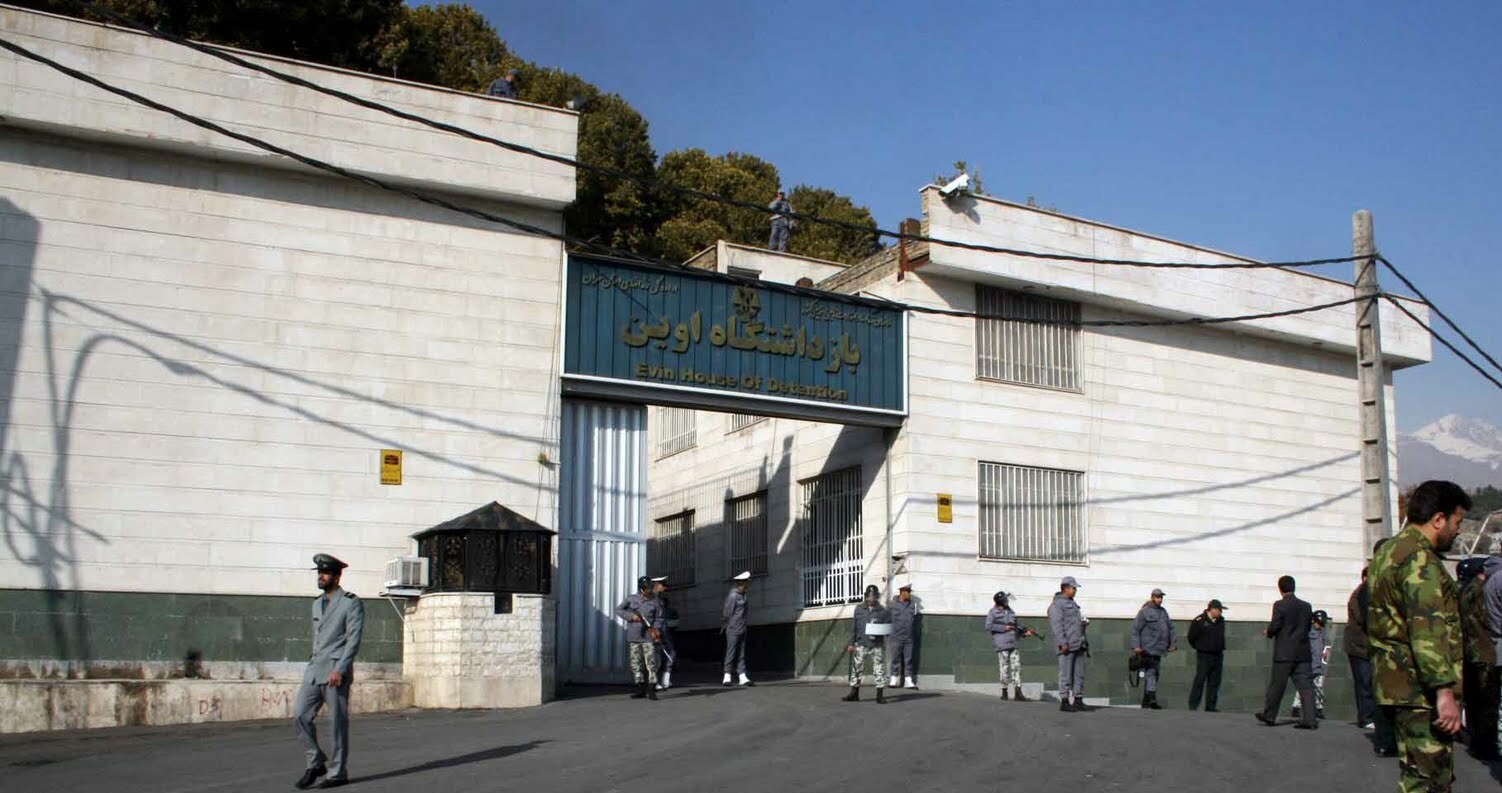
Evin Prison
Most prisons fade from public memory. Evin has done the opposite. Situated in the foothills of the Alborz Mountains in northern Tehran, this compound has become so synonymous with political repression in Iran that its very name functions as shorthand for an entire system of detention and coercion. Established in 1972 under the last Shah's secret police, SAVAK, Evin was designed from the start not merely to contain prisoners but to break them. What changed after the 1979 Islamic Revolution was not the prison's purpose but the identity of those who held the keys.
Built to Intimidate
The Shah's government commissioned Evin Prison in Tehran's northern Evin neighborhood, choosing a location that sat against the mountains, away from the city center and its prying eyes. Under SAVAK, the facility held dissidents, leftists, and critics of the monarchy. Torture was systematic. When the Islamic Revolution swept Iran in 1979, many of Evin's political prisoners were freed -- only for the prison to fill again under new management. The revolutionaries who had once suffered behind its walls now controlled them. The pattern repeated with grim efficiency: new regime, same cells, different prisoners.
Wards of Silence
Evin's layout tells its own story. Ward 209, operated by the Ministry of Intelligence, and Ward 2A, controlled by the Islamic Revolutionary Guard Corps, are reserved for political detainees. Prisoners held in these sections have described prolonged solitary confinement, interrogations lasting weeks, mock executions, sleep deprivation, and forced confessions recorded for state television. Reports from former detainees and international human rights organizations document beatings, electric shocks, and the deliberate denial of medical care. The prison has held journalists, academics, lawyers, women's rights advocates, trade unionists, and dual nationals from countries around the world. Many have been held without formal charges for extended periods.
Iran's Bastille
The comparison to the Bastille is one Iranians themselves make. Like its French counterpart, Evin has become less a place than a political symbol -- a single word that concentrates the grievances of an entire population against its rulers. During the 2009 Green Movement protests, mass arrests funneled thousands of demonstrators into the facility. Reports of abuse and deaths in custody during that period drew international condemnation. In October 2022, as the Mahsa Amini protests swept the country, a fire broke out inside the prison. Gunshots and explosions were reported. At least eight people died. Authorities blamed the blaze on inmates, but families and human rights groups challenged that account, pointing to the chaos of a system under pressure.
The Weight of Names
What distinguishes Evin from other sites of political detention is the prominence of many who have passed through it. Iranian-American journalist Roxana Saberi was imprisoned there in 2009. British-Iranian aid worker Nazanin Zaghari-Ratcliffe spent years detained between Evin and house arrest. Scholar Mahvash Sabet of the Bahai faith was held for a decade. The prison has housed Nobel Peace Prize laureate Narges Mohammadi, filmmaker Jafar Panahi, and human rights lawyer Nasrin Sotoudeh. These are the names the world knows. Thousands of others -- students, union organizers, ordinary citizens who posted criticism online -- have endured the same cells without attracting international attention. Their suffering is no less real for being anonymous.
Condemned and Continuing
The United Nations, Amnesty International, Human Rights Watch, and governments worldwide have repeatedly condemned conditions at Evin. International sanctions have targeted officials linked to the prison. Yet the facility continues to operate. Iran's government maintains that the prison houses criminals and security threats, rejecting most international criticism as interference. For the families gathered outside its walls waiting for news, and for the former inmates who carry its memory in their bodies, Evin remains what it has always been: the place where a government's fear of its own people takes physical form.
From the Air
Located at 35.80N, 51.43E in the northern foothills of Tehran, at the base of the Alborz Mountains. The prison compound sits in the Evin neighborhood of Shemiran district. Nearest major airport is Tehran Imam Khomeini International Airport (OIIE), approximately 55 km to the southwest, and Mehrabad International Airport (OIII), roughly 15 km to the south. The compound is difficult to distinguish from the air amid Tehran's dense northern suburbs, but the mountainous terrain to the north provides a visual reference. Best viewed at lower altitudes from the north.