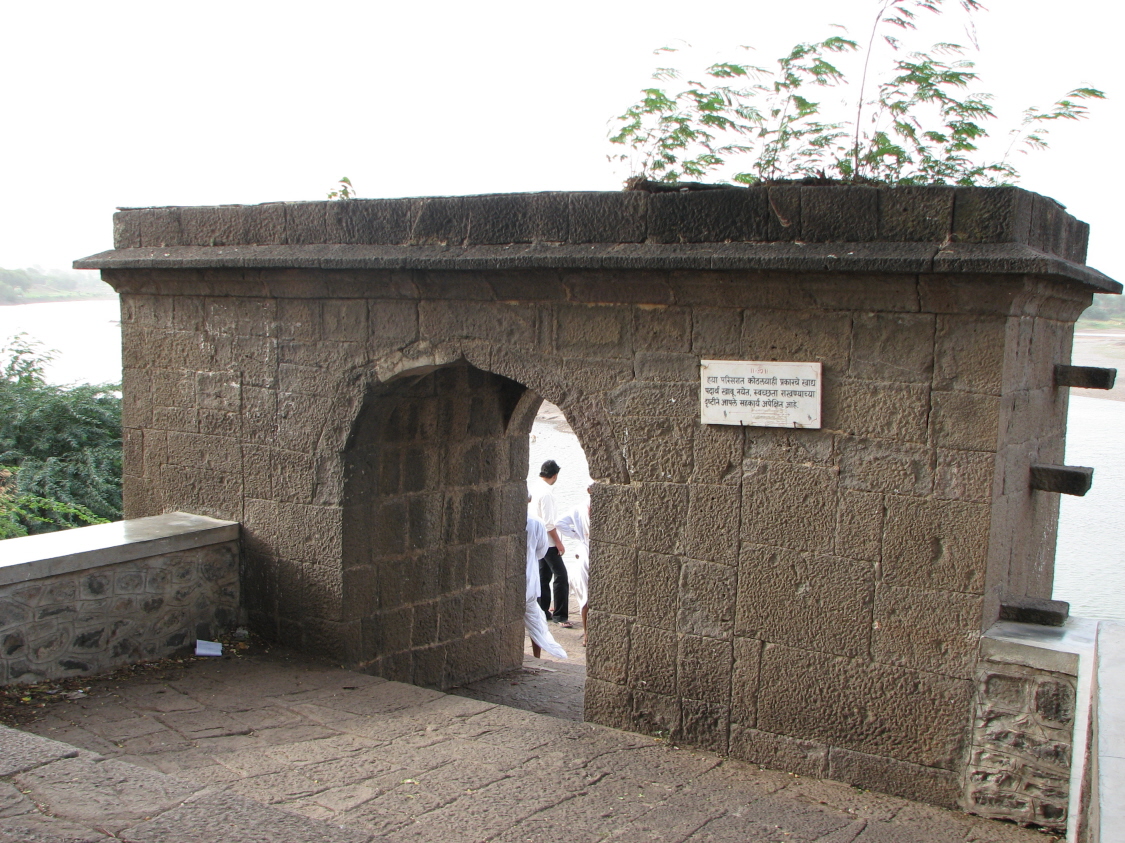
Execution of Sambhaji
On February 1, 1689, a group of Mughal soldiers dragged a man from a temple near Sangameshwar, in the forested hills of what is now Maharashtra. He had tried to flee, but the Mughals knew exactly where to find him. The man was Sambhaji, the second king of the Maratha Empire, son of the legendary Shivaji. Within weeks he would be dead, executed on the banks of the River Bhima by order of the Mughal emperor Aurangzeb. The story of how he came to that riverbank -- through battlefield valor, political betrayal, and the relentless southward expansion of Mughal power -- is one of the defining chapters of Deccan history.
A Kingdom Inherited, an Empire Provoked
Sambhaji's path to the throne was violent from the start. When his father Shivaji died in 1680, Sambhaji was held captive at Panhala fort -- imprisoned by his own father's ministers who opposed his succession. He escaped, proclaimed himself king, and eliminated those who stood in his way. Once in power, he continued his father's campaigns against Mughal expansion into the Deccan. But it was the Maratha sack of Burhanpur that proved decisive, drawing Aurangzeb personally southward. The emperor had another reason to move toward the Marathas: his own rebellious son, Prince Muhammad Akbar, had fled to Sambhaji's court seeking support. For Aurangzeb, who had spent decades consolidating Mughal authority, the Maratha kingdom was no longer merely an irritant. It was a direct challenge to his rule.
Betrayal at Sangameshwar
The Battle of Wai in December 1687 marked a turning point. The Maratha forces under Hambirrao Mohite won the field, but Mohite himself was killed by a cannonball. Sambhaji's military strength began to erode. He moved with a smaller contingent, his camp hemmed in by Mughal forces within the Raigarh and Panhala hills. Then came the betrayal. The Shirke faction within the Maratha ranks began feeding daily reports of Sambhaji's movements to the Mughals. Mughal commander Muqarrab Khan struck at Sangameshwar, catching the Marathas off guard. Five of Sambhaji's men were killed outright. The rest fled. Sambhaji's minister, the poet Kavi Kalash, was captured. Sambhaji himself escaped to a nearby temple, but the Mughals tracked him there. Twenty-five of his officers were captured alongside him.
The Riverbank at Tulapur
Muqarrab Khan transported his prisoners to Bahadurgad at Pedgaon in Ahmednagar district, where Aurangzeb was encamped. The emperor, upon hearing the news, was so pleased that he renamed the place Asadnagar to commemorate the capture. On March 11, 1689, at Tulapur on the banks of the Bhima River near its confluence with the Indrayani, Sambhaji was executed. With his death, Aurangzeb achieved what he had sought for years: dominion stretching from the Narmada River in the north to the Tungabhadra in the south. The land where Shivaji had once fought appeared subdued, with no visible signs of resistance remaining. The Mughal Empire had reached its greatest territorial extent on the subcontinent.
From Defeat to Martyrdom
History's verdict on Sambhaji is complicated. During his reign, he was unable to consolidate his father's achievements, and contemporary accounts describe a ruler whose judgment faltered under pressure. But his execution transformed him. In death, Sambhaji became a martyr -- a king who refused to submit to Mughal authority and paid with his life. His young son Shahu was taken captive by Aurangzeb and held for years before being released. Meanwhile, Sambhaji's brother Rajaram fled south to the Jinjee fort, and Maratha officers continued guerrilla raids across the northern Deccan. The empire Aurangzeb believed he had broken proved resilient. Within decades of Sambhaji's death, the Marathas would rise again to become the dominant power in the subcontinent. The site at Tulapur, in the countryside near modern-day Pune, marks where that long resurgence began -- not with a victory, but with a loss that refused to stay buried.
From the Air
Tulapur is located at approximately 18.669N, 73.996E, in the rural countryside of Maharashtra between Pune and Ahmednagar. The terrain is gently rolling Deccan plateau. Best viewed at 3,000-5,000 feet AGL. The River Bhima, along which the execution took place at Tulapur near its confluence with the Indrayani, is visible as a winding watercourse below. Nearest major airport is Pune Airport (VAPO), about 40 km to the southwest. The area near Sangameshwar where Sambhaji was captured lies in the more rugged Western Ghats to the south.