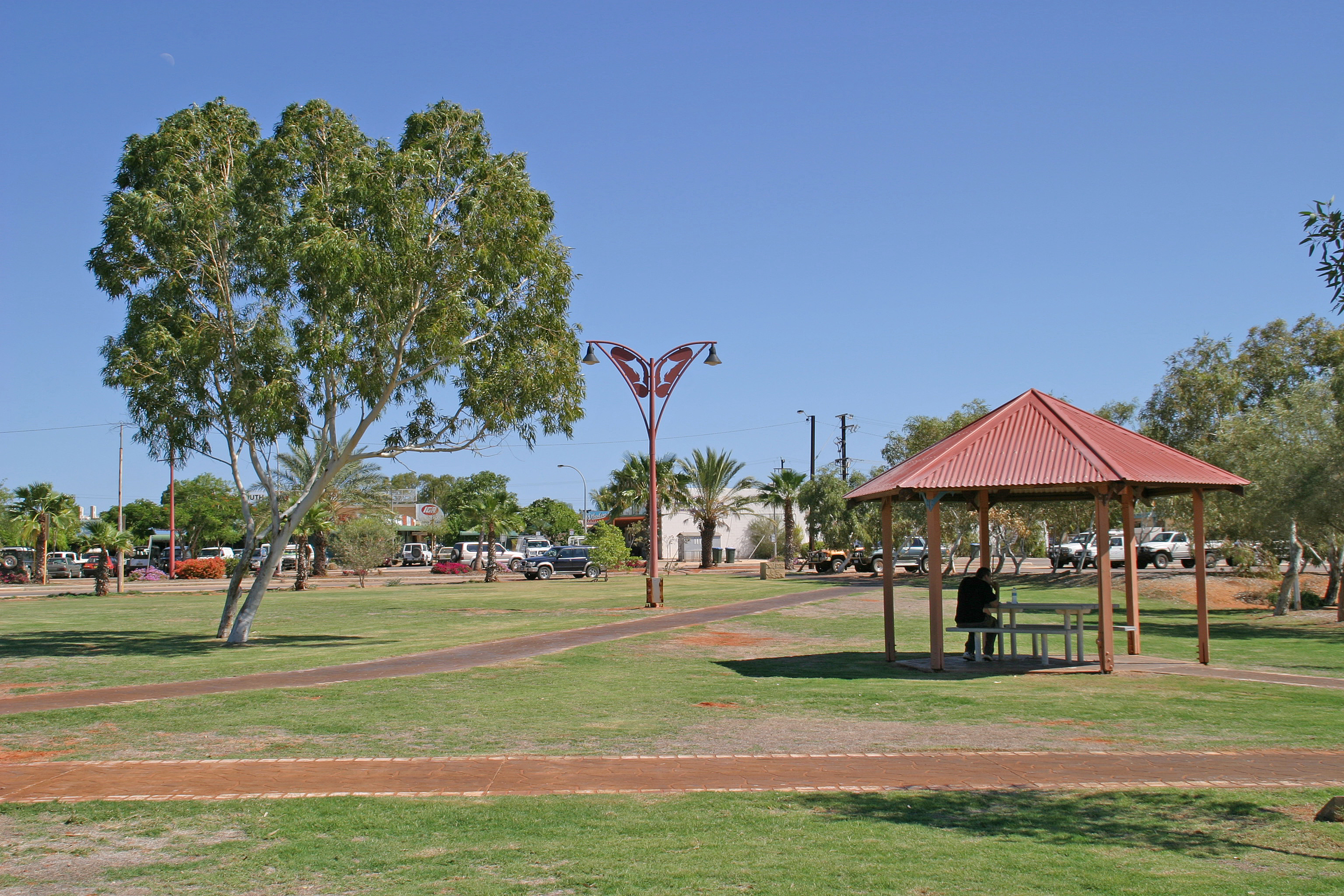
Exmouth (Western Australia)
The Allied commanders called it unpromising but said they'd give it a potshot. The name stuck. Operation Potshot in 1942 brought over a thousand American troops, an airfield, radar installations, and a submarine refuelling station to the remote tip of North West Cape in Western Australia. The Japanese threat faded within a year and the troops withdrew, but the airstrip stayed, and the name did too. Decades later, Exmouth is still here — a small town of just over two thousand people on one of the most isolated peninsulas on the continent, surrounded by some of the finest marine ecosystems on earth.
Before the Town
The Yinikutira people — also called the Jinigudira — were the original inhabitants of North West Cape. Dutch mariners were the first Europeans to see the coast, in 1618. Pearlers and whalers passed through in the late 19th century, but there was no permanent settlement until the war forced one. Even then, the civilian town only appeared in the 1960s, built to support the Naval Communications Station that went up at the cape's northern tip. The bay is shallow, the harbor is modest, and there are no valuable ore deposits to generate the frantic growth that transformed other Pilbara ports. Exmouth grew at the pace that remote towns in Western Australia grow: slowly, with purpose, and without much concern for what the rest of the country was doing.
The Reef at the Doorstep
Ningaloo Reef runs 260 kilometers along the coast and comes to within a few hundred meters of the shore near Exmouth — a proximity almost unheard of in the world's great reef systems. The water inside the lagoon is clear and calm. In April through June, whale sharks — the largest fish in the ocean — gather in the bay in numbers that draw visitors from around the world. Boat operators use spotter planes to find them; divers jump in and snorkel alongside creatures that can exceed 12 meters in length, moving through the water like road trucks lit by a glitter ball, as one guidebook memorably described it. Humpback whales fill the bay in autumn and spring. Turtles haul ashore seasonally near the lighthouse. The reef does not require effort to find.
Tower Zero
Six kilometers north of town, visible from the road as you approach the cape's tip, stands Tower Zero: a mast 387 meters tall, surrounded by a hexagon of twelve more towers, each between 303 and 358 meters high. Together they form the antenna system of Naval Communication Station Harold E. Holt, the most powerful transmission station in the Southern Hemisphere, broadcasting at 19.8 kilohertz — very low frequency, the only band that penetrates seawater and reaches submerged submarines. The base is off-limits to the public. Its purpose — maintaining contact with submarines in the Pacific and Indian Oceans — is visible only as an abstract geometry of steel cables against the sky. The station was commissioned in 1967 and named for Prime Minister Harold Holt, who vanished while swimming in Victoria three months after the ceremony.
Life at the End of the Road
Exmouth sits just north of the Tropic of Capricorn, which means the midday sun is nearly overhead from November through January. The interior landscape is arid, the beaches are long and largely empty, and the nearest city of any size is Perth — a three-day drive. The town has two IGA supermarkets, a craft brewery, a golf club, and a solar observatory that monitors space weather. Eating out costs roughly twice what it would in Perth, due to transport costs and limited competition. What the town lacks in conveniences it compensates for in access: the cape's national parks, canyons, and dive sites are within reach of a reasonable drive. You can always find a beach with almost no one on it.
From the Air
Exmouth is located at 21.94°S, 114.13°E on the North West Cape peninsula of Western Australia. From the air, North West Cape is a distinctive finger of land projecting northward into the Indian Ocean, with the turquoise waters of Ningaloo Reef visible along its western shore. The Naval Communications Station antenna array is visible as a hexagonal cluster of tall towers at the cape's northern tip. The nearest airport is YPLM (RAAF Learmonth), approximately 37 km south of town.