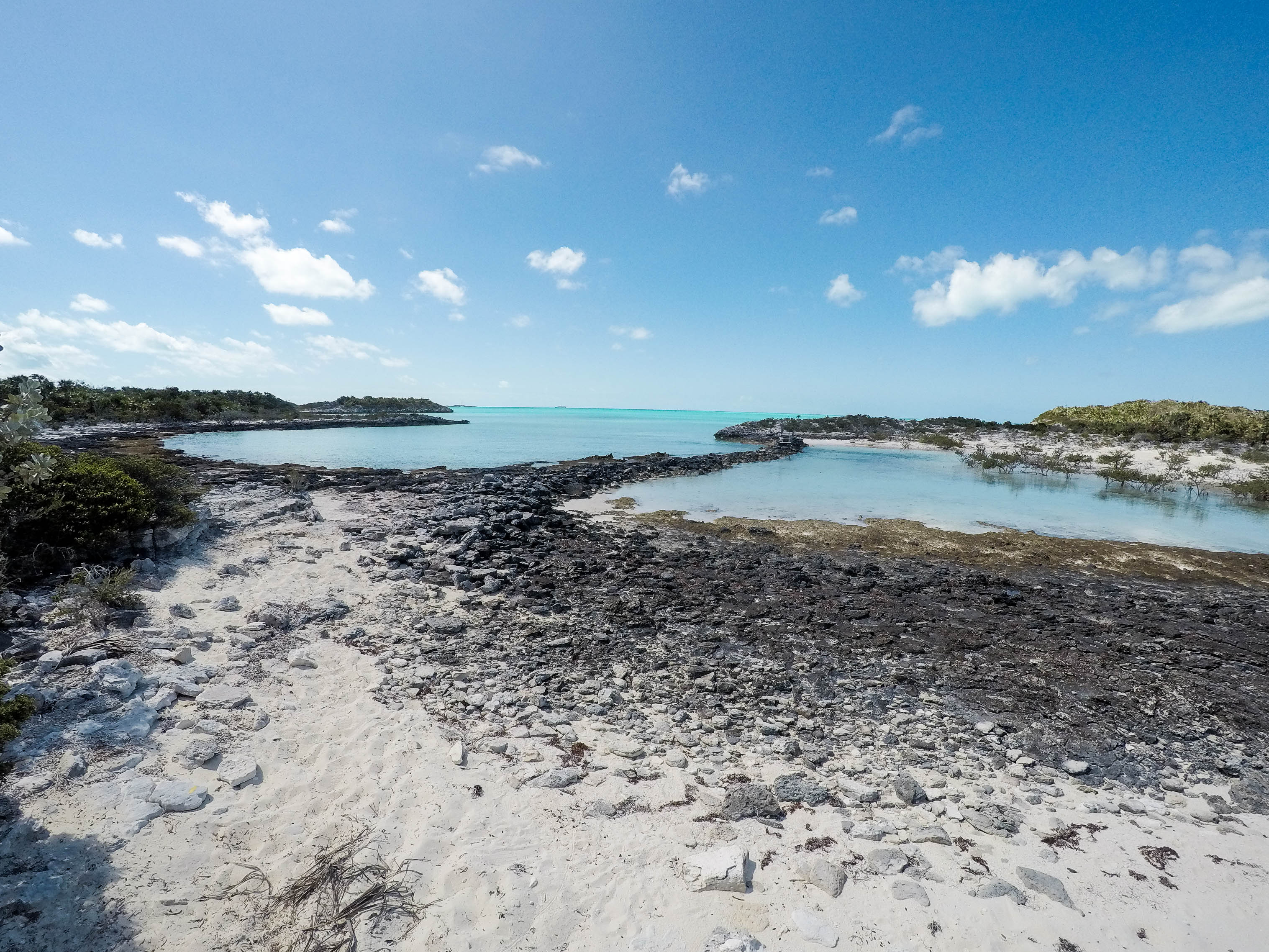
Exuma Cays Land and Sea Park
Only one species is licensed to fish here. In the Exuma Cays Land and Sea Park, ospreys plunge into water so clear you can count the scales on a yellowtail snapper from a boat deck, and nobody objects. Every other creature that wants to take something from these waters - including humans - is out of luck. Since 1985, this 176-square-mile stretch of the Exuma Cays has operated as a strict no-take marine reserve, the first land-and-sea park in the world and still one of the most successful. The park runs from Shroud Cay in the north to Bell Cay in the south, encompassing islands, reefs, sandbars, and some of the most biologically productive waters in the Bahamas.
A Bold Bet on Leaving Things Alone
The Bahamas National Trust established the Exuma Cays Land and Sea Park in 1958, making it the first land-and-sea park in the world. For its first three decades, the park allowed limited fishing - a compromise that satisfied almost nobody and protected almost nothing. Overfishing had hammered commercial species across the Bahamas, and the park's waters were no exception. Conch populations dwindled. Grouper became scarce. Lobster numbers fell.
In 1985, the Trust did something unusual for its era: it banned all fishing within park boundaries, turning the entire area into a replenishment zone. The decision was controversial, but the results were hard to argue with. Conch, grouper, and lobster populations rebounded inside the park, and the effects rippled outward. Marine species reaching maturity within the protected zone began restocking adjacent waters outside the park's boundaries - a spillover effect that turned conservation into an economic argument even skeptics could appreciate.
Islands of Orchids and Ancient Creatures
The park's headquarters sit on Warderick Wells, an island whose above-water landscape is just as carefully managed as the reef below. The eastern shores of the cays are clad in low, wind-sculpted scrub, while the western sides, sheltered from Atlantic weather, support taller vegetation. Mangrove communities thread through the shallows, and epiphytic orchids and bromeliads cling to branches in the interior - unexpected splashes of color on islands that look barren from a distance.
The endangered Allen Cays rock iguana, Cyclura cychlura inornata, survives on several islands in the Exumas. These prehistoric-looking reptiles, some reaching three feet in length, are among the rarest lizards in the world. The park also shelters the Bahamian hutia, the only terrestrial mammal native to the Bahamas, which was introduced to the park in 1973 as part of a conservation effort to establish a secure population away from mainland threats.
Wings Over the Water
Seabirds treat the park as a nesting sanctuary. White-tailed tropicbirds trail their long tail feathers across the sky above the cays, while brown noddies crowd rocky ledges in dense colonies. Six species of terns breed here - bridled, least, roseate, royal, sandwich, and sooty - their calls layering into a constant chorus during nesting season. Sargasso shearwaters skim the wave tops at dusk, skimming so low their wingtips seem to touch the surface.
And then there are the ospreys. Pandion haliaetus, the fish hawk, is the park's unofficial mascot and its only sanctioned fisherman. They build massive stick nests on the tallest available perches and hunt with a precision that makes the no-fishing rule feel almost personal. Watching an osprey fold its wings and drop feet-first into the shallows, emerging with a wriggling catch, is a reminder that this ecosystem was feeding predators long before humans showed up with hooks and nets.
The View from Above
From altitude, the Exuma Cays look like a handful of pale stones scattered across dark velvet. The water shifts through every shade of blue and green, the coral heads visible as dark patches against white sand bottoms. The park's boundaries are invisible, of course, but the difference between its waters and the fished areas beyond is measurable in the density of marine life below the surface.
The park has become a model for marine conservation across the Caribbean, demonstrating that protecting a relatively small area can generate benefits far beyond its borders. Scientists study the spillover effect here, tracking how fish populations inside the reserve seed recovery in surrounding waters. For the Bahamas, the park proves something counterintuitive: that the most productive thing you can do with a stretch of ocean is nothing at all.
From the Air
The Exuma Cays Land and Sea Park is centered at approximately 24.42°N, 76.69°W, stretching across the central Exuma Cays chain in the Bahamas. The park runs roughly north-south from Shroud Cay to Bell Cay. Park headquarters on Warderick Wells are visible as a cluster of buildings on the western shore. The nearest airports are Staniel Cay Airport (ICAO: MYES) to the south and Exuma International Airport (ICAO: MYEF) on Great Exuma further south. Nassau's Lynden Pindling International Airport (ICAO: MYNN) lies approximately 120 km to the north. From altitude, the cays appear as a thin chain of pale islands with vivid turquoise shallows on the western (bank) side and deeper blue Atlantic waters to the east. Coral heads are visible through the clear water at lower altitudes. Weather is tropical with good visibility most of the year; hurricane season runs June through November.