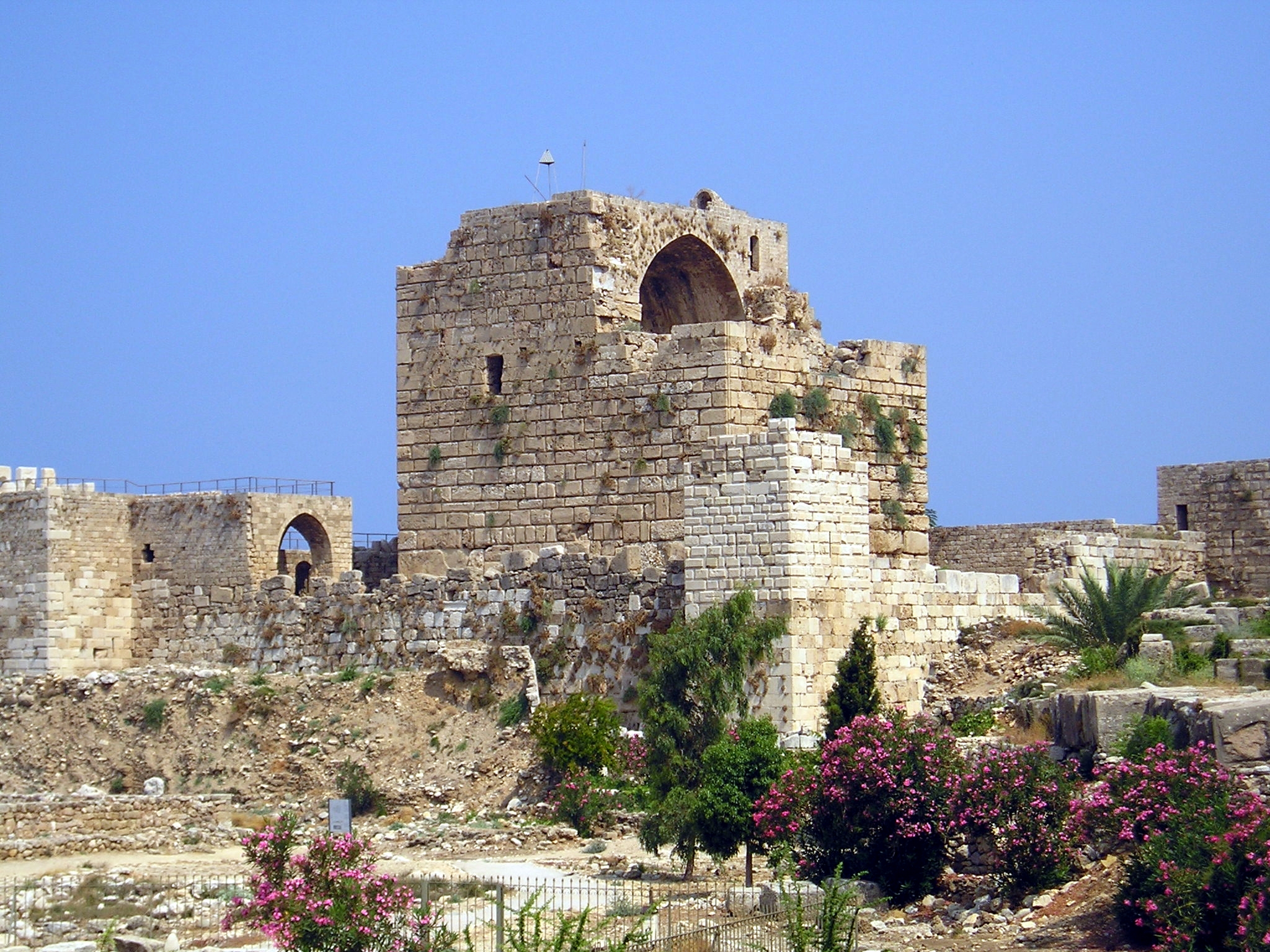
Fall of Tripoli (1289)
Two men went down to Alexandria. According to the chronicle known as the Templar of Tyre, they carried a warning to the Mamluk Sultan Qalawun: the Genoese were consolidating their grip on the port of Tripoli, and if left unchecked, 'they will rule the waves.' It was exactly the excuse Qalawun needed. He had a truce with the Crusader County of Tripoli, but the bickering Christian factions had handed him the pretext to break it. In March 1289, his army arrived with catapults. By April, a city that had been Christian for 180 years lay in ruins.
A County Between Empires
The County of Tripoli occupied one of the most precarious positions in the medieval world. Founded as a Crusader state, it had been a vassal of the Mongol Empire since around 1260, when Bohemond VI submitted to the rapidly advancing Mongols under the influence of his Armenian father-in-law, Hethum I. Tripoli had even provided troops for the Mongol sack of Baghdad in 1258 and the invasions of Syria in 1260 -- alliances that deepened the rift with the Muslim powers. But the Mongols proved unreliable protectors. Their westward expansion stalled amid internal conflicts, and when Abaqa Khan died in 1282, his successor Tekuder converted to Islam and showed no inclination to defend Christian territories. The Egyptian Mamluks, based in Cairo after the destruction of the Abbasid and Ayyubid centers of power, advanced steadily northward, conquering Margat in 1285 and Lattakiah in 1287.
Christians Divided
What the Mamluks could not accomplish by force alone, the Crusaders helped achieve through their own discord. After Bohemond VII died in 1287, a succession crisis tore the county apart. His sister Lucia, rightfully the heir, was in far-off Apulia. His mother Sibylla of Armenia tried to appoint the Bishop of Tortosa to rule in her stead, but the local knights refused: the bishop was their enemy, they said, and they would not tolerate his authority. Lucia eventually arrived to claim leadership, but the knights and barons had already formed a commune under Bartholomew Embriaco. The Genoese merchant magnate Benedetto Zaccaria inserted himself into the tangle, brokering secret deals with all sides and extracting expanded trading concessions from Lucia. When these arrangements became public, the concern was not just local -- someone carried the intelligence straight to Sultan Qalawun.
Catapults Against the Walls
Qalawun arrived in March 1289 with a massive army and siege catapults. The defenders scrambled. Lucia was given supreme authority. In the harbor sat four Genoese galleys, two Venetian, and a few small Pisan boats. Reinforcements came from the Knights Templar under Geoffroy de Vandac, the Hospitallers under Matthew of Clermont, a French regiment from Acre under John of Grailly, and a company of Cypriot knights led by Prince Amalric. Many non-combatants fled to Cyprus before the siege closed. Two towers crumbled under bombardment, and as the walls gave way, the Mamluks overran the city on 26 April 1289. Lucia escaped by ship to Cyprus with Amalric and two marshals of the military orders. The Templar commander Peter of Moncada and Bartholomew Embriaco were killed. The population was massacred, though many managed to reach the boats in time.
Razed and Rebuilt Elsewhere
Those who took refuge on the nearby island of Saint-Thomas were captured three days later. Women and children were enslaved. Twelve hundred prisoners were sent to Alexandria to labor in the Sultan's new arsenal. Qalawun ordered Tripoli razed to the ground and a new city built inland, at the foot of Mount Pilgrim. Nearby Nephin and Le Boutron soon fell as well. Only Peter of Gibelet held his lands around Byblos for another decade, buying time with tribute payments to the Sultan. Two years later, in 1291, Acre -- the last major Crusader outpost in the Holy Land -- fell in a siege that many historians consider the end of the Crusades. The final Templar garrison, on the island of Ruad, was taken in 1302. The Levant's two centuries of Frankish presence were over.
From the Air
Note: This article describes the Fall of Tripoli in present-day Lebanon, not Tripoli, Libya, though the catalog geohash places it in Libya. The historical County of Tripoli was centered on modern Tripoli, Lebanon (34.44°N, 35.85°E). The island of Saint-Thomas (now Abdel Wahab Island) is visible in the harbor of modern el-Mina. Nearby airports include Beirut-Rafic Hariri International Airport (OLBA). Recommended viewing altitude: 5,000-8,000 feet to see the harbor, the island, and Mount Pilgrim to the southeast.