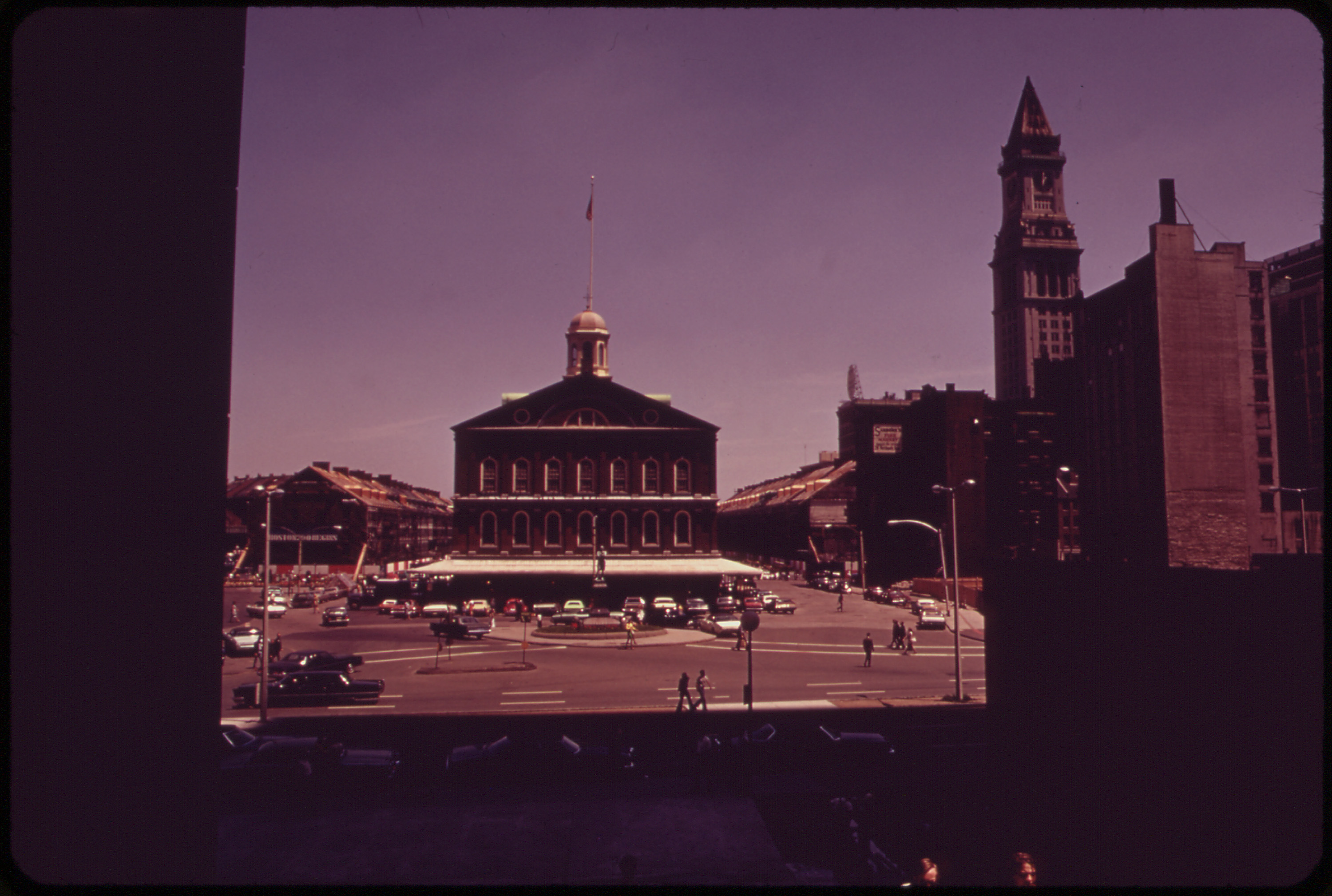
Faneuil Hall: The Cradle of Liberty Built on Slavery's Profits
Atop Faneuil Hall, a gilded grasshopper weather vane has spun in the harbor winds since 1742. Created by Deacon Shem Drowne and modeled after the one atop London's Royal Exchange, it once served as a test of true Bostonian identity -- during the Revolution, anyone who could not name the creature on Faneuil Hall's roof was suspected of being a British spy. The grasshopper has survived fire, theft, and nearly three centuries of New England weather. The building beneath it has endured something harder: the tension between its origins in the slave trade and its role as the place where American freedom found its voice.
A Gift Accepted by Seven Votes
In 1740, Peter Faneuil was one of Boston's wealthiest merchants. He was also a slave trader, and the profits that built his fortune flowed in part from human misery. When he offered to build a public market house and meeting hall at his own expense, the town debated fiercely. A vote of thanks passed unanimously, but the offer itself squeaked through by just seven votes, 367 to 360. Some of Boston's early slave auctions took place near the building that rose in Dock Square. Artist John Smibert designed it in the style of an English country market, with an open ground floor for commerce and an assembly room above for public discourse. Within two years, the hall was complete. Within two decades, it would become the stage for revolution.
Where Liberty Found Its Tongue
Samuel Adams stood in the second-floor assembly room and spoke the words that would unravel an empire. James Otis thundered against the Writs of Assistance. In 1767, Bostonians signed a petition to boycott imported goods. In December 1773, meetings about the tea that had arrived aboard the ship Eleanor spilled out of these walls and toward the harbor. The British understood the building's power -- during their occupation of Boston in 1775, they converted the meeting hall into a theater, a pointed act of cultural subjugation. But the voice that had awakened in Faneuil Hall could not be silenced by stagecraft. Daniel Webster eulogized John Adams and Thomas Jefferson here in 1826. Edward Everett spoke within these walls. Wendell Phillips delivered his fiery oratory. The hall earned its nickname: the Cradle of Liberty.
The Abolitionists' Refuge
The deepest irony of Faneuil Hall is that the building funded by slave trading profits became a fortress of the abolitionist movement. In the 1830s, abolitionists gathered here and formed the Committee of Vigilance and Safety, pledging to "take all measures that they shall deem expedient to protect the colored people of this city in the enjoyment of their lives and liberties." In 1854, after the arrest of Anthony Burns under the Fugitive Slave Act, a public meeting filled the hall demanding justice "for a man claimed as a slave by a Virginia kidnapper." In August 1890, Julius Caesar Chappelle, one of the first Black legislators in the United States, stood in the Cradle of Liberty and made a passionate speech endorsing the Federal Elections bill to secure Black voting rights. The New York Age printed his words on its front page.
A Stage That Never Goes Dark
Faneuil Hall has never stopped being a place where history happens. In 1898, a meeting here launched the American Anti-Imperialist League, whose vice-president would later be Mark Twain. Senator Edward Kennedy declared his presidential candidacy from this podium in 1979. John Kerry delivered his concession speech here in 2004. In 2006, Governor Mitt Romney signed Massachusetts' health care law with a fife and drum band playing before 300 guests, and in 2013, President Obama returned to that same spot to defend the Affordable Care Act. The fourth floor houses the Ancient and Honorable Artillery Company of Massachusetts, which has maintained its headquarters here since 1746. Its military museum, with free admission, is one of Boston's best-kept secrets.
The Name That Won't Stay Settled
Even the pronunciation of "Faneuil" remains a small act of defiance. The French name is anglicized to rhyme with "Daniel" or "panel," though colonists once said it like "funnel" -- James Fenimore Cooper wrote Bostonian characters calling it "Funnel Hall" in his 1825 novel. The building was destroyed by fire in 1761, rebuilt in 1762, expanded by Charles Bulfinch in 1806, entirely rebuilt in noncombustible materials in 1898, and designated a National Historic Landmark in 1960. In 2017, activists proposed changing the name because of Peter Faneuil's role in the slave trade. Boston's mayor refused. Protesters chained themselves to the front door. Others staged a sit-in at City Hall. The grasshopper keeps spinning above it all, indifferent to the debates below -- just as it has since the year this complicated, essential building first opened its doors to the public argument that is American democracy.
From the Air
Faneuil Hall sits at 42.36N, 71.056W in downtown Boston, near the waterfront and Government Center. From the air, look for the distinctive brick building near Quincy Market's long granite structures. The gilded grasshopper weather vane is the building's signature feature. Boston Logan International Airport (KBOS) is approximately 4km to the east across the harbor. Best viewed at 1,500-2,500 feet altitude. The Freedom Trail passes directly through the site. Nearby visual landmarks include Boston City Hall's Brutalist architecture and the harborfront.