Faro Cathedral
In 1596, an English fleet commanded by the Earl of Essex sailed into Faro and burned the city. Among the structures destroyed was the cathedral, the Se de Faro, which had stood on its hilltop site for over three centuries. The attack was an episode in the Anglo-Spanish War, and the cathedral was simply collateral damage in a larger conflict. But the building that rose from the ashes carried the scars of that destruction into its DNA, mixing Gothic bones with Baroque embellishments and the restrained geometry of the Portuguese Plain Style into a structure that defies easy architectural classification.
Sacred Ground, Many Faiths
The cathedral premises have a long tradition of sacredness, though the earliest layers lie beyond the reach of archaeology. According to local tradition, a Paleo-Christian basilica occupied the site before the Moorish conquest, and the basilica was subsequently converted into a mosque during the centuries of Arab rule in the Algarve. When King Afonso III reconquered Faro in 1249, the mosque was converted once more, this time into a Christian church. A mother church, the predecessor of the current cathedral, was rebuilt on the site shortly afterward. The origins of the present structure are traced to the middle of the 13th century, making it one of the oldest continually sacred sites in the Algarve, a place where three faiths worshipped in succession on the same ground.
Bones and Bells
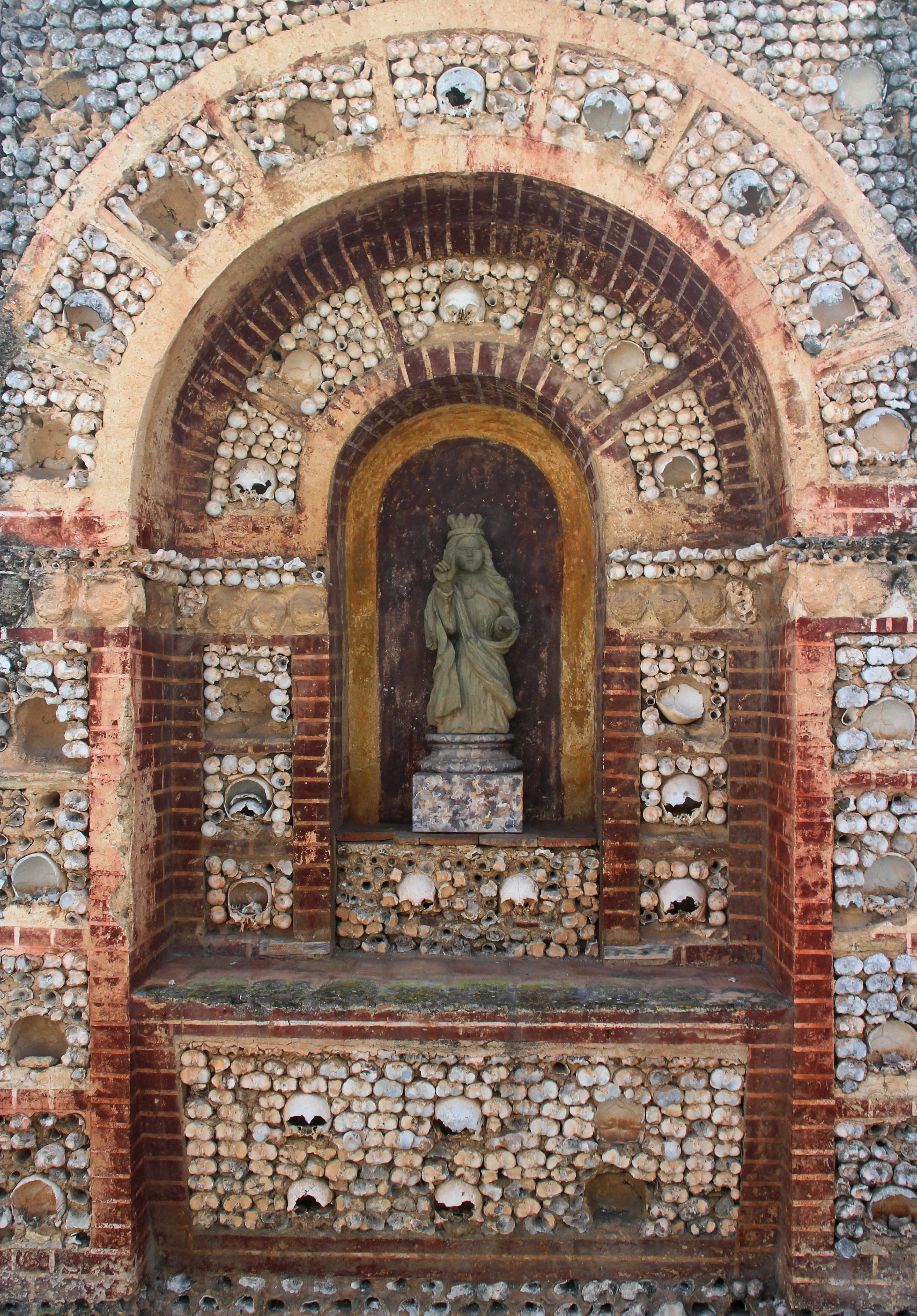
The cathedral's most unsettling feature is an outdoor ossuary arranged in the form of an altar. Human bones, stacked and fitted into a devotional display, greet visitors with a directness that modern sensibilities find startling. The practice of bone chapels and ossuaries was common in Portuguese churches of this period, reflecting a Catholic theology that emphasized the brevity of earthly life and the proximity of death. A similar bone altar exists at the nearby Church of Nossa Senhora in Faro. Inside, the contrast shifts from mortality to music: Johann Heinrich Hulenkampf installed the cathedral's organ in the 18th century, and the instrument's pipes and carved case remain among the most notable features of the interior. The bell tower, rising above the mixed architectural facade, serves as a landmark in Faro's old town.
A Cathedral of Many Styles
The destruction wrought by the Earl of Essex's raid, combined with the rebuilding that followed, left Faro Cathedral as a composite of eras. Gothic elements survive in the structural bones, pointed arches and ribbed vaults from the original 13th-century construction. The Baroque arrived during the 17th and 18th centuries, adding gilded woodwork and decorative exuberance to the interior. The Portuguese Plain Style, a distinctly national architectural idiom characterized by restraint and geometric clarity, tempers the whole, keeping the Baroque from overwhelming the Gothic foundations. Since 1540, when King John III transferred the diocesan seat from Silves to Faro, the cathedral has served as the seat of the Diocese of Faro, the spiritual center of the Algarve. Its classification as a National Monument of Portugal acknowledges not just architectural merit but the building's role as a palimpsest of the region's tumultuous history.
From the Air
Located at 37.013N, 7.935W in the old town of Faro, the capital of the Algarve region in southern Portugal. The cathedral and its bell tower are visible within the walled old town (Cidade Velha) near the waterfront of the Ria Formosa lagoon. Faro Airport (LPFR) is approximately 5 km west, making this easily visible on approach. Best viewed at 1,500-3,000 ft AGL.