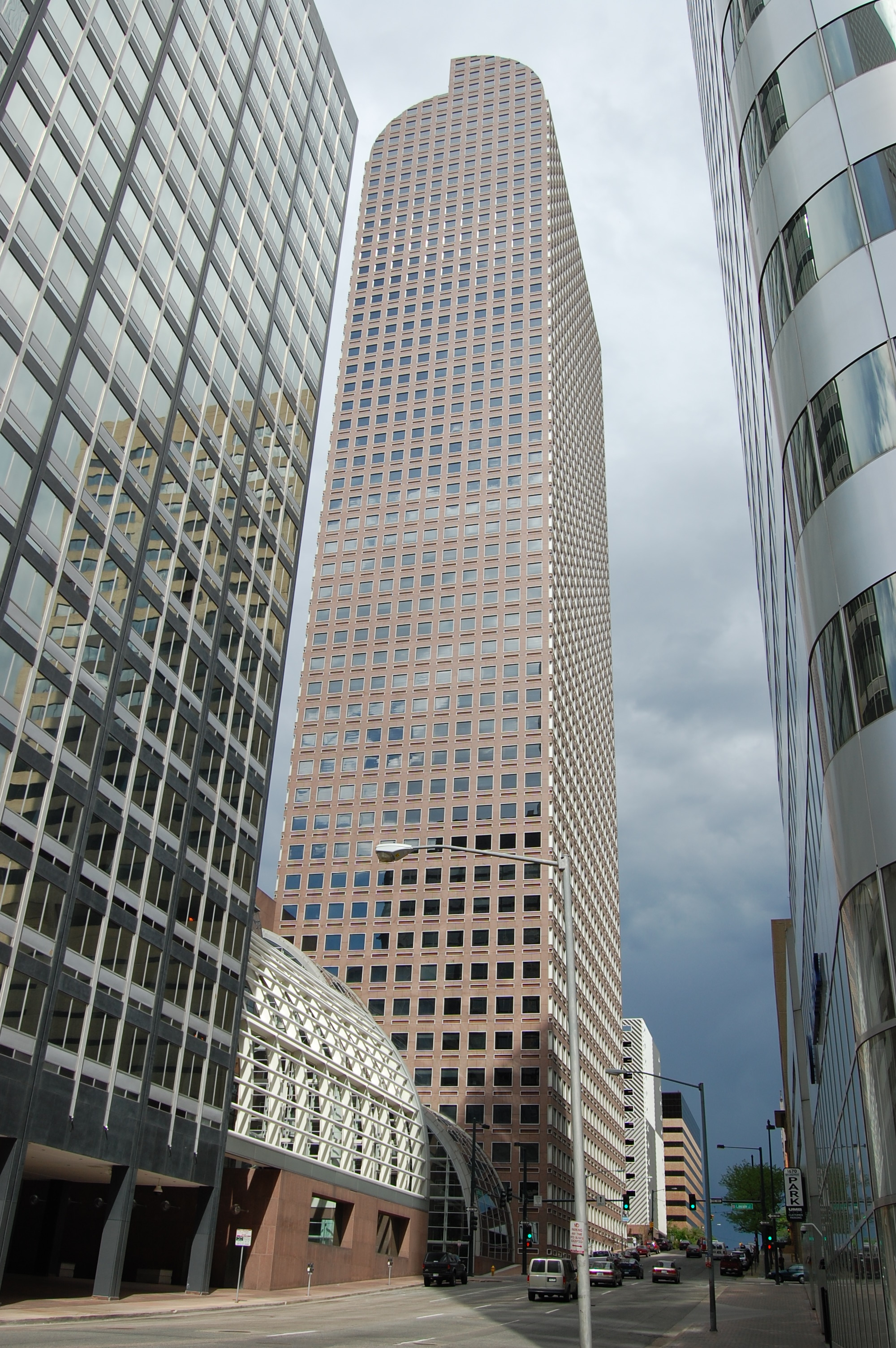
Father's Day Bank Massacre
Seventeen of eighteen shots found their targets. On the morning of June 16, 1991, as families across Denver prepared Father's Day celebrations, a gunman moved through the basement corridors of the United Bank Tower with terrifying precision. By 9:56 a.m., four unarmed security guards lay dead, six vault tellers had been locked in a mantrap, and roughly $200,000 had vanished. What baffled investigators most was not what the killer took, but what he left behind: over $2 million in cash, untouched in the vault. More than three decades later, the Father's Day bank massacre remains Denver's most haunting cold case.
Forty-Two Minutes of Terror
The timeline reconstructed from electronic records reveals a chillingly methodical crime. At 9:14 a.m., a man identifying himself as Robert Bardwell, a bank vice president, called the guard room from a street-level security phone requesting entry through a freight elevator. Guard William McCullum Jr. responded, riding the elevator up to meet him. The killer forced McCullum to the subbasement, shot him, hid the body in a storage room, and took his electronic pass card. Moving through the basement tunnels, the intruder triggered an alarm at 9:20 a.m. but pressed on to the guard station. There he forced guards Phillip Mankoff and Scott McCarthy into a battery room and killed them both. A third guard, Todd Wilson, apparently returned during or just after the shooting and was killed feet from where his colleagues had fallen.
A Deliberate Restraint
The vault door opened at 9:48 a.m. Six employees were processing cash deliveries when the gunman entered, ordering them to cover their eyes and lie face down. He directed senior vault manager David Barranco to fill a satchel with cash from the work stations. Then something strange happened: the robber stopped. With more than $2 million within reach, he took roughly $200,000, barely ten percent of what was available. He forced the tellers into a mantrap, a small security room near the vault, and escaped by 9:56 a.m. The tellers freed themselves twenty minutes later using a broken spoon found on the door sill. Before leaving, the killer had seized ten security videotapes, bank keys, a two-way radio, and pages from the guard logbook. He knew exactly what evidence to destroy.
The Trial That Riveted America
More than forty FBI agents and two dozen detectives worked the case. The eighteen rounds fired suggested a police-issued load. Investigators focused on James King, a retired Denver police officer who had worked as a part-time bank guard from 1989 to 1990, leaving ten months before the robbery. King had declared bankruptcy and carried $25,000 in credit card debt. A map of the bank's interior was found in his home in a folder labeled "plans." His .38 Colt Trooper, the same type of weapon used in the crime, had disappeared. He claimed a chess club alibi that no one could corroborate. King was arrested on July 4, 1991, and his trial aired nationally on Court TV. After days of deliberation, the jury acquitted him. The defense had presented another viable suspect: former guard Paul Yoccum, who had previously been tried and acquitted for stealing $30,000 from a bank ATM. Yoccum died of a heart attack four months after King's acquittal.
The Questions That Remain
None of the stolen money was ever recovered. The case file remains open, classified as a cold case by Denver police. What continues to puzzle investigators is the killer's restraint, both in the amount stolen and in sparing the vault employees after executing four guards. The guards had been unarmed, presenting no greater threat than the tellers. Some theories suggest the killer had a personal grudge against the security staff. Others point to the surgical precision of the crime, the evidence destruction, the specific amount taken, as signs of careful premeditation. Robert Bardwell, the vice president whose name the killer used, had reported his bank access card missing on August 13, 1990. James King resigned from the bank on August 12, 1990. Coincidence or not, it remains one detail among many in a case where all the evidence led nowhere conclusive. The Wells Fargo Center, as the building is now known, rises over downtown Denver, its basement corridors holding secrets that may never be revealed.
From the Air
The former United Bank Tower, now the Wells Fargo Center, stands at 39.744N, 104.985W in downtown Denver. The 52-story tower is visible from considerable distance as one of the tallest buildings on the Denver skyline. Best viewed from 4,000-6,000 feet AGL. Nearest airports: Denver International (KDEN) 25nm northeast, Centennial (KAPA) 15nm southeast. The building sits approximately 3 blocks southeast of Denver Union Station.