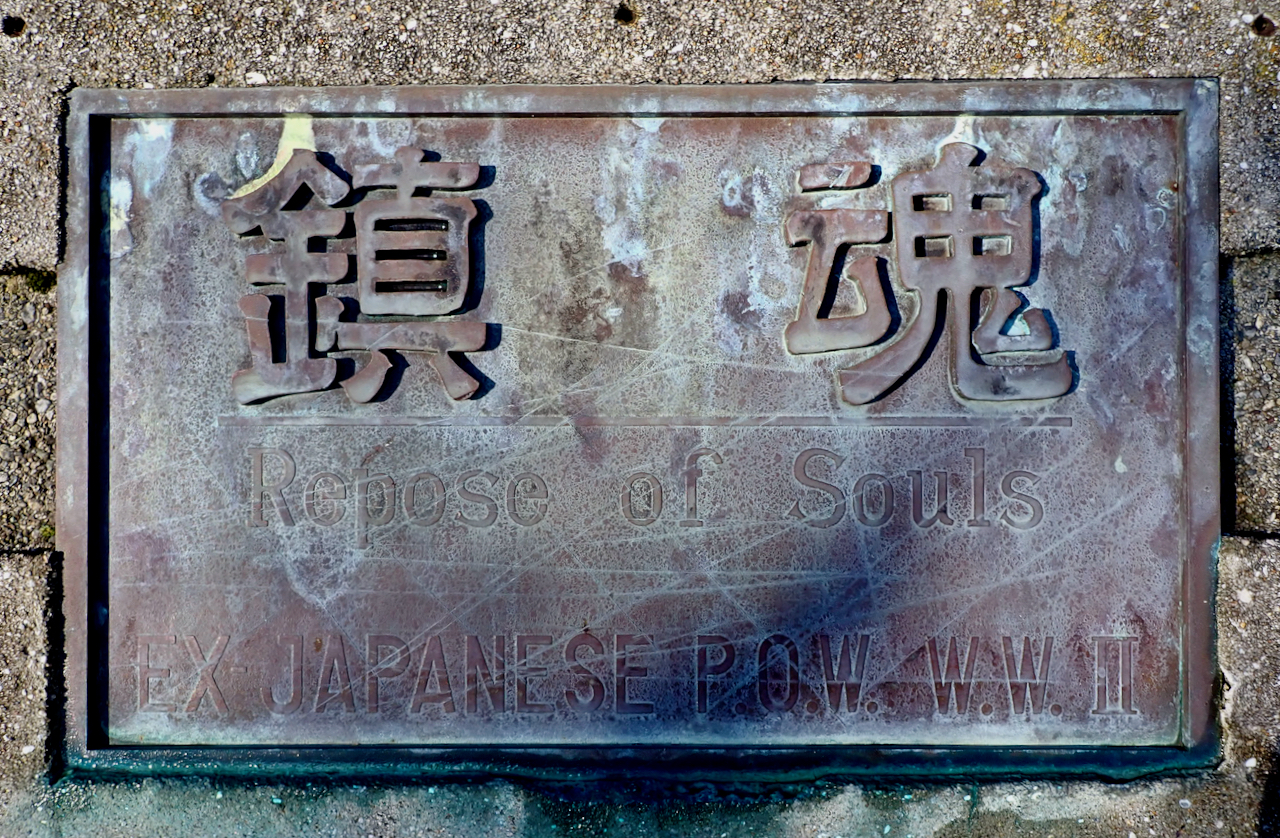
Featherston Prisoner of War Camp
On 25 February 1943, guards at a prisoner-of-war camp in the small Wairarapa town of Featherston opened fire on Japanese prisoners. In 15 to 30 seconds of shooting, 48 prisoners were killed or mortally wounded and 74 others injured. One New Zealand soldier, Private Walter Pelvin, died from a ricochet. The incident was immediately suppressed. At Greytown Hospital, windows of the ward treating wounded prisoners were blacked out, and every staff member who had contact with them was replaced to prevent word from reaching the public. For decades, what happened at Featherston remained one of New Zealand's most tightly guarded wartime secrets.
A Camp of Untrained Guards
Featherston Military Camp had served as a training ground for New Zealand soldiers since World War I. In September 1942, at the request of the United States, it was re-established as a prisoner-of-war facility. The staff assigned to guard the prisoners were those deemed unfit for overseas service: too young, too old, or medically unable. They received almost no training in how to manage prisoners of war and were given only a vague understanding of their role. In total, 868 Japanese soldiers and paramilitary personnel captured in the South Pacific were brought to Featherston, many of them conscripts. The larger group were Koreans and forced labourers who had been working at Henderson Field on Guadalcanal. The smaller group, about 240 men, were officers and enlisted personnel of the Imperial Japanese Army and Navy, including roughly half the surviving crew of the cruiser Furutaka, sunk during the Battle of Cape Esperance, and the 19 survivors of the destroyer Akatsuki.
The Shooting
The camp was divided into four compounds. Prisoners lived eight to a hut, wearing blue-dyed New Zealand Army uniforms with khaki diamond patches. Tensions had been building. At the core of the conflict was a fundamental misunderstanding: the Japanese prisoners did not know that under the 1929 Geneva Convention on Prisoners of War, which Japan had signed but never ratified, compulsory labour was permitted. They believed they were being forced to work illegally. The exact sequence of events on 25 February remains disputed. A Japanese officer was forcibly removed from one of the compounds. The adjutant threatened another officer with a revolver and fired a shot near him, then a second that struck and wounded Sub-Lieutenant Adachi. Prisoners began throwing stones. What happened next was described as a rush toward the guards. The guards opened fire with rifles, sub-machine guns, and pistols. The burst lasted between 15 and 30 seconds. Thirty-one prisoners died immediately; 17 more died of their wounds at hospital.
Silence and Inquiry
The military moved quickly to contain the story. The only public acknowledgment was a brief newspaper notice reporting that Private Pelvin had died from wounds sustained at a prisoner-of-war camp. A military court of inquiry placed most of the blame on the prisoners, a conclusion that subsequent historians have called erroneous. The inquiry did acknowledge that cultural differences had contributed to the breakdown, particularly the prisoners' ignorance of Geneva Convention provisions on compulsory work. The Red Cross, which had previously visited and pronounced conditions normal, was not publicly implicated. It would take decades for the full story to emerge, and when it did, it raised uncomfortable questions about how untrained, underequipped guards had been placed in charge of hundreds of men from a military culture they did not understand.
Lives Between the Wire
Beyond the violence of that February day, life at Featherston had its own quiet rhythms. Each compound elected its own leader, who organized daily tasks, maintained order, and communicated complaints to the camp commander. Prisoners levelled ground to build a tennis court, fashioning nets and rackets from scrap materials. Mahjong sets were carved from wood. Movies screened roughly once a fortnight, and some prisoners staged traditional costume plays in the recreation huts. These were people making a life within confinement, finding ways to sustain culture and dignity in captivity. After the war ended, the prisoners were loaded onto ships for the journey home. The vessels stopped at Guadalcanal, where the Japanese held a ceremony to remember their dead. They eventually disembarked at Uraga, Kanagawa, on 4 February 1946.
Cherry Blossoms at the Gate
Today, cherry trees stand at the site of the former camp. They bloom each spring in a place where most New Zealanders once had no idea anything had happened at all. The Featherston incident appears on New Zealand's official list of massacres. A television programme called Heritage Rescue devoted an episode to the site, bringing the story to a wider audience. The memorial is quiet, set in pastoral Wairarapa farmland with the Remutaka Range as a backdrop. There are no grand monuments. The cherry trees are the memorial, their annual flowering a Japanese tradition of remembrance planted in New Zealand soil. The 49 people who died here, 48 prisoners far from home and one young New Zealand soldier, deserve to be remembered not as statistics in a wartime incident but as individuals caught in a failure of communication, training, and basic human understanding.
From the Air
Located at 41.12S, 175.36E in the Wairarapa district near the town of Featherston. The camp site is in flat farmland east of the Remutaka Range. Nearest airports: NZWN (Wellington, 60 km southwest), Masterton (NZMS, 40 km northeast). The site is not visually prominent from the air but lies near the southern end of the Wairarapa plain. Best viewed at 2,000-4,000 ft AGL in clear weather.