Federal Senate of Brazil
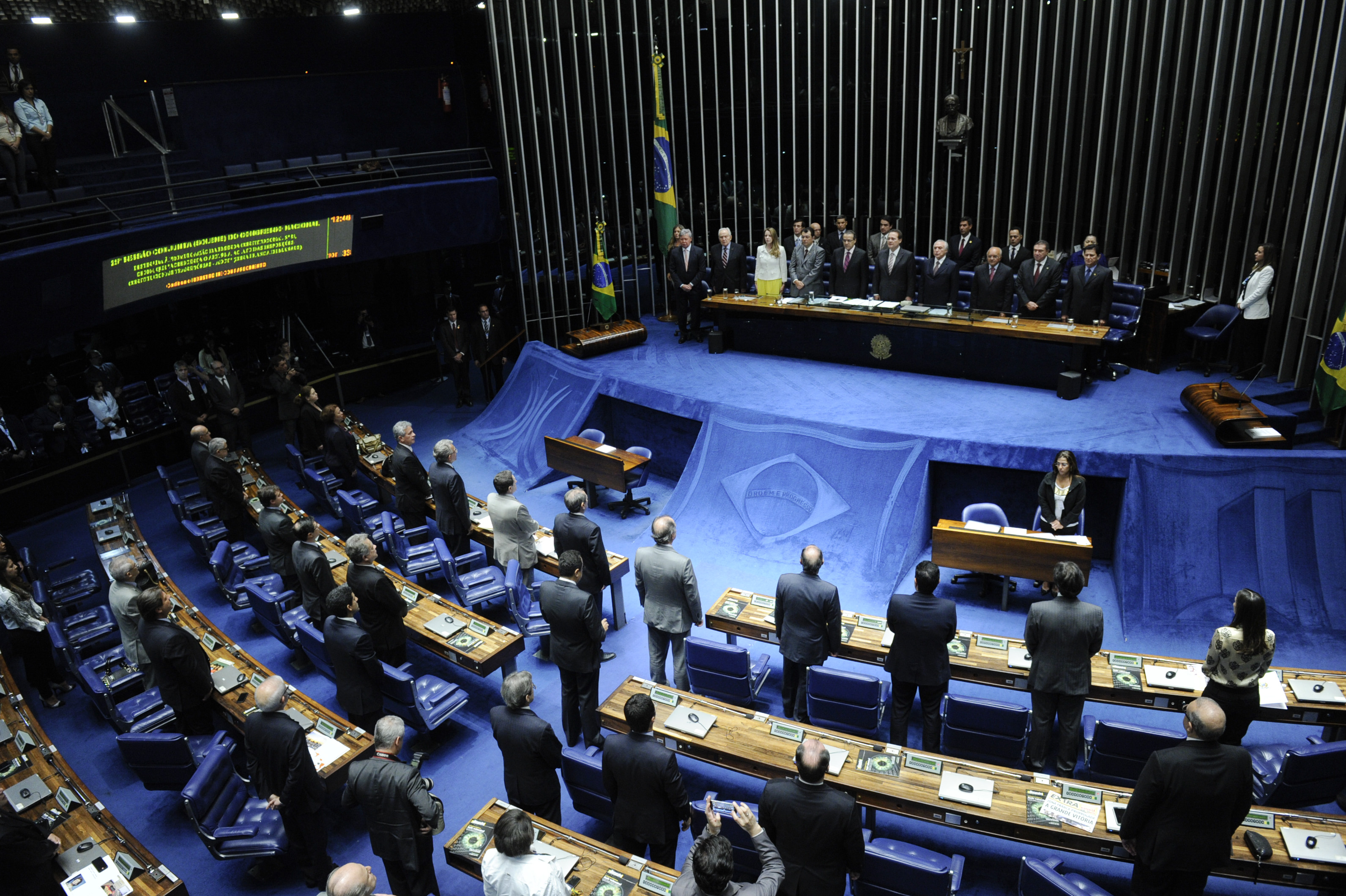
Under the glass and concrete of Oscar Niemeyer's inverted dome, 81 senators meet to shape Brazilian law. The building is one of the signature images of Brasilia: two matching white towers housing the legislative offices, and between them, two shallow domes, one pointing up for the Chamber of Deputies, the other pointing down for the Senate. The upside-down bowl of the Senate chamber is supposed to suggest restraint and deliberation, holding the hot debate inside like a cupped hand. The institution beneath it has existed in various forms since 1824, when Emperor Pedro I borrowed the idea from the House of Lords. A lot has changed since then. Senators are no longer seated for life. The emperor is no longer making the final pick from a short list.
Imperial Origins
When Pedro I enacted Brazil's first Constitution in 1824, two years after independence from Portugal, the document created an Imperial Senate modeled on the British House of Lords. The Emperor's sons and daughters aged 25 or over were automatically senators by right. Elected members had to be at least 40 and earn 800,000 contos-de-reis a year, which restricted candidates to the genuinely wealthy. Voters also faced an income threshold of 200,000 contos-de-reis. These voters did not elect senators directly; they elected senators electors, who then produced a three-name list for each vacancy, and the Emperor selected one. He usually picked the top vote-getter, but he did not have to. Seats were for life, and a seat in the Senate was one of the most prestigious honors the Empire could grant. The first session was held in May 1826. The Emperor had delayed the first election repeatedly, which made enough people suspicious that he was attempting absolute rule that the subsequent politics of the Empire were shaped partly by that suspicion.
From Imperial to Federal
The Proclamation of the Republic on November 15, 1889, ended the Brazilian Empire and began the messy work of reinventing Brazilian institutions. The 1891 Constitution transformed the Empire's provinces into states and rebuilt the Senate along U.S. lines: three senators per state, elected rather than chosen from a short list, representing the federative units equally regardless of population. Each subsequent constitution, including the 1988 Constitution still in force, has retained that basic structure. The Senate today has 81 members: three each from the 26 states and three from the Federal District. Senators serve eight-year terms, staggered so that elections alternate between one-third and two-thirds of seats every four years. In one-third years, voters cast a single vote. In two-thirds years, they cast two votes, and parties can field up to two candidates each. The two highest vote-getters win.
The Presidency of the Senate
The president of the Federal Senate is the third-highest office in Brazil, after the president of the Republic and the vice president. If both are incapacitated, the Senate president assumes the presidency briefly until the Chamber of Deputies president takes over. The current president, as of February 2025, is Davi Alcolumbre, a UNIAO member from the small northern state of Amapa, serving his second non-consecutive two-year term after previously leading the Senate from 2019 to 2021 during the Bolsonaro government. The Senate president controls the legislative agenda, decides what bills get floor votes, and can effectively delay impeachment proceedings or advance them. Senate presidents have made and broken political careers from this seat, and the office's agenda-setting power means each election for the presidency of the Senate is itself a political event watched closely by markets and media.
Impeachment Court
The Senate plays a role Brazilians know from the television news. It is the court that tries presidential impeachments. When the Chamber of Deputies votes to accept charges against a sitting president, the case moves to the Senate, where a trial is held presided over by the Chief Justice of the Supreme Federal Tribunal. Two-thirds majority convicts. This mechanism has removed two Brazilian presidents from office: Fernando Collor in 1992, who resigned during the trial to avoid conviction, and Dilma Rousseff in 2016, convicted by the Senate on fiscal-responsibility charges. The sessions play out live on television, with senators given time to speak their vote. The institutional weight of these decisions, removing a democratically elected head of state, falls on the 81 senators sitting under Niemeyer's inverted dome. The Senate's upper-house status was originally meant to temper the passions of the larger and more populist Chamber of Deputies. The role it has actually played has been more like the American Senate's: stabilizer in some eras, gridlocker in others, impeachment tribunal when the moment demands one.
Proportions and Politics
The equal representation of states, three senators each, produces the same political distortion in Brazil that it produces in the United States. The small northern states have the same Senate weight as Sao Paulo, which has more than 40 million people. This amplifies rural and northern interests relative to population, and the distribution of Senate power shapes which coalitions can pass which legislation. Parties in the Senate are generally fluid, with alliances shifting between votes and presidents needing to negotiate across a dozen parties to assemble a majority. The current 57th Legislature includes senators from at least 15 parties, from left to right, with UNIAO, PSD, PL, MDB, and PT all holding significant blocs. It is a chamber that reflects Brazilian politics in full: federal, plural, contentious, and essential to the functioning of a country the size of a continent.
From the Air
The National Congress building housing the Federal Senate stands at 15.80 S, 47.86 W on Brasilia's Monumental Axis. The distinctive profile of twin towers and paired domes (one upward, one inverted) is visible from the air at 3,000 to 5,000 feet. Brasilia International Airport (SBBR) is 11 km east. The capital sits at 1,000 meters elevation on the cerrado plateau.