Federal Shipbuilding and Drydock Company
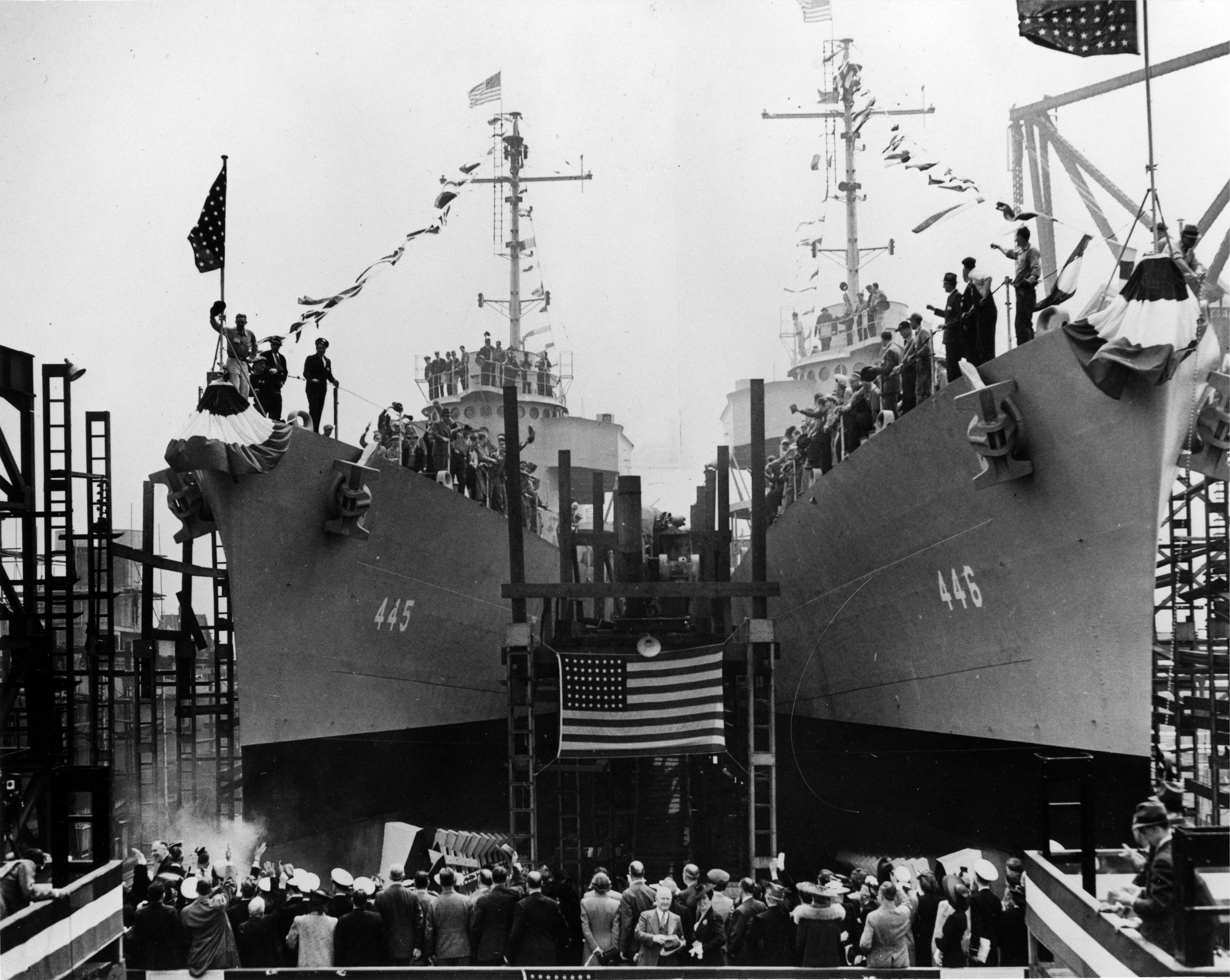
Four destroyers in fifty minutes. On a single day in May 1942, the Federal Shipbuilding and Drydock Company at Kearny Point, New Jersey, slid four warships down its ways and into the Hackensack River in less time than it takes to watch a baseball game. By 1943, the yard employed 52,000 workers and was building ships faster than any facility on Earth. But the story of Federal Shipbuilding is not simply a tale of wartime production miracles. It is a story about labor and power, about what happens when the nation's appetite for ships collides with workers' demands for fair treatment, and about how a place that once built the instruments of victory became the place where those same instruments were taken apart for scrap.
Born of One War, Forged by Another
Federal Shipbuilding was established in 1917, a child of World War I and the urgent need to expand America's merchant fleet. Located where the Hackensack River meets Newark Bay in the Port of New York and New Jersey, the yard was operated by a subsidiary of United States Steel Corporation. The shipways were ready by fall 1917, and keels were being laid by November. Federal completed a 9,600-ton vessel six weeks before the armistice and delivered 27 ships to the Emergency Fleet Corporation in 1919 alone, accounting for five percent of all steel merchant tonnage built that year. What made Federal unusual was its resilience. While shipyards across the country shuttered during the interwar slump, the Kearny yard stayed open. By 1921, it had twelve shipbuilding ways for 15,000-ton vessels, a 9,000-ton floating dry dock, and a boiler shop where 250 men could produce three massive Scotch marine boilers per week. A devastating fire in May 1924 destroyed the yard's largest building and idled over a thousand workers, but even that could not close the gates.
The Strike That Brought the Navy
In August 1941, with war looming and half a billion dollars in naval contracts on the line, 16,000 Federal workers walked off the job. The sticking point was a "maintenance of membership" clause that would have effectively made the yard a closed union shop. Company president Lynn Korndorff refused the demand so completely that he offered to hand the entire shipyard to the Navy rather than comply. President Franklin Roosevelt took him up on it. The Navy's seizure of Federal Shipbuilding was the first military takeover of an industrial plant in that era. Rear Admiral Harold Bowen, placed in charge, proved no friendlier to the union than management had been. He refused to acknowledge any right to collective bargaining and ignored the membership clause entirely. After 134 days under Navy control, the yard was returned to the company. It was not until May 1942, under pressure from the National War Labor Board and the weight of the war emergency, that Federal finally accepted the union's terms.
Faster Than Any Yard in the World
Once the labor dispute was settled, Federal's production became staggering. The yard claimed records of 170 days from keel to commissioning on a 2,050-ton destroyer and 137 days on a 1,630-ton destroyer. Type C2 cargo ships rolled out in an average of 82 days. Destroyer escorts were being launched roughly once a week by the spring of 1943. Between the Kearny and Port Newark yards, Federal launched 11 ships in 29 days during March 1943. Over the course of the war, the company was allocated 569 hull numbers and delivered approximately 465 ships. Of the 415 World War II-era destroyers built nationwide, 69 came from Kearny alone, more than any yard except Bath Iron Works in Maine. The Port Newark facility, expanded to the former Submarine Boat Corporation site in January 1942, added another 140 completed vessels including destroyer escorts, landing craft, and Gearing-class destroyers.
From Building Ships to Breaking Them
Peace brought contraction. Postwar contracts trickled in for cargo ships serving Lykes Lines, Grace Line, and American South African Line, but the volume was a fraction of wartime output. A 140-day strike in 1947 further weakened the yard. In April 1948, Korndorff announced that the Navy had agreed to purchase the Kearny facilities for approximately $2,375,000 at depreciated book value. The New York Times called the price "astoundingly low." The Navy held the yard in standby for potential reactivation, but no emergency came. Instead, Federal's legacy underwent a grim inversion. By the late 1950s, the site that had built warships became one of the nation's largest ship-breaking operations. Aircraft carriers Essex, Randolph, Boxer, Wasp, and Antietam were all scrapped at the former Federal yard, along with battleships, cruisers, and submarines. The tools that had once riveted steel into instruments of war now cut those instruments apart.
What Remains at Kearny Point
Today, portions of the old Federal yard have been converted into warehouses and mixed-use business parks. In 2013, Building 77 was renovated and reopened as the USS Juneau Memorial Center, named for the light cruiser that Federal built and that was sunk at the Naval Battle of Guadalcanal in 1942. The center now houses Hudson County's Office of Emergency Management and served as a COVID-19 vaccination mega-site during the pandemic. From the air, the industrial waterfront at Kearny Point still traces the outline of what was once the fastest shipyard on the planet. The Hackensack River bends around the point where 52,000 workers once labored around the clock, building the fleet that helped win a world war, then watching as that fleet returned to be dismantled.
From the Air
Coordinates: 40.7239°N, 74.1061°W. Located at Kearny Point where the Hackensack River meets Newark Bay in northeastern New Jersey. Visible from altitude as an industrial waterfront area on the west side of Newark Bay. Nearest airports: KEWR (Newark Liberty International, 5 km S), KTEB (Teterboro, 12 km N). Best viewed at 2,000-4,000 ft AGL following the Hackensack River south to Newark Bay.