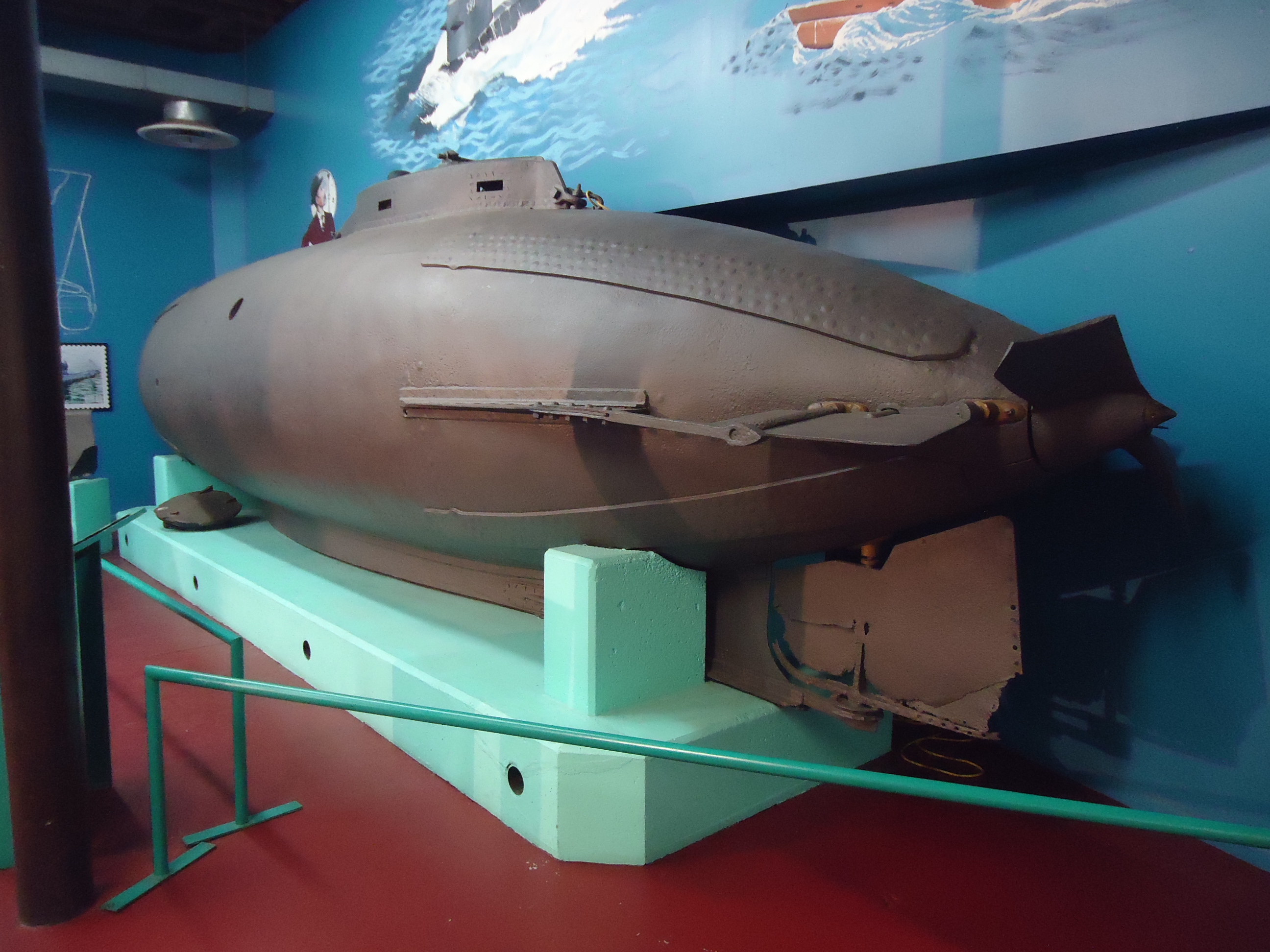
Fenian Ram
The submarine sitting in the Paterson Museum in New Jersey was supposed to sink the British Navy. Designed by John Philip Holland, an Irish immigrant and former Christian Brothers schoolteacher, and funded by the Fenian Brotherhood's Skirmishing Fund, it was launched in 1881 from the DeLamater Iron Company works in New York. The New York Sun called it the Fenian Ram. Holland called it Holland Boat No. II. The British called it a threat. None of them could have predicted that the vessel's most dramatic chapter would involve not warfare but theft -- by its own sponsors.
The Schoolteacher's Weapon
John Philip Holland arrived in the United States from County Clare, Ireland, carrying a grudge against British rule and an engineer's conviction that submarines could break Britannia's grip on the seas. He was a Christian Brothers teacher by training, but hydrodynamics consumed his spare hours. The Fenian Brotherhood -- the American arm of the Irish Republican Brotherhood -- saw potential in Holland's designs and funded the construction through their Skirmishing Fund, a war chest collected from Irish-American communities across the country. The DeLamater Iron Company built the vessel in New York, and by 1881 it was ready for trials. At 31 feet long and powered by a 15-horsepower Brayton piston engine running on kerosene, the Ram was small but revolutionary. Unlike contemporary submarines that simply took on ballast until they sank, Holland's design maintained slightly positive buoyancy and used tilted horizontal planes so that forward motion forced the boat underwater -- a principle still used in submarines today.
Armed and Ingenious
The Fenian Ram's design drew inspiration from an unlikely source: the Whitehead torpedo. Like that weapon, the submarine featured cruciform control fins near the tail for stability and maneuverability. But the Ram was not just a delivery vehicle -- it carried its own armament. A nine-inch pneumatic gun, roughly eleven feet long, ran along the boat's centerline and fired forward through the bow. The loading mechanism anticipated modern torpedo tubes: a watertight bow cap stayed shut while six-foot dynamite-filled steel projectiles were loaded from inside the hull. The inner door was then sealed, the outer cap opened by remote mechanism, and 400 pounds per square inch of compressed air launched the projectile into the water. To reload, the process reversed: outer door shut, water blown from the tube into the surrounding ballast tank by more compressed air. During extensive sea trials, Holland made numerous dives and test-fired the gun with dummy projectiles. The weapon worked.
Stolen by Its Own Side
The partnership between Holland and the Fenians did not survive success. Funding disputes within the Irish Republican Brotherhood led to disagreements over payments to Holland, and in November 1883 the Fenians took matters into their own hands. They stole the Fenian Ram and Holland's smaller prototype, Holland III, spiriting both vessels away without the inventor's knowledge or consent. Holland III sank accidentally in the East River during the heist. The Fenians managed to get the Ram to New Haven, Connecticut, where they discovered a critical problem: no one among them knew how to operate it. Holland, understandably furious, refused to help. Unable to use the submarine, sell it, or return it without admitting what they had done, the Brotherhood had the Ram hauled into a shed along the Mill River, where it sat for decades -- a revolutionary weapon gathering dust in a Connecticut boathouse.
From Madison Square Garden to the Junkyard
The Ram resurfaced -- figuratively -- in 1916, when it was exhibited at Madison Square Garden to raise funds for victims of the Easter Rising in Dublin. The old submarine still had the power to draw crowds and loosen wallets for the Irish cause. Afterward, it was moved to the Clason Point Military Academy in the Bronx. When the academy relocated to Long Island in 1927, the hull was sold for scrap. The story might have ended there, in a junkyard, but Irish-American activist Harry Cunningham intervened. He purchased the Fenian Ram from the scrap dealer, determined to preserve it as a symbol of Irish-American ingenuity. That same year, Cunningham sold the submarine to Edward Browne of Paterson, New Jersey, who offered it to the city as a memorial to Holland's work.
Holland's Longer Legacy
Holland never got to use the Fenian Ram against the British, but his designs changed naval warfare permanently. In 1896, he founded the Holland Torpedo Boat Company after the U.S. Navy expressed interest in his submarine designs. His Holland VI, launched in 1897, became the Navy's first commissioned submarine, USS Holland. The Royal Navy -- the very fleet the Fenian Ram was built to attack -- also purchased Holland's designs. Today, the Fenian Ram sits in the Paterson Museum, a 31-foot iron vessel that looks more like an oversized torpedo than a weapon of war. Visitors peer through its small portholes at the Brayton engine, the operator's seat, the pneumatic gun mechanism. It is a strange artifact: too small to have changed history on its own, too important to have been forgotten. A schoolteacher's dream, a revolutionary brotherhood's investment, and the ancestor of every submarine that has ever put to sea.
From the Air
Located at 40.914°N, 74.179°W at the Paterson Museum in Paterson, New Jersey. From the air, Paterson is identifiable by the Great Falls of the Passaic River, a 77-foot waterfall in the center of the city and a National Historical Park. The museum is near the falls in the historic industrial district. Nearest airports: Teterboro (KTEB), approximately 12 nm southeast; Essex County/Caldwell (KCDW), approximately 8 nm south. Best viewed at 2,000-3,000 ft AGL.