Ferry Farm
"I cannot tell a lie; I did it with my little hatchet." The famous confession almost certainly never happened. But the farm where Parson Weems set his cherry tree fable is real, and its story is stranger than any myth. Ferry Farm sits on a bluff above the Rappahannock River in Stafford County, Virginia, directly across the water from Fredericksburg. George Washington arrived here as a six-year-old in 1738 and spent his formative years on this ground -- learning to ride, to survey, and to navigate a world that would soon demand everything of him. The farm's name, ironically, has nothing to do with the Washingtons. It came from a free ferry that crossed the river on their land, a service the family neither owned nor operated.
Ten Thousand Years on the Bluff
Long before any Washington set foot here, indigenous peoples made this stretch of the Rappahannock home. Archaeologists have unearthed a spear point over 10,000 years old, crafted by a big-game hunter during the late Ice Age. Stone axes, quartz scrapers, and pottery from Woodland Indian farmers paint a picture of continuous habitation stretching from 1500 BC through 1500 AD. The first European claim came in 1666, when John Catlett received a land patent. By 1727, the property belonged to William Strother, a lawyer and Burgess. In 1738, Augustine Washington -- George's father, a plantation owner and managing partner of the Accokeek Iron Furnace six miles north -- purchased the farm and moved in with his second wife, Mary Ball Washington, and their five young children.
A Boy on the Rappahannock
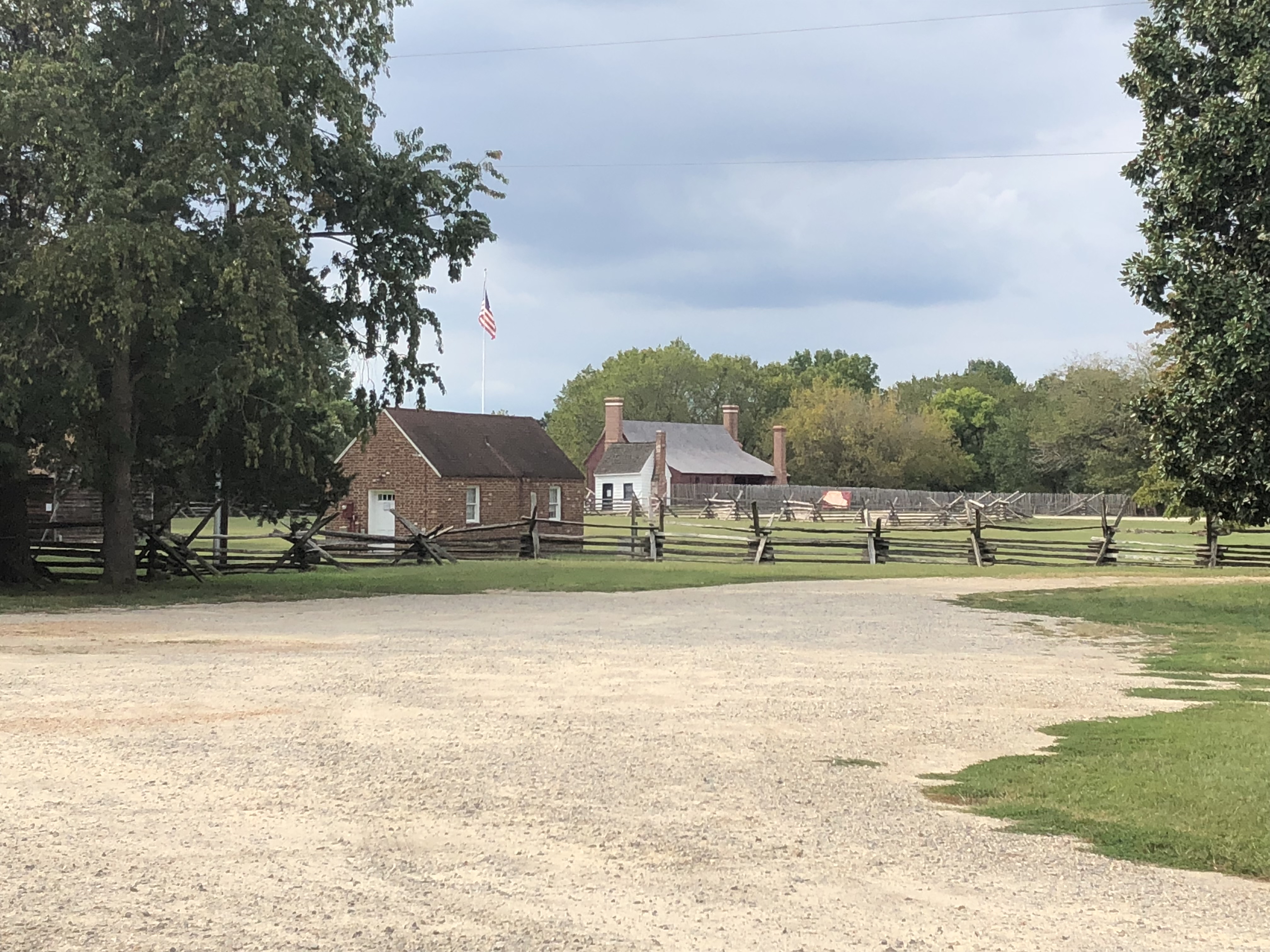
The Washington family home was a modest one-and-a-half-story central-passage house, two rooms deep, perched on the river bluff. Augustine built it himself. George lived here from age six until his father's death in 1743 upended the family's world. His older brother Lawrence inherited Little Hunting Creek, later renamed Mount Vernon, while the Home Farm -- as the Washingtons called it -- passed through harder times. During his boyhood, George learned the surveyor's craft that would serve him on frontier expeditions and battlefields alike. The myths that Parson Weems later attached to this place -- the cherry tree confession, the silver dollar hurled across the Rappahannock -- became more famous than anything that actually happened here. But each year on Washington's birthday, townspeople still gather at the riverbank to attempt the coin toss. In 2006, archaeology intern Jim Trueman actually made the throw, then did it again the following summer to prove it was no fluke.
Battleground and Bargaining Chip
The Civil War reached Ferry Farm in 1862. Union soldiers, familiar with Weems's cherry tree myth, carved trinkets and rings from a tree they believed was the one from the story. Much of the farm was destroyed. President Abraham Lincoln himself toured the property during the occupation. After the war, new farmhouses rose in the 1870s, and the land cycled through decades of preservation schemes and commercial ambitions. In the 1920s, a real estate speculator named James Beverly Colbert tried to cash in on the Washington connection, hiring writer George Allan England to craft ads celebrating the site's historical value. The Great Depression killed that dream. The 1960s brought a home for troubled boys. The 1990s brought something worse: Walmart offered to build a superstore adjacent to the boyhood site, complete with a columned plaza featuring "special tributes to George and the Cherry Tree." Fredericksburg residents, historical preservationists, and the Daughters of the American Revolution fought back. On April 1, 1995, the review board rejected Walmart's bid.
Unearthing the Real Home
The George Washington Foundation purchased the land in 1996 and launched serious archaeological work in 2002 under David Muraca and Philip Levy. In 2008, they announced the discovery: the original Washington home's cellar and foundations, dating to the 1740s. Artifacts included pieces of a cream-colored tea set likely belonging to Mary Ball Washington and wig hair curler fragments used by George's younger brothers -- wigs being the single most expensive item in a gentleman's wardrobe. In 2015, construction began on a replica house built directly over the original foundations, using eighteenth-century building techniques. The replica opened to the public in 2018, stocked with reproductions of furniture listed in Augustine Washington's probate inventory from 1743. Tour guides encourage visitors to sit on the chairs, open the cabinets, and handle the objects. Ferry Farm was designated a National Historic Landmark in 2000, and today the George Washington Foundation oversees both this site and Kenmore, the Fredericksburg home of Washington's sister Betty.
From the Air
Ferry Farm sits at 38.295N, 77.449W on the north bank of the Rappahannock River, directly across from Fredericksburg. The nearest airport is Shannon Airport (KEZF), about 2 miles south. Stafford Regional Airport (KRMN) is 8 miles north. At 1,500-2,000 feet AGL, the river bluff and the red replica farmhouse are visible along the Rappahannock's north bank. The Fredericksburg Historic District is immediately across the river to the south.