Festival Internacional Cervantino
It started with a professor and a playwright dead for three centuries. In 1953, Enrique Ruelas of the University of Guanajuato began staging entremeses -- short comic interludes written by Miguel de Cervantes, the author of Don Quixote -- in the open plazas of this colonial mining city wedged into the mountains of central Mexico. The performances were modest, local, and entirely in the spirit of Cervantes himself, who understood that theater belongs in the street. Two decades later, those plaza performances had become something no one planned: the seed of what is now the largest international arts festival in Latin America.
From Plaza to World Stage
The transformation happened in 1972. The Mexican federal government wanted to establish an international cultural festival and initially proposed Acapulco as the host city. But the tradition Ruelas had built -- nearly twenty years of Cervantes plays performed outdoors to engaged audiences -- made Guanajuato the obvious choice. The first official Festival Internacional Cervantino featured artists from fourteen countries. It grew fast. Between 1976 and 1982, during the presidency of Jose Lopez Portillo, the festival expanded dramatically, propelled in part by his wife Carmen Romano, who promoted it internationally. Herbert von Karajan, director of the Berlin Philharmonic, offered to perform at no cost. Queen Elizabeth II and Prince Philip attended in 1975. King Juan Carlos and Queen Sofia of Spain came as guests of honor in 1978. Cantinflas and Dolores del Rio were among the first Mexican luminaries invited. An organizing committee, established by decree in 1976, still coordinates the festival today.
When the World Arrives
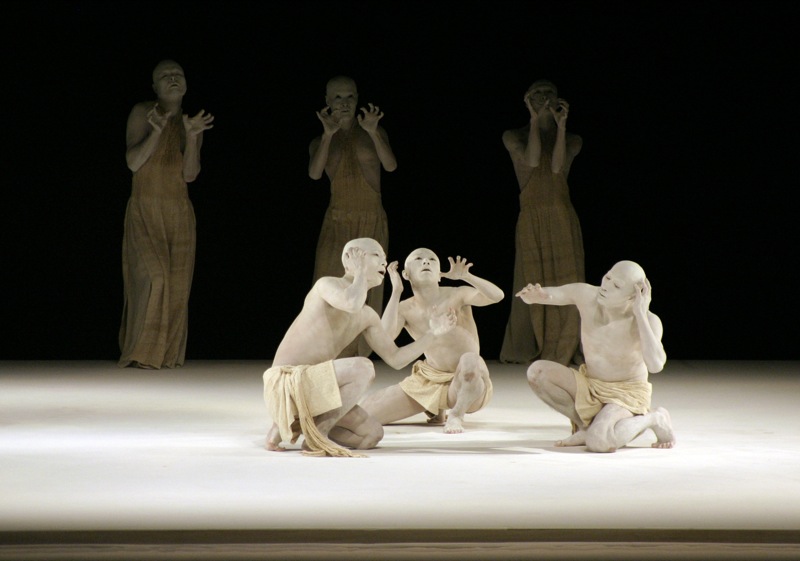
Each October, forty-nine theaters, plazas, and venues across Guanajuato fill with performances spanning opera, ballet, theater, music, and visual art. The roster of performers who have appeared reads like a directory of the 20th and 21st century's performing arts: the Bolshoi Ballet and the National Ballet of Canada, the New York Philharmonic and the Saint Petersburg Philharmonic Orchestra, Mercedes Sosa and Joan Baez, Ray Charles and Arcade Fire, Rudolf Nureyev and Sankai Juku. The festival is a member of both the European Festivals Association and the Asian Association of Theater Festivals. Being named after Cervantes, the event maintains a special emphasis on artistic creation in the Spanish language, but the international programming is deliberately eclectic -- a space, as organizers describe it, for discovery and exchange. Satellite events extend beyond Guanajuato into other cities and states across Mexico.
Growing Pains in a Colonial City
Success brought complications. After 1982, reduced federal funding shrank the festival's scale. A different kind of pressure came from below: the Cervantino had become enormously popular with young backpackers, who slept in Guanajuato's streets and plazas, creating friction with local residents. Public drinking remains a persistent issue during festival weeks. The 2011 edition cost 122 million pesos to produce, funded primarily by CONACULTA with contributions from the state of Guanajuato, the University of Guanajuato, and the city itself. Despite budget constraints, the festival continued to draw up to 140 journalists and internationally significant programming. The 2020 edition, held online from October 14 to 18 due to the COVID-19 pandemic, demonstrated both the festival's adaptability and the irreplaceable quality of live performance in Guanajuato's stone plazas.
Theater Where It Matters Most
The most distinctive legacy of the Cervantino may be its least visible. The Cervantino Program for Youth auditions performers under thirty from across Latin America -- students from Guatemala, Brazil, Cuba, Bolivia, and Mexico -- for workshops, masterclasses, and concert performances alongside maestros like Irvine Arditti and Salvatore Sciarrino. The Mas Alla de Guanajuato program has brought free cultural events to over 100 venues in 26 states, including schools, libraries, and correctional institutions. Most ambitiously, the Ruelas Project, created in 2014 and named after the festival's founder, pairs professional artists with communities facing high levels of crime and family instability. Local residents perform adapted plays -- Shakespeare reworked for local culture, in the spirit of how Ruelas originally staged Cervantes. They have worked with prison populations. It is the festival's answer to its own origin story: that art begins not in concert halls but in plazas, among the people it is meant for.
From the Air
Located at 21.02N, 101.26W in Guanajuato City, which fills a narrow mountain ravine in the Sierra de Guanajuato. The city's colorful colonial architecture packed into steep valleys is visible from altitude. During the October festival, the forty-nine venues span the compact city center. Nearest airport is Del Bajio International Airport (MMLO) in Leon, approximately 30 km west. The Alhondiga de Granaditas and the University of Guanajuato's main buildings are prominent landmarks visible from above.