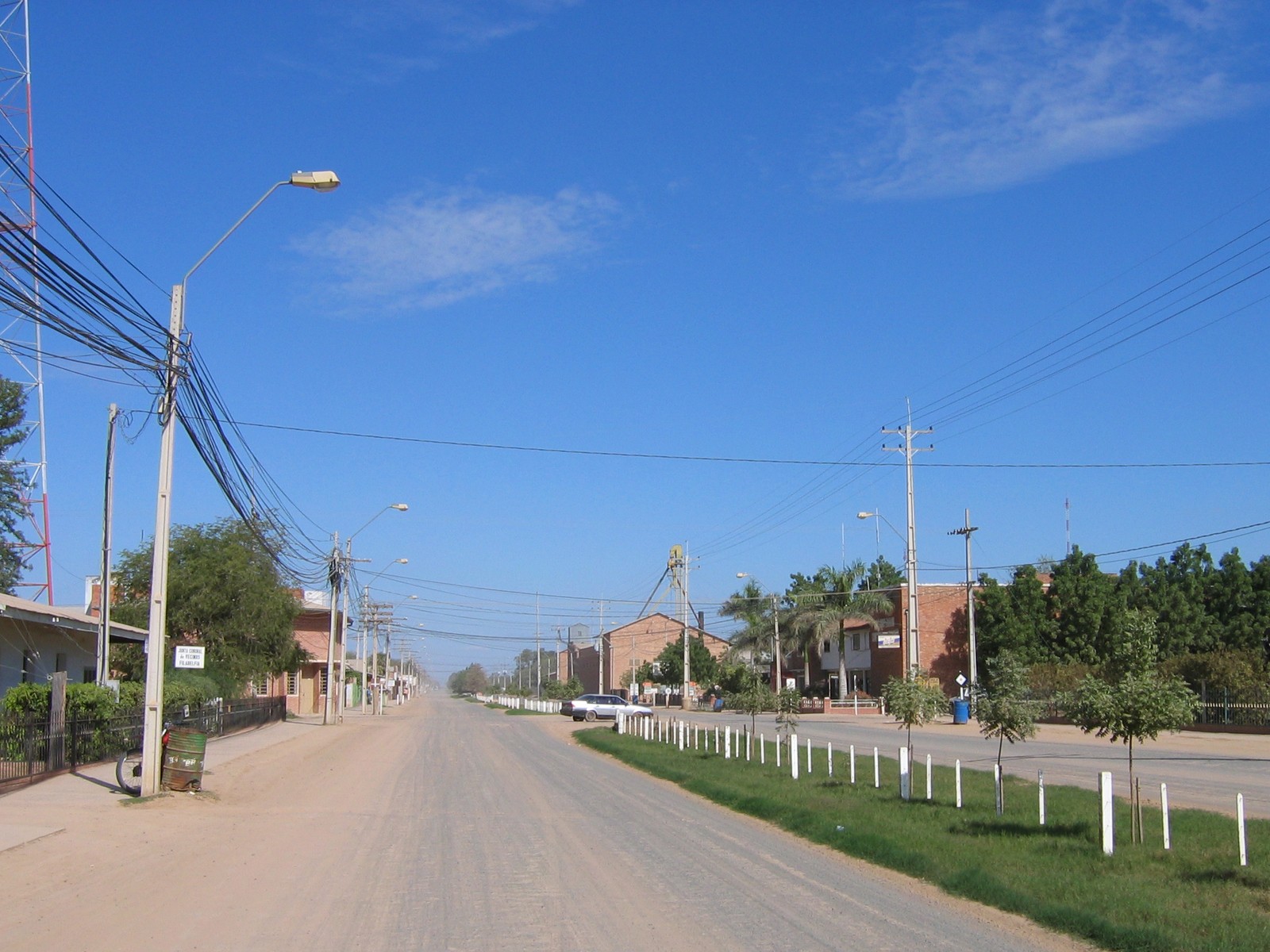
Filadelfia
The word 'Fernheim' means 'far away home' in German, and it is difficult to imagine a name more literally earned. In 1930, a group of 1,572 Mennonites arrived in the central Chaco of Paraguay from the Soviet Union, sponsored by German President Paul von Hindenburg. They found a flat, semiarid landscape of thorn forest and salt pans, 467 kilometers northwest of Asuncion by a road that barely existed. Here they established Filadelfia, choosing the site because it sat at the center of their planned villages and, crucially, because they found freshwater underground. Nearly a century later, this improbable settlement has become the economic hub of the entire Chaco region.
A Cooperative as Government
Filadelfia runs on a system that most visitors find startling. The Fernheim Cooperative, not the municipal government, manages the hospital, the main supermarket, the savings bank, the school, and much of the city's infrastructure. Nearly all Mennonite families hold shares. The cooperative collects ten percent of each member's earnings and returns it as health insurance, elderly care, university scholarships, and supermarket discounts -- services the Paraguayan national government does not provide in the Chaco. Members vote on whether to distribute dividends or reinvest them in new facilities. Outsiders who wish to buy land from the cooperative must first live among the community for a year so their character can be assessed. It is capitalism filtered through communal Anabaptist values, and it has produced a standard of living well above Paraguay's national average.
Four Communities, One City
Although Filadelfia is synonymous with its Mennonite founders, they comprise only about thirty percent of the population. Four indigenous communities -- the Nivacle, Guarani, Enxet, and Ayoreo -- account for roughly sixty percent. The remainder are Latin Paraguayans and other foreigners. Walking the streets, you pass blond farmers in overalls, Latinos speaking on cell phones, and indigenous women in long skirts decorated with bright prints. The diversity is real, but so is the segregation: most non-Mennonites live in the Barrio Amistad neighborhood, while indigenous residents are concentrated in Barrio Villa Guarani. The Ayoreo, semi-nomadic and the least changed by development, sell striking fibre bags colored in earthy browns and reds, and sometimes wild honey. The Guarani community hosts the Arete Guazu festival during carnival season, when masks depicting tigers, pigs, and ancestral faces appear, flutes and drums fill the air, and everyone drinks chicha made from fermented algarrobo fruit.
Plattdeutsch in the Chaco
The Mennonites still speak Plautdietsch, a Low German dialect carried from the Russian steppes. Standard German is used in church and for reading and writing. Non-Mennonites speak Spanish and Guarani -- Paraguay is the first country in the Americas to have made its indigenous language co-official. English, taught in the Mennonite schools, is widely understood among the younger generation. The result is a city where four or five languages coexist across a population of about 18,000 people. The cooperative provides radio broadcasts for the indigenous population, and the Jakob Unger Museum -- the only one permanently open to the public among Filadelfia's excellent collection -- documents the colony's journey from Soviet persecution through the desperate early years in the Chaco to the relative prosperity of today.
Desert Economy, Growing Demand
The Chaco's aridity shapes everything. All households collect rainwater for storage, and a desalination project is underway to supplement supplies during dry spells. Electricity, once generated locally by burning wood, now comes from the national grid through ANDE, the state power company. Demand for electricity grows at twenty percent per year as affluence increases, far outpacing the four percent annual population growth. The economy revolves around cattle herding, beef processing, and dairy industrialization -- Filadelfia's dairy production is of national importance. The cooperative also produces castor beans for hydraulic oil, cotton, sorghum for biodiesel, sesame, and peanuts. Every September and October, the Trans Chaco Rally floods the city with motorsport fans, and hotel rooms become almost impossible to find without advance reservations.
Bottle Trees and Bush Forest
Filadelfia is surrounded by an endless expanse of flat, semiarid bush forest, the characteristic landscape of the dry Chaco. Within the city parks, bottle trees -- swollen trunks shaped like their namesake and high in water content, used to keep cattle hydrated during droughts -- attract butterflies and birds. Twelve kilometers north on Avenida Hindenburg, the nature reserve Flor del Chaco offers walking trails through Chaco flora and fauna, with armadillos, tapirs, and foxes most active at dawn and dusk. Estancias in the surrounding countryside welcome visitors for ranch activities and hiking. The Chaco bush is not scenic in any conventional sense, but it possesses the severe beauty of a landscape that tests everything that tries to live in it -- including the people who chose to call it their far-away home.
From the Air
Located at 22.33S, 60.02W in Paraguay's Chaco region, approximately 467 km northwest of Asuncion. The city center is 15 km off the Transchaco Highway. Nearest significant airfield is the military airbase at Mariscal Estigarribia (SGME), approximately 75 km to the northwest. No commercial airport serves Filadelfia directly. The terrain is extremely flat semiarid bush forest with very low population density. Elevation is approximately 140 meters. Climate is dry with extreme summer heat (November-March) and occasional winter freezes.