Fillmore East: The Church of Rock and Roll
They called it the Church of Rock and Roll, and for the faithful who packed its pews from 1968 to 1971, the name was no exaggeration. The Fillmore East at 105 Second Avenue in Manhattan's East Village held services on Friday and Saturday nights -- two shows per evening, triple-bill concerts that could pair the Grateful Dead with the Allman Brothers and Miles Davis on a single weekend. Promoter Bill Graham ran it all with the precision of a field general and the passion of a true believer. In just three years and four months, this converted Yiddish theater on the Lower East Side became the most important rock venue in America, a place where the music was so good and the recordings so crisp that more than 40 live albums were captured within its walls.
From the Jewish Rialto to the Rock Cathedral
The building began its life in 1926 as the Commodore Theater, designed by Harrison Wiseman in the Medieval Revival style. It rose on a stretch of Second Avenue then known as the Yiddish Theater District -- the Jewish Rialto -- where a cluster of theaters served a Yiddish-speaking audience. The Commodore eventually became a Loews movie house, then the Village Theatre. Bill Graham, a Holocaust survivor who had built his reputation at the Fillmore Auditorium in San Francisco, saw its potential. He opened the Fillmore East on March 8, 1968, and from the first night, it was clear that something extraordinary was happening. The room had superb acoustics. Graham had an instinct for pairing acts that elevated each other. And the audiences -- passionate, knowledgeable New York crowds -- became part of the performance.
Nights That Changed Music
The roster of performers who played the Fillmore East reads like a history of rock itself. Jimi Hendrix recorded Band of Gypsys on New Year's Day 1970. Led Zeppelin made four appearances in early 1969, opening for Iron Butterfly before anyone knew their name. John Lennon and Yoko Ono sat in with Frank Zappa and the Mothers of Invention on June 6, 1971. The Grateful Dead played 43 concerts in the hall, Jefferson Airplane performed 36 shows, and the Allman Brothers Band played so often they earned the nickname 'Bill Graham's house band.' Behind the bands, the Joshua Light Show cast psychedelic projections across a backdrop screen, turning every performance into a visual event. Crosby, Stills, Nash and Young, The Who, Janis Joplin, Miles Davis -- they all played the Fillmore East, and many of them recorded there.
The Sound That Filled a Thousand Records
What set the Fillmore East apart was its acoustics and Graham's meticulous attention to sound. The Allman Brothers Band's At Fillmore East, recorded in March 1971, became one of the greatest live albums ever made. Gregg Allman later explained the choice: 'There was no question about where to record a concert. What made the Fillmore special was Bill Graham. He was the best promoter rock has ever had.' Miles Davis recorded multiple sessions at the venue, including his landmark Live at the Fillmore East. The Grateful Dead captured some of their most celebrated performances there, including a 30-minute version of 'Dark Star' from February 1970 that fans consistently rank among the five best Dead tapes ever. Derek and the Dominos, Neil Young, The Who, Joe Cocker, King Crimson -- the list of live albums from this single venue runs to more than 40 releases.
The Last Night at the Church
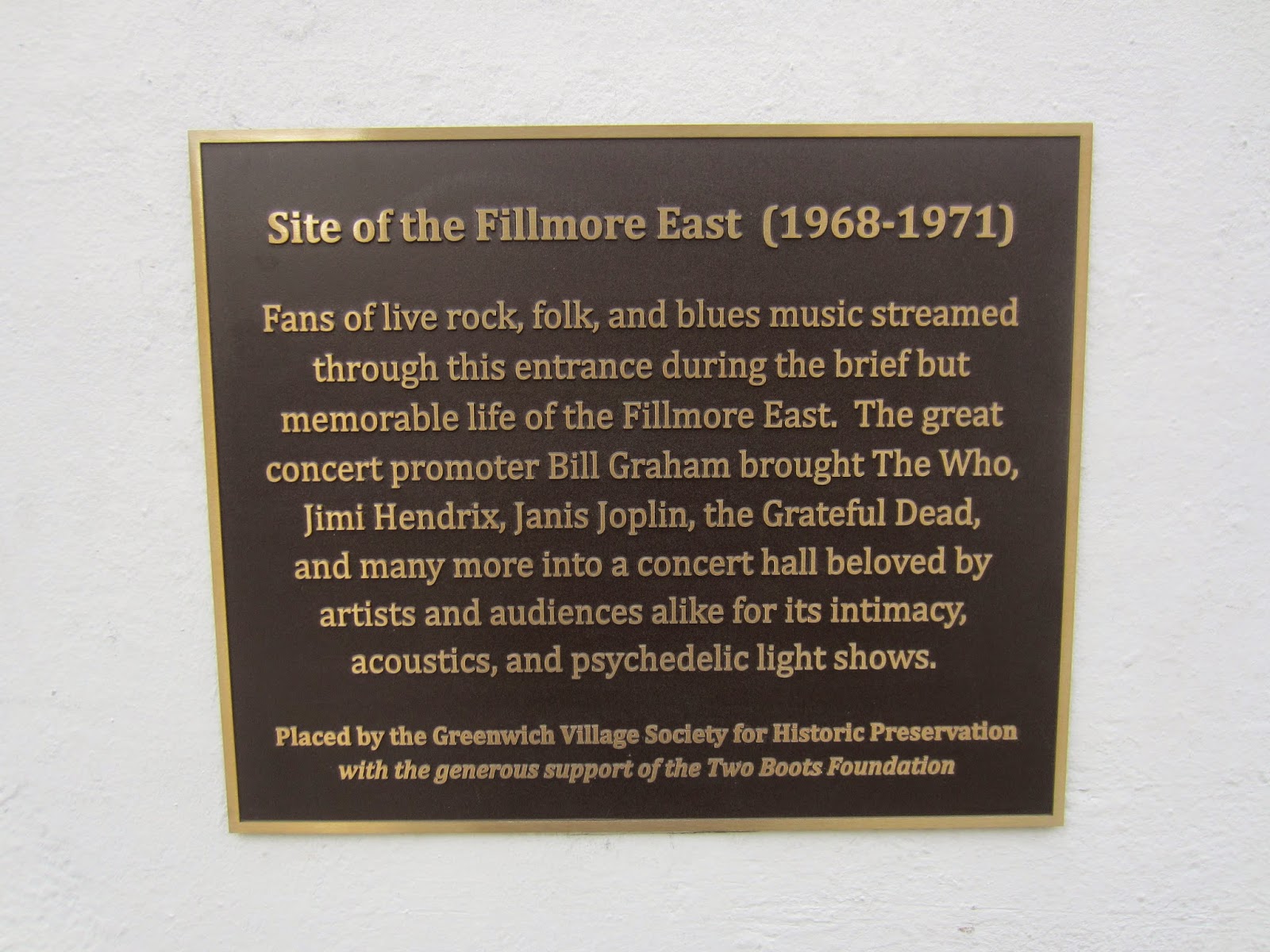
By 1971, the concert industry was shifting toward arenas and stadiums. Graham, who believed in intimate venues where the audience could feel the music, decided to close rather than compromise. The final concert on June 27, 1971, was invitation-only: the Allman Brothers Band, the J. Geils Band, and Albert King, with surprise appearances by Mountain, the Beach Boys, Edgar Winter's White Trash, and Country Joe McDonald. New York radio stations WPLJ and WNEW-FM simulcast the event live. The building cycled through several reinventions -- a brief run as Villageast, a stint as the NFE Theatre, years as The Saint nightclub -- before the auditorium interior was demolished and replaced with apartments. Today, only the lobby building at 105 Second Avenue survives, owned by Apple Bank, with a historic plaque unveiled in 2014 marking what once stood there.
A Ghost That Still Echoes
In 2007, Live Nation tried to resurrect the Fillmore East name by rebranding Irving Plaza as 'The Fillmore New York at Irving Plaza.' By 2010, they gave up -- the name had not caught on. The original was irreplaceable. The building at 105 Second Avenue now sits within the East Village/Lower East Side Historic District, designated in October 2012. A plaque on its facade and a signpost on the sidewalk are all that remain. But the recordings endure. Every time someone plays At Fillmore East or Band of Gypsys or the Dead's Dick's Picks Volume Four, they are hearing the acoustics of a converted Yiddish theater on the Lower East Side, where for three incandescent years, rock and roll had its cathedral.
From the Air
The former Fillmore East site is at 105 Second Avenue (40.7276N, 73.9886W) in Manhattan's East Village. The building is visible at low altitude along the Second Avenue corridor, near the intersection with East 6th Street. Nearest airports: LaGuardia (KLGA) 15km NE, JFK (KJFK) 22km SE, Newark (KEWR) 18km W. The East Village/Lower East Side neighborhood is identifiable by its dense grid pattern south of Tompkins Square Park.