Fin Garden
Water should not exist here. Kashan sits on the rim of the Dasht-e Kavir, Iran's great central desert, where summer temperatures routinely exceed 40 degrees Celsius and rain is a rumor. Yet a few kilometers southwest of the city, behind high walls topped with circular towers, a spring-fed garden has been flowing without interruption since at least 1590, making Fin Garden the oldest surviving garden in Iran. The water rises from a natural spring in the nearby foothills and runs through a network of turquoise-tiled channels and pools, feeding hundreds of cypress trees, some of them five centuries old. The Persian word for paradise, pardis, originally meant a walled garden. Walking through Fin Garden, the etymology feels less like linguistics and more like reportage.
A Shah's Vision of Heaven
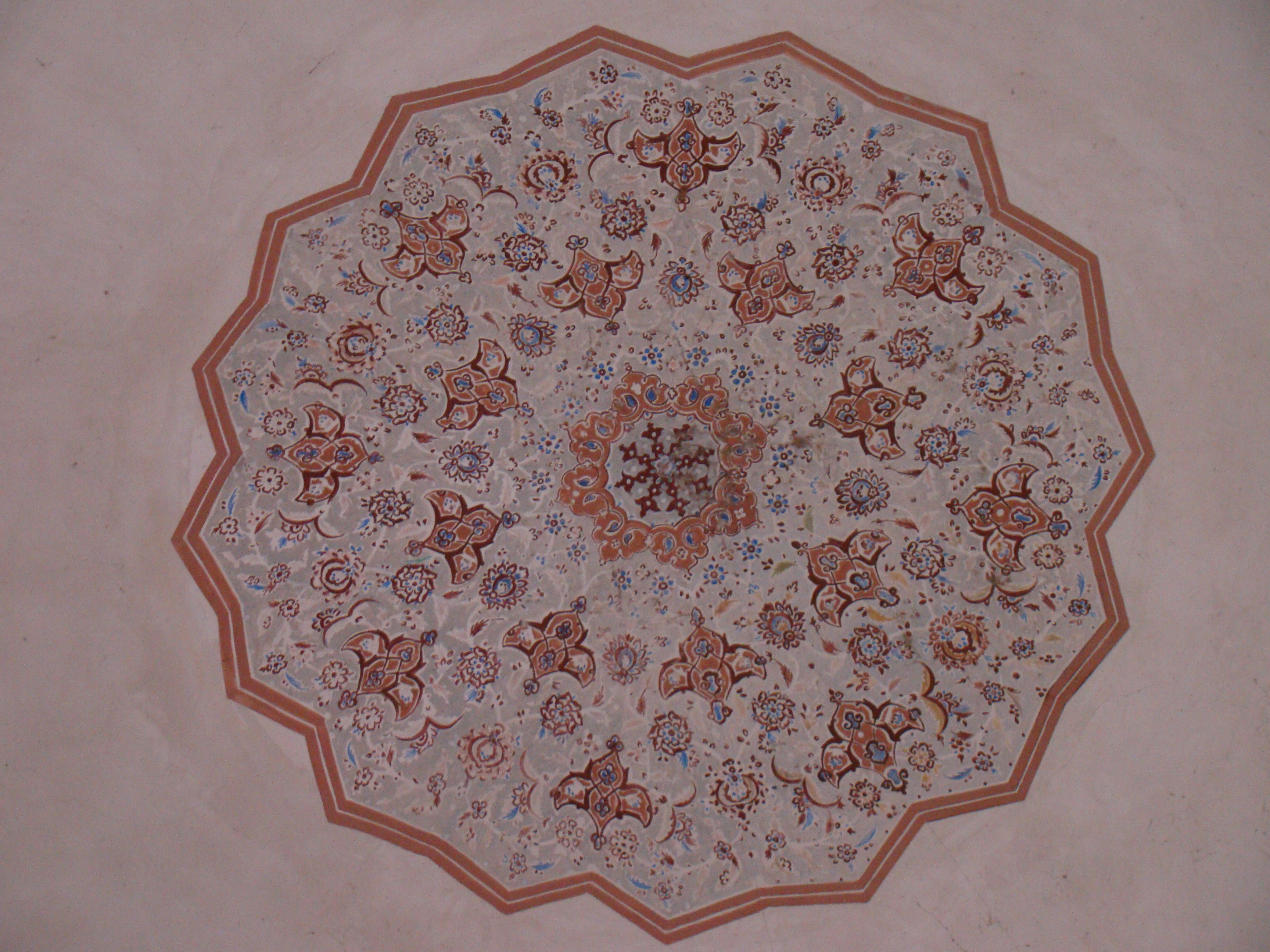
The garden's origins may predate the Safavid dynasty, but its present form took shape under Shah Abbas the Great, who reigned from 1588 to 1629 and transformed Iran into a cultural powerhouse. Abbas built Fin Garden as a traditional bagh, a formal Persian garden organized around the chahar bagh principle: four quadrants divided by water channels, with a central pavilion at the intersection. The layout is not decorative but cosmological, representing the four rivers of paradise described in Islamic tradition. The Safavid kushak, or pavilion, still stands at the garden's center, its arched porticos framing views down the long water channels. A later Qajar-era pavilion at the garden's far end features painted interiors that reflect the changing tastes of successive dynasties. The garden covers thousands of square meters, but the walls enclosing it transform scale into intimacy.
Blood in the Bathhouse
Fin Garden's darkest chapter unfolded in January 1852 in its bathhouse. Amir Kabir, the chancellor of Iran under the young Naser al-Din Shah Qajar, had spent his brief time in power pushing through reforms that modernized the country: founding Iran's first modern university, establishing a state newspaper, curtailing the influence of foreign powers and corrupt courtiers. His effectiveness made him enemies. The courtiers who resented his reforms maneuvered to have him dismissed and exiled to Kashan. Even in exile, Amir Kabir was considered dangerous. The courtiers persuaded the Shah to sign an execution order. Assassins found Amir Kabir in the Fin Bathhouse and slit his wrists, forcing him to bleed to death. The bathhouse, now a museum within the garden, preserves the memory of a reformer whose vision for Iran came decades too early.
Water, Stone, and Cypress
What makes Fin Garden extraordinary is not just its age but its physics. The natural spring that feeds the garden produces enough pressure to sustain the fountains without any mechanical pumps, a feat of hydraulic engineering that has functioned for centuries. The water arrives warm and clear, running through turquoise-tiled channels that give it an almost luminous quality. Plane trees and cypresses shade the walkways, their canopy filtering the desert light into dappled patterns on the stone paths. The cypress trees, evergreen and upright, are traditional Persian symbols of eternity, and the oldest specimens in Fin Garden have been standing since the Safavid era. In a landscape defined by aridity, the garden's abundance of water and shade feels almost transgressive, as though someone carved a private exception into the laws of geography.
A Garden for the World
In 1935, Fin Garden was listed as a national property of Iran, and in 2011, UNESCO inscribed it as a World Heritage Site as part of the Persian Garden designation, recognizing the chahar bagh tradition as one of humanity's most influential landscape designs. Today the garden houses a museum and remains one of Kashan's most visited sites, drawing visitors who come for the architecture, the history, or simply the relief of shade and running water after the dusty streets outside. The garden has survived neglect, earthquakes, and the ordinary erosion of four centuries. That it endures at all on the edge of a salt desert says something about the Persian conviction that beauty is not a luxury but a necessity, worth engineering into existence even where nature offers no encouragement.
From the Air
Located at 33.946N, 51.373E, a few kilometers southwest of central Kashan. The walled rectangular garden is visible from low altitude as a green rectangle against the arid surroundings. Kashan Airport (OIFK) is the nearest airfield; Isfahan Shahid Beheshti International Airport (OIFM) lies approximately 130 km south. From altitude, the contrast between the garden's dense tree canopy and the surrounding desert terrain is striking. The Dasht-e Kavir salt desert stretches to the east. Best viewed at 2,000-5,000 feet to appreciate the garden's oasis quality within the desert-edge landscape.