Finnish War
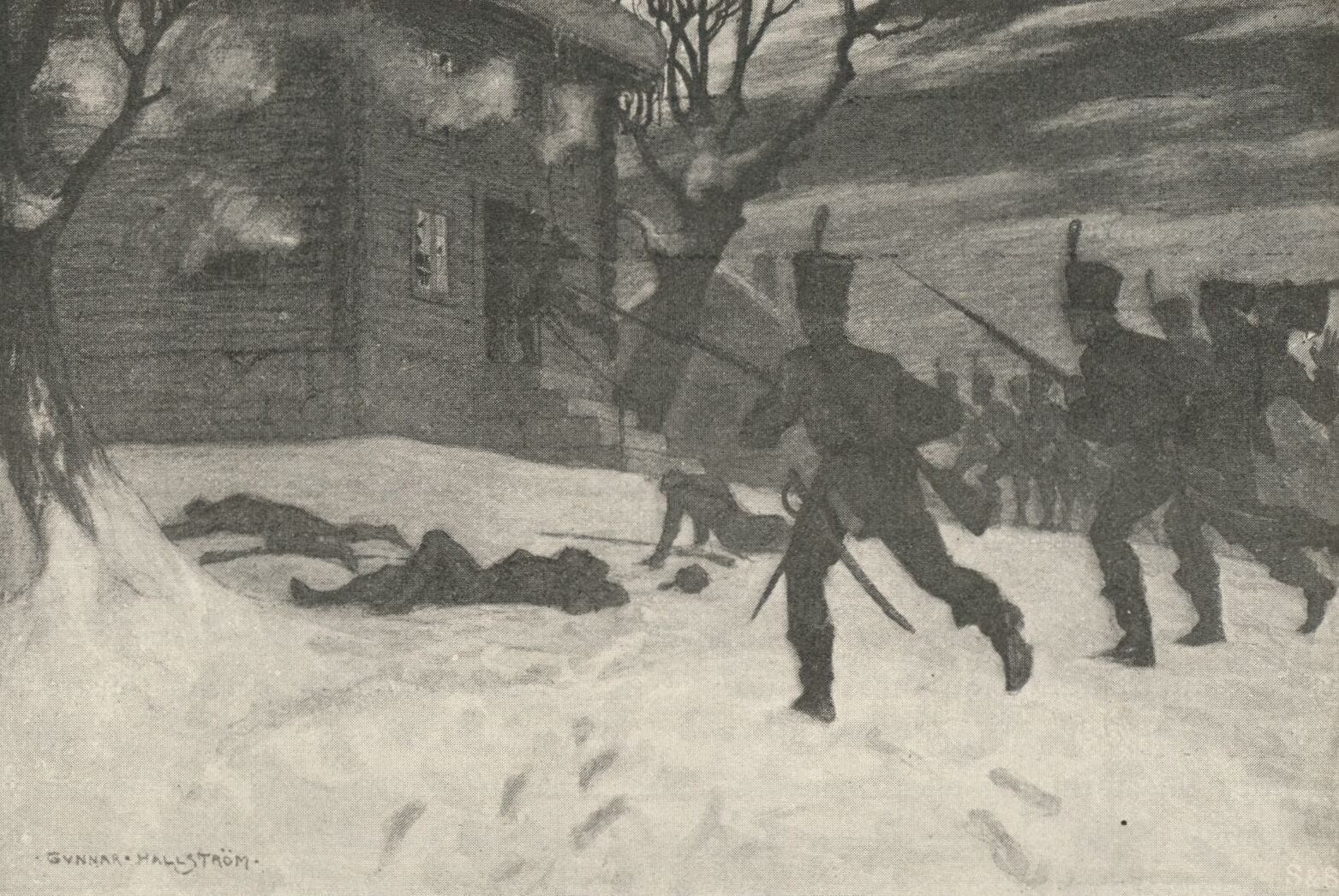
In March 1809, a Russian corps marched across the frozen Gulf of Bothnia -- an ice sheet separating Sweden from Finland -- and reached the Swedish coast within 70 kilometers of Stockholm. It was an audacious gambit in a war that had already cost Sweden its entire eastern territory, and the shock of Russian soldiers on Swedish soil triggered a coup that toppled King Gustav IV Adolf. The Finnish War of 1808-1809, fought between Sweden and Russia as part of the wider Napoleonic conflicts, ended more than six centuries of Swedish rule over Finland and created the Grand Duchy of Finland under the Russian Empire.
Napoleon's Shadow Over the Baltic
The war's origins lay not in Scandinavia but in the Treaty of Tilsit, signed in 1807 between Napoleon and Tsar Alexander I. The treaty's Continental System demanded that European nations cut trade with Britain. Gustav IV Adolf, who regarded Napoleon as the Antichrist, refused and instead allied with Britain on 8 February 1808. Alexander used Sweden's defiance as a convenient pretext to seize Finland, pushing Russia's frontier far to the west of St. Petersburg. The strategic calculus was straightforward: with Finland in Russian hands, any future threat to the capital from the northwest would be eliminated. Sweden faced the nightmare of a two-front war, with both Russia and Denmark as potential enemies, yet Gustav Adolf largely ignored warnings of the Russian buildup, clinging to the outdated assumption that winter campaigning was impossible.
A Swift and Brutal Advance
On 21 February 1808, 24,000 Russian troops crossed into Finland and captured Loviisa on the first day. The advance was relentless: Porvoo fell on 24 February, Helsinki on 2 March, Turku on 21 March. Swedish commanders ordered retreat after retreat. The fortress of Svartholm, manned by 700 soldiers of whom only a third had functioning weapons, surrendered after a month. The far more formidable Sveaborg -- garrisoned by 6,000 men with over 700 cannon and enough supplies to last until summer -- surrendered on 6 May after its commanding officer judged resistance futile, handing Russia the main Swedish archipelago fleet intact. By the end of March, even Vaasa on the Gulf of Bothnia had fallen. Swedish troops torched nearly 50 of their own gun sloops in Turku harbor to prevent capture.
Counterattack and Collapse
Sweden's fortunes briefly revived. Colonel Carl Johan Adlercreutz halted the Russian offensive at Siikajoki, and Finnish guerrilla fighters harassed Russian supply lines as far east as Hamina. A British fleet of 14,000 troops under Sir John Moore entered Gothenburg in May, but disagreements with the Swedish king meant they never landed and sailed off to fight in Spain. Swedish coastal forces fought inconclusive naval battles at Rimito Kramp and Pukkisaari, while small landing parties briefly recaptured Aland and parts of the Finnish coast. None of it was enough. By August 1808, Russia had reinforced to 55,000 troops against Sweden's 36,000, and Count Nikolay Kamensky's decisive victory at Oravais on 14 September broke the back of Swedish resistance. By November, all of Finland was in Russian hands.
Across the Frozen Gulf
The war's most extraordinary chapter came in the winter of 1808-1809. Kamensky proposed marching armies across the frozen Gulf of Bothnia itself -- one column from Vaasa toward Umea, another from Turku through Aland toward Stockholm. Commander-in-chief Knorring considered the plan unrealistic and delayed until the Tsar dispatched War Minister Arakcheyev to force action. On 13 March 1809, as Russian forces set out across the ice, Gustav IV Adolf was overthrown in Stockholm and replaced by his uncle, Charles XIII. Bagration's 17,000-man corps occupied Aland, while Kulnev's vanguard reached the Swedish shore. Further north, Barclay de Tolly's 5,000 men endured brutal conditions crossing the gulf to enter Umea on 24 March. A third force under Shuvalov encircled and captured a Swedish army at Tornio.
A Border Redrawn
The Treaty of Fredrikshamn, signed on 17 September 1809, ceded all of Finland and Sweden's domains east of the Torne River to Russia. Sweden joined the Continental System and closed its harbors to British ships. Russia created the Grand Duchy of Finland from the conquered territory, retaining Sweden's Gustavian constitution of 1772 with minor modifications until 1919. The war's consequences rippled far beyond borders. Sweden's new parliament adopted a new constitution, and within a decade the House of Bernadotte replaced the old royal line. Two 2015 studies by political scientists Jan Teorell and Bo Rothstein argue that the shock of losing Finland motivated Swedish elites to reform the country's notoriously corrupt bureaucracy, transforming Sweden into one of Europe's most effective states -- a legacy as enduring, in its way, as the border it drew across Scandinavia.
From the Air
The Finnish War ranged across all of Finland and parts of Sweden. The article's coordinates center near Vaasa, Finland (62.00°N, 22.97°E) on the Gulf of Bothnia, a key theater of operations. Nearest airport: Vaasa Airport (EFVA). Key battle sites visible from the air include the Aland Islands (midway across the Gulf), the fortress island of Suomenlinna (Sveaborg) off Helsinki, and the coastal towns of Turku and Oulu. The frozen Gulf of Bothnia crossing route ran roughly Vaasa-Umea. Recommended viewing altitude: 10,000-15,000 ft to trace the coastline and gulf crossing routes.