First Battle of Boudouaou
At sunrise on 25 May 1837, roughly 6,000 Kabyle fighters materialized on the east bank of the Oued Boudouaou. Across the river, in a camp whose defenses were barely half-built, 900 French soldiers and 45 cavalry scrambled to their positions beside two mountain howitzers loaded with just four rounds each. The Kabyle coalition had chosen their moment precisely: the French were exhausted, their supplies depleted, and their commanding officer was still reeling from a humiliating retreat through the mountains a week earlier.
Emir Abdelkader's Gambit
The battle grew out of Emir Abdelkader's broader strategy to encircle Algiers. In the spring of 1837, while negotiating a truce with the French, the Emir simultaneously escalated attacks on colonial farms and military posts across the Mitidja plain. From his command center in the Titteri mountain range, he orchestrated an insurrection of the Kabyle peoples of the Khachna mountains, the Beni Aicha region, and the Issers plain -- a coordinated uprising that stretched French forces thin across eastern Algiers. His brother, Emir Mustapha, led the attack on the Mercier farm at Reghaia, an assault that forced Governor General Charles-Marie Denys de Damremont to launch a retaliatory expedition into territory the French barely understood.
Retreat Through the Mountains
Colonel Maximilien Joseph Schauenburg led that expedition, and it ended badly. On 18 May, his column of 3,000 soldiers pushed into the Col des Beni Aicha and ran headlong into terrain that defeated them before the Kabyles did. Bad weather drenched the marshy, bush-covered ground around the Meraldene River, and Schauenburg's ignorance of the landscape proved devastating. The Kabyle defenders, commanded by the marabout Cheikh Ali Boushaki and reinforced by fighters from Laazib Zamoum under Cheikh Ben Zamoum, harassed the French column relentlessly. Schauenburg retreated in disorder toward Boudouaou, taking a winding coastal path to protect his flanks while Kabyle cavalry attacked from the beach and infantry pressed from the heights.
The Unfinished Camp
The camp at Boudouaou was supposed to be a fortified strongpoint at the entrance to Kabylia. Damremont wanted a permanent French presence there, equidistant from the valleys of the Sebaou, Issers, and Meraldene rivers and the Mitidja plain beyond. But when Schauenburg's battered column limped in, the camp's construction was barely underway. The Governor General left behind a single battalion under Commandant Antoine de La Torre of the 2nd Light Regiment -- 900 infantry and 45 horsemen with two howitzers -- to finish building the defenses. The Kabyle coalition saw the opportunity immediately. Before the camp walls could shelter anyone, 5,500 foot soldiers and 500 cavalry appeared at dawn, outnumbering the garrison nearly seven to one.
A Victory Measured in Stalemate
The battle itself, fought across 25-26 May, demonstrated the tactical ingenuity that made Kabylia so difficult for the French to subdue. The Kabyle leaders coordinated infantry and cavalry in a double-pronged assault that exploited the camp's incomplete fortifications. For Emir Abdelkader, even the French decision to maintain a garrison at Boudouaou represented a kind of victory: every isolated military post the colonial forces built required soldiers, supplies, and constant vigilance, stretching an already overextended army thinner. The battle was part of a pattern that would persist for decades across Algeria -- colonial forces claiming territory faster than they could hold it, and indigenous resistance making every claim costly.
From the Air
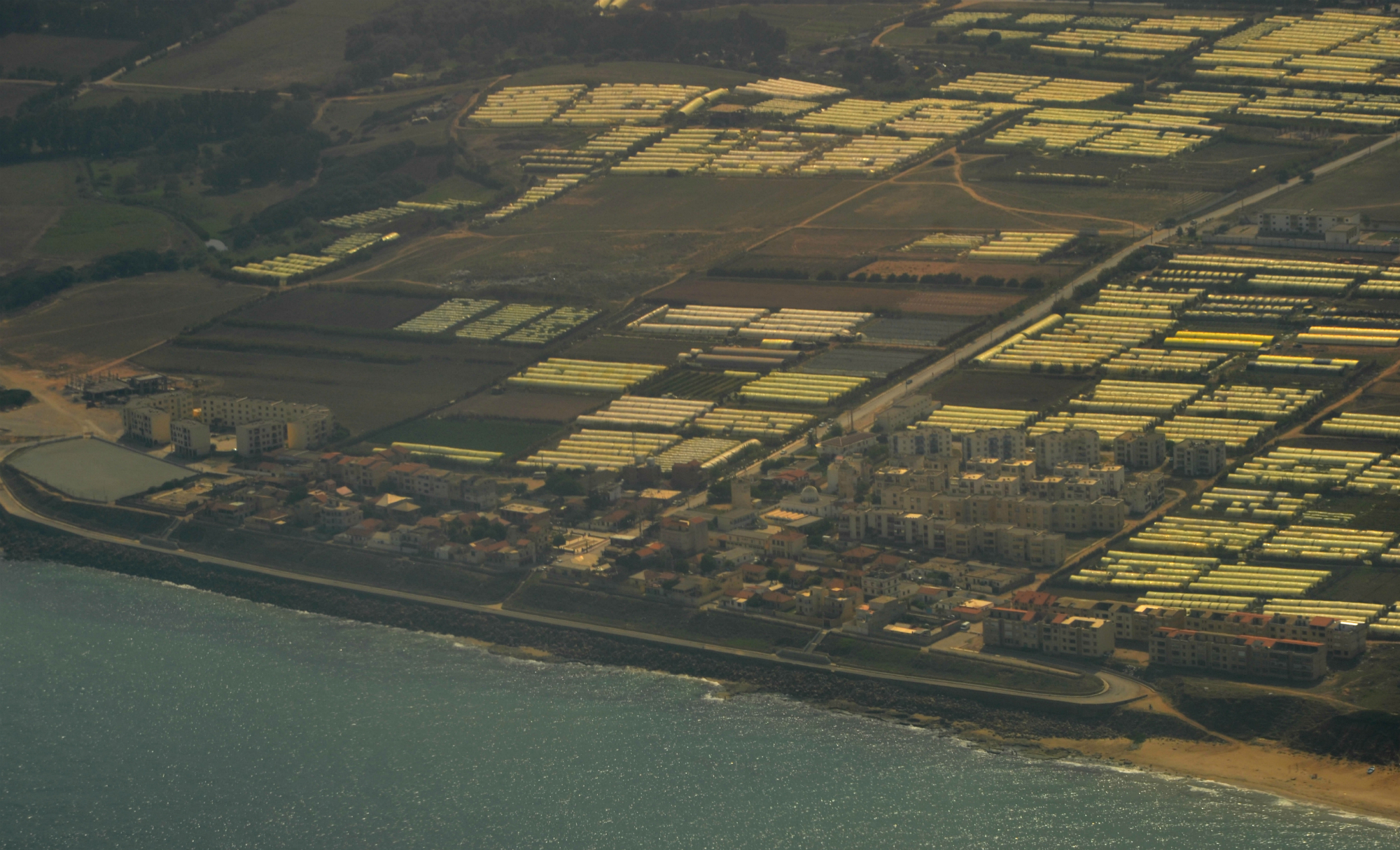
Located at 36.72N, 3.41E along the Oued Boudouaou valley, east of Algiers. The terrain is a mix of coastal plain and mountain foothills. Nearest airport: DAAG (Houari Boumediene Airport), approximately 30 km west. The river valley and surrounding ridgelines are visible at medium altitude.