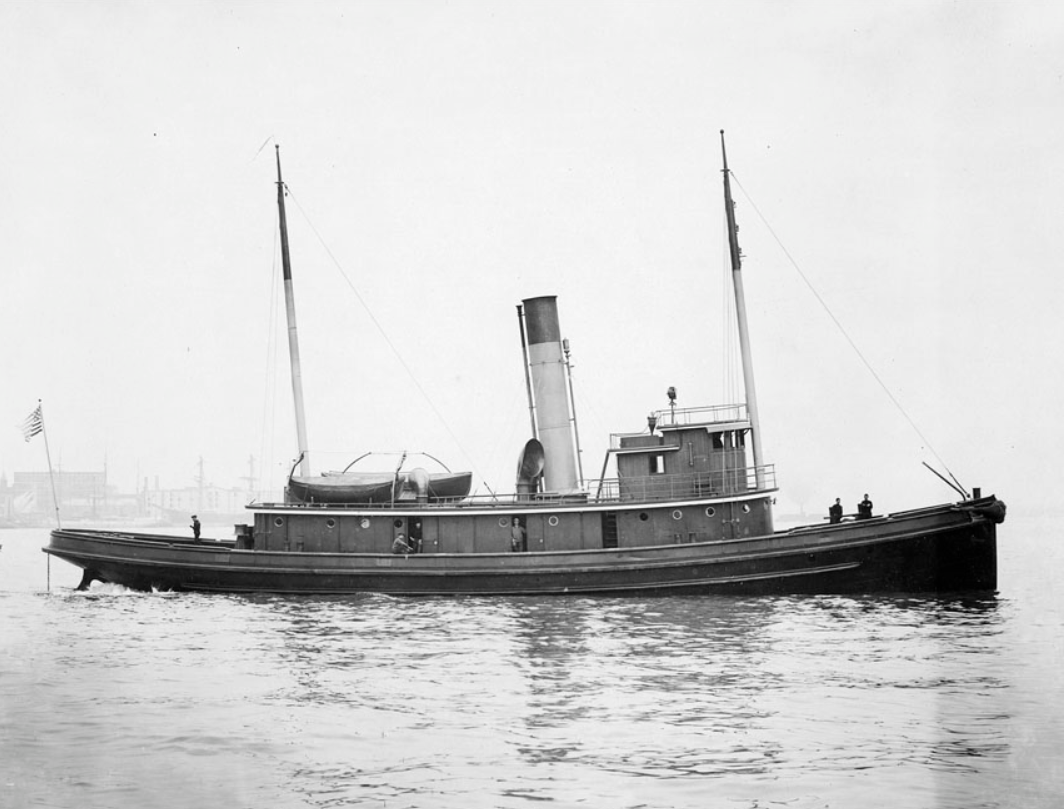
First Battle of Manzanillo
The Spanish held Manzanillo with a fleet that looked like it belonged in a museum. Old wooden gunboats, armed pontoons crewed by skeleton teams, a converted sailboat serving as a barracks ship. On paper, the three American vessels that entered the harbor on June 30, 1898, should have ended the engagement in minutes. Instead, the Spanish gunners found their range almost immediately, punched holes through engine rooms and steam pipes, and sent the Americans limping back out to sea. The First Battle of Manzanillo became one of those rare moments in the Spanish-American War when the outcome defied every expectation.
The Blockade Widens
The trouble began with supply lines. After the American blockade sealed Santiago's harbor, Spanish forces started routing provisions through smaller ports along Cuba's southern coast. The American consul in Kingston, Jamaica, caught wind of a resupply convoy being prepared for the southern run. On June 28, President McKinley expanded the blockade to cover Cuba's entire southern coastline and Puerto Rico as well. To enforce this widened cordon, a flotilla of gunboats and armed auxiliaries was dispatched to patrol the waters between Santa Cruz and Manzanillo. Among them were the Hornet, Hist, and Wompatuck, three small warships tasked with cutting off what had become Spain's last reliable supply route into Santiago.
A Gunboat Named Centinela
The Americans encountered their first resistance near Niguero Bay, where the Spanish gunboat Centinela was spotted on patrol. At just thirty long tons, she was barely larger than a harbor launch. Wompatuck's deep draft kept her offshore, so Hornet and Hist moved in to engage. Centinela opened fire with two Maxim guns, and Spanish troops on the shoreline joined in. The Americans returned fire, knocked out Centinela's aft gun, and drove the shore troops into cover. The little gunboat tried to escape by ducking behind a small cay, but American shells found her anyway, and her crew ran her aground. It seemed a quick, decisive action. But Centinela would be refloated, repaired, and back in the Spanish line at Manzanillo before the month was out. She was harder to kill than she looked.
The Harbor Fights Back
Manzanillo's harbor held a motley Spanish squadron: the gunboats Guantanamo, Estrella, and Delgado Parejo, each crewed by nineteen sailors and officers, plus three armed pontoons with improvised weaponry. Guardian carried four gunners manning an old Parrott gun. Cuba Espanola was a wooden antique armed with another Parrott. A converted sailboat rounded out the defense. The Americans opened fire at 3:20 in the afternoon. The Spanish answered with startling accuracy. Hist took multiple hits, some dangerously close to her engine room. Hornet suffered worse: a shot ruptured her main steam pipe, filling the engineering spaces with superheated vapor. At least three men were severely scalded, and at least one died from his burns. With Hornet disabled and under tow by Wompatuck, and Spanish guns now concentrating on the retreating pair, the Americans withdrew. Their gunboats simply did not carry enough firepower to destroy the Spanish squadron.
Four Battles for One Harbor
The retreat from Manzanillo was not the end. Two American reinforcement vessels arrived the following day and attempted a second attack, but they too were driven off. The Spanish repaired their battered ships and waited. More American warships gathered through July, and on July 18 a third engagement finally broke the back of the Spanish fleet. Even then, the town's garrison held out until August, when a fourth and final battle settled the matter. Manzanillo required four separate engagements to subdue, a stubborn resistance that reflected less the strength of the Spanish position than the determination of its defenders and the limitations of the small American gunboats initially sent against them.
An Overlooked Corner of Cuba's Coast
Manzanillo sits on the Gulf of Guacanayabo, a broad, shallow bay on Cuba's southeastern coast. In 1898, its harbor was a working port surrounded by sugar country, its waterfront crowded with commercial vessels alongside the military ones. The shallow waters that made Wompatuck's deep draft a liability also made the harbor difficult to assault from the sea. Today Manzanillo remains a fishing and agricultural port, its waterfront facing the same gulf where Spanish and American gunboats traded fire across warm Caribbean water. The battles that raged here for weeks during the summer of 1898 have been largely overshadowed by the more famous engagements at Santiago, but they tell the same story: colonial wars are never as simple as the maps suggest.
From the Air
Located at 20.34N, 77.12W on the Gulf of Guacanayabo, southeastern Cuba. Manzanillo's harbor is visible as a concave indentation on the gulf's western shore. The shallow waters of the bay extend well offshore. Nearest airports: Sierra Maestra Airport (MUSM) near Manzanillo and Antonio Maceo International (MUCU/SCU) in Santiago de Cuba, approximately 150 km to the east. Niguero Bay, site of the initial engagement with Centinela, lies to the south along the coast. Expect tropical conditions with good visibility over the gulf on clear days.