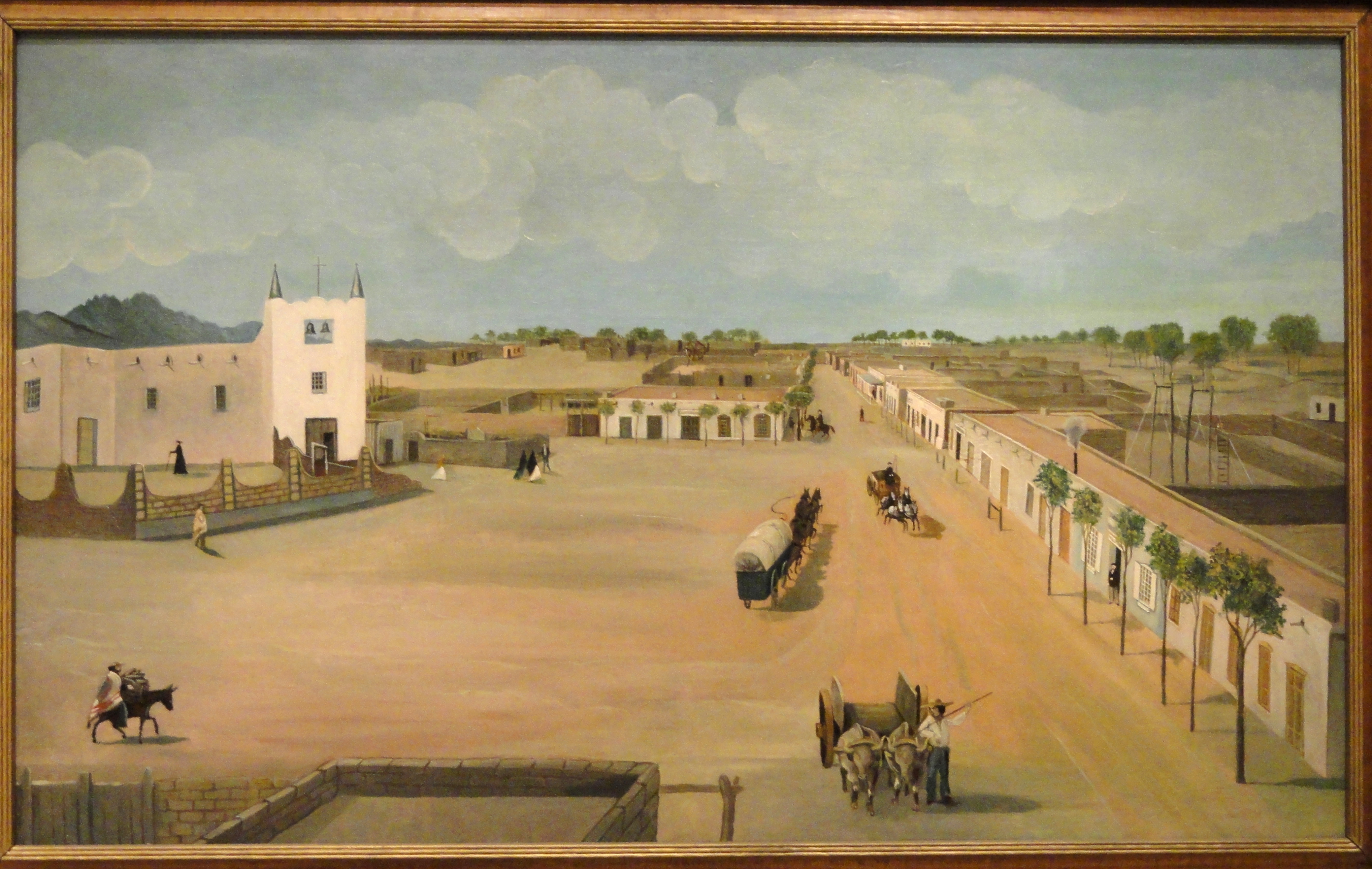
First Battle of Mesilla
The Civil War came to the desert Southwest in the summer of 1861, and it arrived with all the chaos and improvisation that marked the conflict's earliest days. On July 25, a Confederate battalion from Texas rode into the dusty crossroads town of Mesilla and was greeted with cheers by residents who saw themselves as southerners trapped in Union territory. Two days later, the same Confederates would capture an entire Union garrison without firing a shot -- not through superior tactics or overwhelming force, but because the Federal troops had drunk themselves into dehydration during a summer march across the Organ Mountains.
The Crossroads of Empire
Mesilla in 1861 was no ordinary frontier town. It sat at the intersection of the two most important routes across the American Southwest: El Camino Real de Tierra Adentro, the ancient north-south Royal Road connecting Mexico City to Santa Fe, and the east-west Butterfield Overland Mail route carrying passengers and post between St. Louis and San Francisco. Whoever controlled Mesilla controlled access to California, the gold and silver mines of Arizona, and the lucrative Santa Fe trade. The town's population had grown increasingly sympathetic to the Southern cause, and two conventions in March 1861 had already voted for secession from the Union. When Texas joined the Confederacy in February, the region's fate seemed sealed -- it was only a matter of who would make the first move.
Baylor's Gambit
Lieutenant Colonel John R. Baylor led a battalion of the 2nd Texas Mounted Rifles into New Mexico with orders that gave him remarkable discretion: attack the Union forts along the Rio Grande if circumstances warranted. Convinced that the garrison at Fort Fillmore was preparing to strike first, Baylor decided to seize the initiative. His men crossed the Rio Grande on July 25 and entered Mesilla to the cheers of the townspeople. A company of Arizona Confederates, already organized and waiting, mustered into his command on the spot. When Union Major Isaac Lynde marched 380 regulars from Fort Fillmore to retake the town, Baylor refused to surrender. Lynde opened fire with mountain howitzers and ordered his cavalry to charge, but heavy sand and cornfields disrupted the assault. After suffering several casualties and making no progress, Lynde withdrew to the fort.
The Whiskey Retreat
What happened next became one of the most embarrassing episodes in Union Army history. That night, Confederates captured 85 of the fort's horses. Fearing an overwhelming attack, Lynde ordered Fort Fillmore abandoned the following day, setting fire to supplies and ammunition before retreating northeast toward Fort Stanton across the brutal Organ Mountains. It was July in the Chihuahuan Desert, with temperatures well above 90 degrees. Many of Lynde's soldiers had made a fateful decision: rather than fill their canteens with water, they had raided the fort's medicinal whiskey stores. By the time Confederate cavalry caught up with the column at San Augustine Springs on July 27, Lynde's command had dwindled to barely 100 men capable of continuing. Dozens of dehydrated stragglers had already been captured. Lynde surrendered his remaining force without a fight.
A Territory Is Born
The Confederate victory at Mesilla had consequences far beyond a single skirmish. On August 1, 1861, Baylor proclaimed the creation of the Confederate Arizona Territory, encompassing all land south of the 34th parallel from Texas to California. He installed himself as military governor and declared martial law. The success at Mesilla convinced Confederate leadership that a full-scale invasion of New Mexico was feasible, leading directly to Henry Hopkins Sibley's ambitious campaign the following year. Major Lynde fared less well: on November 25, 1861, President Abraham Lincoln personally ordered him dropped from the Army rolls for abandoning his post and surrendering his command to an inferior force of insurgents. The stain on his record was never fully erased.
Desert Crossroads Today
Modern Mesilla survives as a historic district south of Las Cruces, its central plaza largely unchanged from 1861. The adobe buildings that witnessed Baylor's arrival still stand, now housing restaurants and art galleries. Fort Fillmore is gone, leveled sometime after a failed attempt to preserve it as a state park. A grove of pecan trees marks its approximate location, and the fort's cemetery remains on a sandy ridge nearby, most of its graves still unidentified. The Organ Mountains that defeated Lynde's retreat rise dramatically to the east, their jagged spires clearly visible from the air. San Augustin Pass, where the whiskey-soaked column finally collapsed, still carries traffic between Las Cruces and White Sands.
From the Air
The First Battle of Mesilla occurred in the town of Mesilla, New Mexico, located at approximately 32.27°N, 106.80°W, about 45 miles north of El Paso. The battlefield and historic plaza are visible from altitude as a small cluster of adobe buildings south of modern Las Cruces. Fort Fillmore's former location lies about 6 miles to the southeast near the Rio Grande, now marked only by agricultural land and pecan groves. The dramatic Organ Mountains rise to the east, clearly visible from cruising altitude; San Augustin Pass cuts through them at approximately 5,720 feet MSL. The contrast between the lush Rio Grande valley and the harsh desert terrain explains why Lynde's dehydrated column collapsed during their retreat. Nearest major airport: El Paso International (KELP), approximately 45 nm south.