First Battle of Newtonia
Cherokee and Choctaw warriors fought alongside Texas cavalrymen in the fading light of a Missouri autumn. The First Battle of Newtonia, fought on September 30, 1862, stands apart in Civil War history as one of the few pitched battles where Confederate-allied Native American troops served as a significant component of the fighting force. Colonel Douglas H. Cooper's Confederates held the small communications hub of Newtonia in southwestern Missouri, with Joseph O. Shelby's Iron Brigade cavalry and a full brigade of Cherokee, Choctaw, and Chickasaw soldiers. When Union Brigadier General Frederick Salomon's advance force attacked, what followed was a daylong seesaw of reinforcements and counterattacks that ended only when darkness -- and a Confederate charge -- sent the Federal column fleeing in disorderly rout.
Missouri's Tug of War
By autumn 1862, Missouri had become a vicious no-man's land. The Union had claimed victory at Pea Ridge in March and declared no rebel flag still flew in the state. That boast proved premature. Confederate forces under Joseph C. Porter raided freely, William Quantrill's bushwhackers terrorized the countryside, and Sterling Price sent troops back into Missouri to recruit and resupply. Major General Thomas C. Hindman rebuilt Confederate strength in Arkansas and pushed a 6,000-man force into the state's southwestern corner. Cooper's cavalry, including Shelby's seasoned Iron Brigade and the Native American brigade, took up position near Newtonia. Union General James G. Blunt dispatched Salomon's advance force to intercept them. The stage was set for a collision at a crossroads town that served as a regional communications hub.
A Day of Seesaw Fighting
The battle opened with a Union probe on September 29, when 150 men of the 9th Kansas Cavalry under Colonel Edward Lynde rode toward Newtonia and discovered it held in strength. Lynde's mountain howitzers lacked the range to shell the town, so he withdrew. The next morning, a mixed force of Wisconsin infantry, Kansas cavalry, Indian Home Guard, and Ohio artillery advanced on Newtonia around 7:00 a.m. Both sides fed reinforcements into the fight throughout the afternoon. The Union line included troops from Kansas, Ohio, and Wisconsin regiments, backed by multiple artillery batteries. Cooper's Confederates fielded Texas cavalry, Missouri cavalry, Cherokee and Choctaw mounted rifles, and two artillery batteries. Estimates place Union strength at 4,000 to 4,500 men against 4,000 to 7,000 Confederates.
Nightfall and Rout
Shortly before sunset, Cooper's Confederates launched an all-out assault against the Union line. The attack broke Salomon's resolve, and he ordered a withdrawal. Colonel George Hall's militia covered the retreat, but Confederate artillery fire struck the retreating column and panic spread. What had been an orderly withdrawal became a disorderly rout. Union casualties were reported as either 245 or over 400 men; Confederate losses were 78. The disparity reflected the cost of retreat under fire. When Blunt's full division began advancing toward Newtonia in early October, Cooper abandoned Missouri rather than face the larger force. The Confederates had won the field but could not hold the state.
The Ritchey House Stands Witness
The Mathew H. Ritchey House served as headquarters for both sides during Newtonia's two Civil War battles and as a field hospital afterward. A portion of the battlefield was listed on the National Register of Historic Places in 2004 as the First Battle of Newtonia Historic District. At least nine Union soldiers lie buried in the on-site Civil War-era cemetery, though many earlier burials were exhumed and moved to Springfield National Cemetery in 1869. The Newtonia Battlefields Protection Association has worked to preserve the site. In 2022, the Ritchey House and 25 acres of battlefield, including the Old Newtonia Cemetery, were added to Wilson's Creek National Battlefield by the Consolidated Appropriations Act of 2023 -- a recognition that these two southwest Missouri battlefields, though separated by miles, share a common story of a border state consumed by war.
From the Air
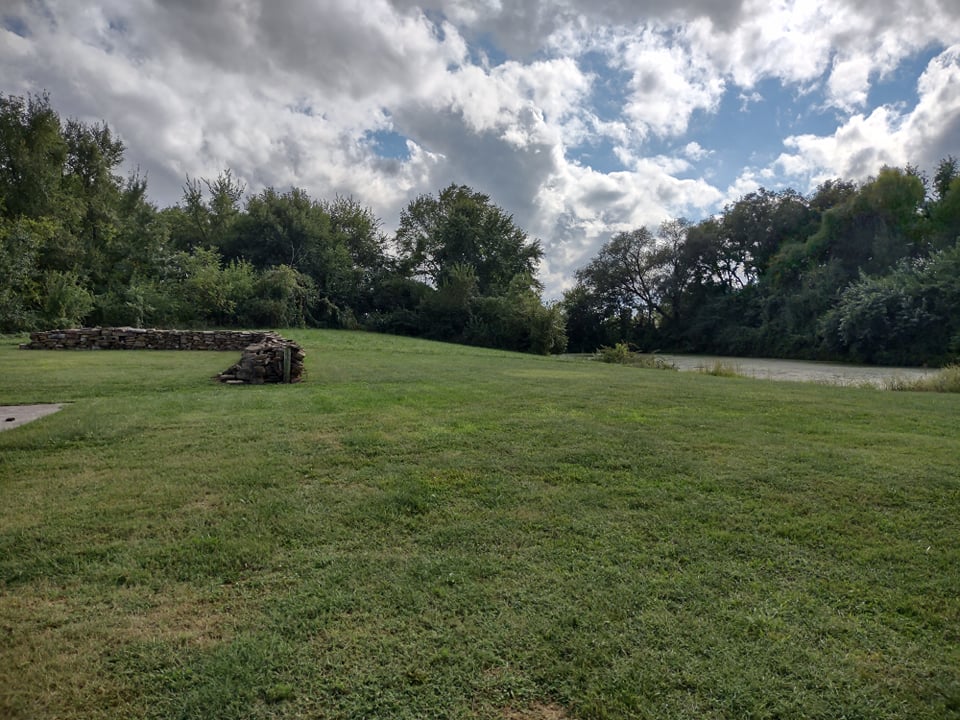
Located at 36.884N, 94.185W near Newtonia, Missouri, at approximately 1,100 feet MSL. The battlefield sits in the gently rolling terrain of Newton County in southwestern Missouri. Joplin Regional Airport (KJLN) is approximately 20 nm to the northwest. The terrain is open farmland with scattered woodlots, similar to its 1862 appearance. The historic Neosho Road and Newtonia Branch stream cross the battlefield. The First and Second Battle of Newtonia historic districts share boundaries at two places. Best viewed from 2,000-3,000 feet AGL to appreciate the open terrain that shaped the battle.