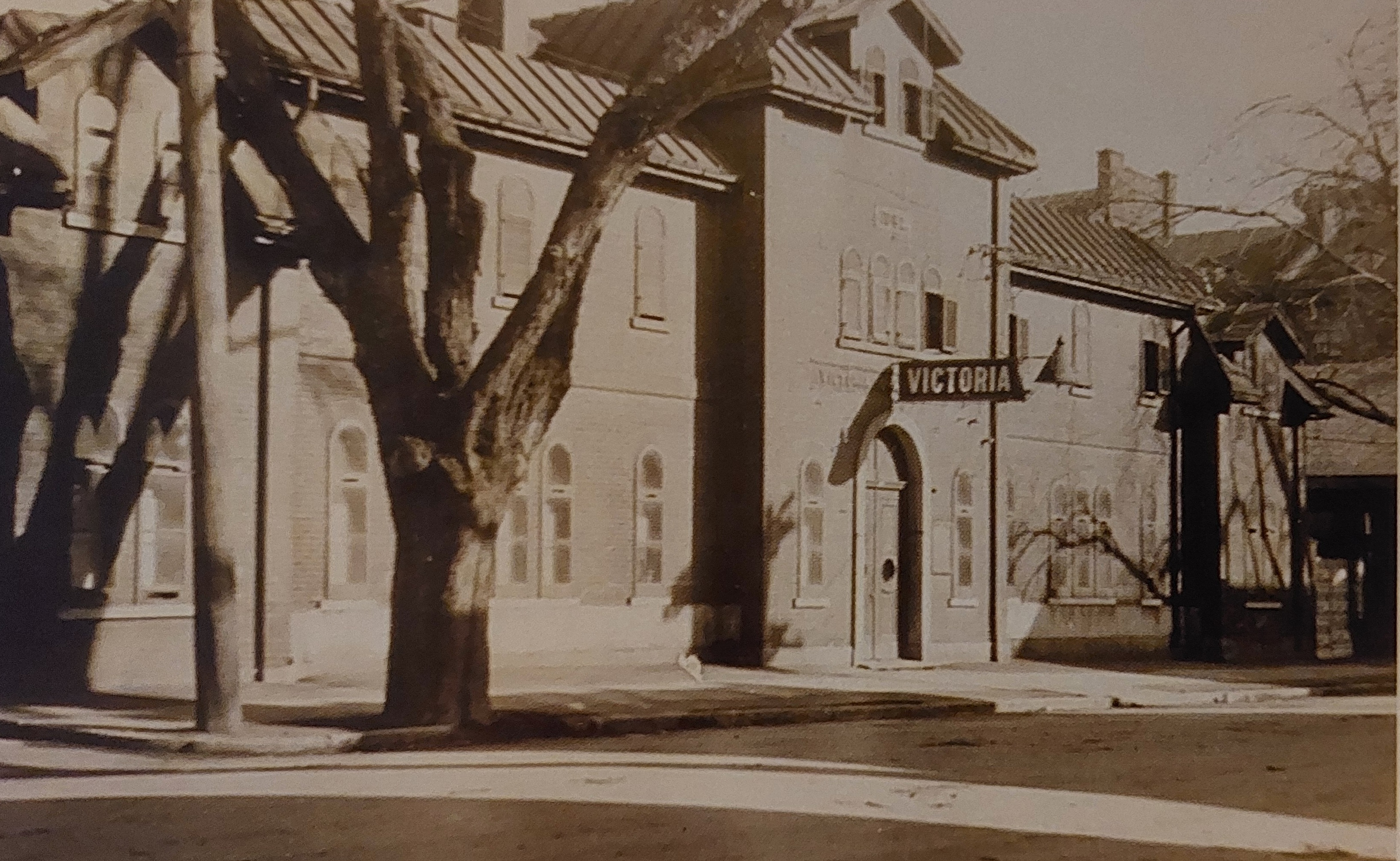
First Indoor Ice Hockey Game
The Montreal Gazette's notice was modest. 'A game of Hockey will be played at the Victoria Skating Rink this evening, between two nines chose from among the members. Good fun may be expected.' It was March 3, 1875, and readers had little idea what hockey even was - the newspaper itself noted the sport was 'much in vogue on the ice in New England and other parts of the United States' but 'not much known here.' That evening, eighteen men took to the ice inside one of the most elegant buildings in Montreal, captained by a Nova Scotian named James Creighton who had been organizing informal shinny sessions at the rink since 1873. They played with sticks imported from Nova Scotia and, in a crucial innovation, replaced the traditional lacrosse ball with a flat block of wood to keep it from flying into the spectators. The game that followed is recognized as the first organized indoor ice hockey match - the birth of a sport that would become inseparable from Canadian identity.
A Cathedral of Ice and Gaslight
The Victoria Skating Rink was no makeshift arena. Built on Drummond Street in the heart of Montreal's English community, near McGill University and the Golden Square Mile where the city's wealthiest industrialists lived, it was a two-story brick edifice with a pitched roof supported by curving wooden trusses that arched across its full width. Tall, round-arched windows flooded the interior with daylight, while 500 gas-jet lighting fixtures set in colored glass globes illuminated evening sessions. The rink later became the first building in Canada to be electrified. Its ice surface dimensions were remarkably similar to today's NHL rinks. A wide promenade surrounded the ice, elevated above the surface so spectators could watch, and a gallery with a royal box was later added for visiting dignitaries. One block east stood Dominion Square, home to Montreal's annual winter sporting events. Across the street rose the Windsor Hotel, the social heart of the city's English establishment. The Victoria Rink was a place of refinement - which made what happened after the hockey game all the more shocking.
Creighton's Rules
James Creighton had grown up playing outdoor hockey and shinny in Nova Scotia, where the game existed in various informal forms. When he moved to Montreal and joined the Victoria Skating Club as a member and figure skating judge, he began adapting those outdoor rules for indoor play. Starting in 1873, he organized sessions of shinny at the rink, played casually between club members and friends. The key adaptations were practical: the rink's enclosed space demanded control over the projectile, and the presence of spectators and glass windows made a bouncing lacrosse ball dangerous. Creighton's solution - a flat circular piece of wood that slid along the ice without rising - was the prototype of the modern puck. The rules he brought from Nova Scotia, adjusted for the indoor dimensions and the nine-player-per-side format, became the template from which all subsequent hockey rules descended.
Eighteen Men and a Flat Block of Wood
The game itself, played on the evening of March 3, 1875, featured two teams of nine, many of them McGill University students. The Gazette's report the following day described the action vividly: 'The match was an interesting and well-contested affair, the efforts of the players exciting much merriment as they wheeled and dodged each other.' Goals were scored by sending the block through flags placed about eight feet apart, similar to lacrosse goals. Captain Creighton's team won two games to Captain Torrance's one. The spectators 'adjourned well satisfied with the evening's entertainment.' The match holds its distinction as the first organized ice hockey game because of specific elements that connect it to the modern sport: two defined teams with recorded names, a recorded score, pre-announced public participation, and rules adapted for an indoor rink. Previous hockey games had been mostly outdoor, informal affairs. Creighton's game was the moment hockey became an organized sport.
The Fight After the Whistle
The Gazette omitted one detail that other newspapers did not. After the game, a fight broke out - not between the players, but between the hockey players and members of the Victoria Skating Club who opposed the use of their rink for this rough new sport. Club members resented hockey because it consumed hours that could be devoted to figure skating and recreational skating, and it tore up the ice surface. The Kingston Daily British Whig reported the aftermath without delicacy: 'Shins and heads were battered, benches smashed and the lady spectators fled in confusion.' The tension between hockey and other ice sports would persist for years, but hockey's popularity was unstoppable. The nine-player-per-side format lasted until 1880, when it was reduced to seven during the Montreal Winter Carnival ice hockey tournaments, the standard that held for the next thirty years before the game eventually settled on the six-a-side format that endures today.
Where the Puck Dropped
The Victoria Skating Rink is long gone, but its legacy is acknowledged at the site's modern neighbor. In 2002, the International Ice Hockey Federation announced it would recognize the location as 'the birthplace of organized hockey.' On May 22, 2008, a commemorative plaque was dedicated at the nearby Centre Bell - home of the Montreal Canadiens - honoring both the rink and James Creighton. The IIHF also created the Victoria Cup, with its first match held in Berne, Switzerland on October 1, 2008 between the New York Rangers and Metallurg Magnitogorsk. Today, the site at 1187 Drummond Street (originally numbered 49) sits in the commercial heart of downtown Montreal, surrounded by towers and traffic. Nothing visible marks the spot where eighteen men, a flat block of wood, and sticks shipped from Nova Scotia launched a sport that would define a nation. The ice is gone. The gaslit globes are gone. But every time a puck drops in any arena in the world, it echoes back to that March evening in 1875.
From the Air
Located at 45.50°N, 73.57°W in downtown Montreal, at the former site of the Victoria Skating Rink on Drummond Street, now in the commercial core near the Centre Bell arena. The site is not visible from altitude as no structures remain - look instead for the Centre Bell (home of the Montreal Canadiens) approximately one block away as a landmark. McGill University campus is visible to the northeast, and Dominion Square (now Dorchester Square) sits one block east. Nearest airport is Montreal-Pierre Elliott Trudeau International (CYUL), approximately 16 km west. Montreal/Saint-Hubert (CYHU) lies 14 km southeast. Best appreciated as part of a broader Montreal historic landmarks tour from 2,000-4,000 ft AGL.