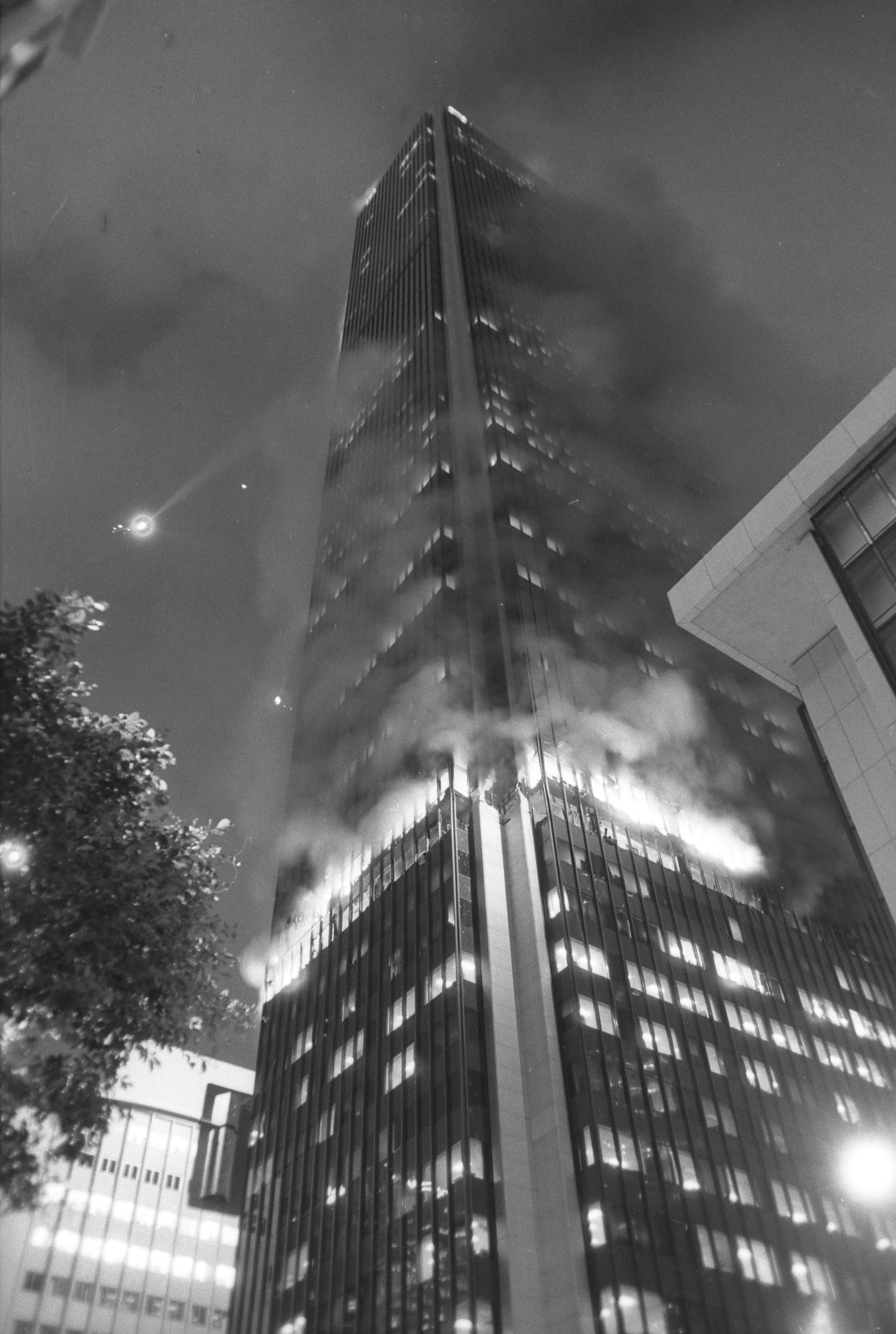
First Interstate Tower Fire
The sprinklers were ninety percent installed. That detail would haunt investigators, insurance adjusters, and the family of Alexander Handy for years to come. On the evening of May 4, 1988, fire erupted in the First Interstate Tower, the tallest building in Los Angeles at 62 stories and 860 feet. The sprinkler system that might have contained it sat idle throughout the building, waiting for water flow alarms that had not yet been connected. By the time flames died, five floors had been destroyed, forty people had been injured, and Handy, a maintenance worker who rode an elevator into the inferno to investigate smoke alarms, was dead.
The Night Everything Went Wrong
The fire started in the southwest corner of the twelfth floor, in an open-plan office filled with desks, computers, and the ordinary flammable materials of white-collar work. The U.S. Fire Administration later suspected an electrical origin but could never pinpoint the exact cause. What happened next moved with terrifying speed. Within six minutes, smoke detectors on floors twelve through thirty had activated. Yet the building's occupants and emergency services remained unaware until people on the street below called 911 after spotting flames shooting from the windows. Around fifty people were in the building that night. Firefighters would eventually rescue five individuals from the rooftop by helicopter, their silhouettes against the smoke becoming iconic images of the disaster.
Alexander Handy's Final Elevator Ride
When smoke detectors began triggering throughout the building, maintenance worker Alexander Handy did what his training dictated: he took a service elevator to investigate. The elevator doors opened onto the twelfth floor, directly into the fire. There was no escape. Investigators later blamed an open fire door for allowing the blaze to reach the elevator lobby. Handy's death transformed the incident from a dramatic but survivable fire into a tragedy that demanded answers. His name appears in fire safety training materials to this day, a reminder that building code gaps cost lives, not just money.
Ninety Percent Complete
The First Interstate Tower was completed in 1973, when Los Angeles did not require sprinkler systems in office towers. By 1988, the building's owners had recognized the vulnerability and begun retrofitting. The system was nearly done. Pipes ran through the structure. Sprinkler heads waited behind their glass bulbs. But the water flow alarms required for the system to operate legally had not been installed, so the entire apparatus sat dormant. After the fire, officials estimated that activated sprinklers could have contained the blaze to its floor of origin. Instead, flames climbed through the building's core, consuming five floors before firefighters achieved containment. The damage exceeded fifty million dollars. The lessons proved more expensive still.
The Code Rewrites Itself
The First Interstate Tower fire became a case study in regulatory failure. Los Angeles fast-tracked requirements for sprinkler retrofits in existing high-rises. Building codes nationwide tightened. The disaster joined a grim catalog of similar fires, from the One Meridian Plaza blaze in Philadelphia three years later, where another incomplete sprinkler system failed to prevent catastrophe, to the Grenfell Tower fire in London in 2017, where no sprinkler system existed at all. The First Interstate Tower itself was repaired and remained standing for years before being demolished. In 1991, a television movie titled Fire: Trapped on the 37th Floor dramatized the disaster with Lee Majors and Lisa Hartman Black. The building is gone now, but fire codes carry its memory.
From the Air
The former site of the First Interstate Tower (now demolished) was located at 34.049N, 118.257W in downtown Los Angeles, near the intersection of Hope Street and Wilshire Boulevard. The downtown LA skyline is clearly visible from altitude, a dense cluster of high-rises rising from the flat basin. Nearest airports: Bob Hope/Burbank (KBUR) 10nm north, Los Angeles International (KLAX) 12nm southwest, Santa Monica Municipal (KSMO) 8nm west. The Bunker Hill financial district provides distinctive landmarks for orientation.