First Nations University of Canada
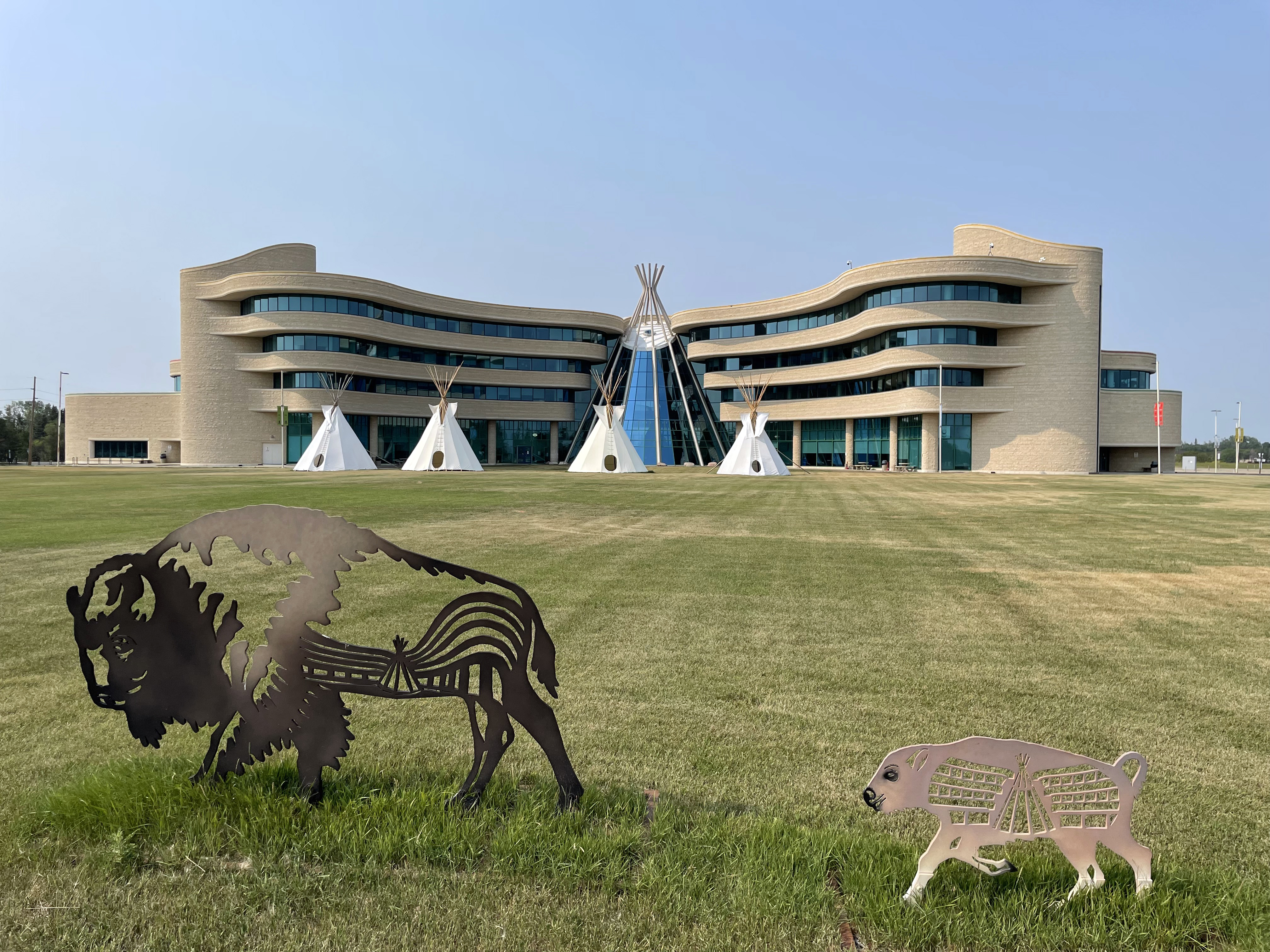
The building itself makes a statement before you read a single word about its mission. Douglas Cardinal, the renowned Blackfoot architect, designed the Regina campus with sweeping curves that echo the natural forms of the Saskatchewan landscape, rejecting the rigid geometry of colonial architecture. Inside, Aboriginal Elders provide guidance to students navigating not just academic challenges but the complex terrain of reclaiming cultural identity through education. This is the First Nations University of Canada, the only university in North America controlled by First Nations people, where degrees carry the weight of both Western academic tradition and Indigenous knowledge systems.
A Vision Takes Root
The idea emerged from necessity and determination. In May 1976, the Federation of Saskatchewan Indian Nations and the University of Regina formalized an agreement to create the Saskatchewan Indian Federated College. The stated intent was unambiguous: to serve the academic, cultural and spiritual needs of First Nations students. For nearly three decades, the college operated under that name, building programs and earning respect within the Canadian academic community. On June 23, 2003, under the leadership of university president Eber Hampton, the institution was renamed the First Nations University of Canada. Later that year, the Earl of Wessex opened the new Regina campus, and in 2005, Queen Elizabeth II made it her first engagement during the centennial celebrations of Saskatchewan and Alberta.
Three Campuses, One Mission
The university operates across Saskatchewan from three strategic locations. The Regina campus at 1 First Nations Way sits within the University of Regina grounds, its Cardinal-designed building housing programs in Indigenous Studies, Indian Fine Arts, Education, and Business. The Saskatoon campus occupies the Asimakaniseekan Askiy Urban Reserve, a significant designation that places Indigenous governance directly in an urban center. The Northern Campus in Prince Albert focuses on Indigenous Health Studies and Education, serving communities across the province's vast northern reaches. Each campus maintains its own library, with collections tailored to the disciplines taught there, all affiliated with the broader University of Regina library system since 1976.
Bridging Two Worlds
Though called a university and recognized as such by the Saskatchewan Government, FNUniv operates technically as a federated college of the University of Regina, with degrees conferred by the larger institution. This structure has allowed Indigenous-focused education to flourish within the framework of Canadian higher education. The university developed specialized programs in partnership with Aboriginal communities to address specific needs in health, education, and environmental management. A National School of Dental Therapy trains practitioners for communities often underserved by mainstream healthcare. First-year bridging programs help students transition to university life, with Aboriginal Elders present on campus to provide cultural and social support that no textbook can offer.
Weathering Storms
The path has not been smooth. Between 2007 and 2010, the university faced serious challenges to its governance and financial management. The Association of Universities and Colleges of Canada placed it on probation in 2007, demanding full independence from the Federation of Saskatchewan Indian Nations. The Canadian Association of University Teachers voted unanimously to censure the institution in 2008 over concerns about academic freedom and governance. Provincial and federal governments froze funding. In February 2010, both levels of government announced they would cease financial support, and the board of governors was dissolved. Yet the institution survived. By March 2010, governance reforms convinced Saskatchewan to restore funding. By April 2010, the censure was lifted after significant reforms took hold.
The Work Continues
Today, students of all cultures and nationalities can attend FNUniv, though its core mission remains serving First Nations, Metis, and Inuit students. The university offers over twenty scholarships and bursaries specifically for Indigenous students, from the Adam Dreamhealer Prize to the Mary Ahenakew Memorial Scholarship Award. Star Blanket Cree Nation has proposed making the institution's property an Urban Indian Reserve under a Saskatchewan Treaty Land Entitlement Agreement, a plan that band members unanimously supported in a 2008 referendum. Whether that vision becomes reality, the First Nations University of Canada continues to prove that Indigenous governance of higher education is not only possible but essential to reconciliation and cultural survival.
From the Air
Located at 50.42N, 104.58W on the University of Regina campus in Saskatchewan's capital city. The distinctive curved architecture of the Douglas Cardinal-designed Regina campus building stands out from the surrounding rectilinear structures. Regina International Airport (CYQR) is approximately 5 km to the southwest. The campus sits in the southern portion of Regina, easily identified within the broader University of Regina complex. The flat prairie landscape makes the city and its institutions visible from considerable altitude in clear conditions.