The Battle of Fishguard: The Last Invasion of Britain
On February 22, 1797, four French warships appeared off the coast of Pembrokeshire, Wales. The ships landed 1,400 soldiers - French regulars and released convicts - near the town of Fishguard. It was meant to be the start of a revolution that would spread to England and overthrow the government. It lasted barely two days. The invaders got drunk on wine from a shipwreck, were confronted by local militia and women in red shawls whom they mistook for British soldiers, and surrendered unconditionally on February 24. The Battle of Fishguard was the last invasion of mainland Britain - a fiasco that became a legend.
The Plan
Revolutionary France in 1797 was at war with Britain. The plan called 'La Légion Noire' (The Black Legion) envisioned diversionary landings in Wales and England to distract from a main invasion of Ireland. The Welsh landing would burn Bristol, rally Welsh opposition to London, and create chaos.
The force assembled was less than inspiring. Of the 1,400 men, about 600 were regular soldiers. The rest were convicts released from French prisons and promised pay and plunder. They were commanded by 44-year-old Irish-American Colonel William Tate, a veteran of the American Revolutionary War who had a grievance against Britain. The ships were poorly provisioned. The men were poorly disciplined. The plan was poorly conceived.
The Landing
The original target was Bristol, but adverse winds pushed the fleet to Wales. An attempt to land at Cardigan was abandoned when the ships were fired on. On February 22, the force landed at Carregwastad Point, near Fishguard. The landing was unopposed - there was no one there to oppose it.
The soldiers marched inland and established headquarters at a local farmhouse. The invasion had begun. But the invasion force had a problem: they had landed in one of the most remote parts of Britain, far from any strategic targets, with no horses, no artillery, and no real plan beyond 'cause chaos.'
The Wine
Within hours of landing, discipline collapsed. The invaders discovered that a Portuguese ship had recently wrecked nearby, and its cargo of wine had been salvaged by local farms. The soldiers and convicts looted the farms and got spectacularly drunk.
By the second day, most of the invasion force was incapacitated by alcohol. Colonel Tate struggled to maintain order. Some soldiers began deserting. Others were too drunk to respond to commands. The great invasion was degenerating into a drunken brawl.
The Women
Local militia under Lord Cawdor gathered to confront the invaders - perhaps 500 men with limited military experience. But they were joined by local civilians, including women who came to watch or help. According to legend, the women wore red shawls (known as the 'Frenchman's terror') and tall black hats - red cloaks were actually rare in Wales until after 1860.
From a distance, the French reportedly mistook the women for British redcoats. The sight of what appeared to be a large British force convinced Tate that resistance was futile. Whether the story is embellished or not, it became part of local legend - that the last invasion of Britain was foiled with help from Welsh women.
The Surrender
On February 24, Colonel Tate surrendered unconditionally. His demoralized, hungover force laid down their arms on Goodwick Sands. The battle, such as it was, cost several dozen French lives and a handful of local casualties. The invasion had achieved nothing.
The prisoners were marched to various towns across England. Most were eventually exchanged and returned to France in 1798. Jemima Nicholas, a cobbler's wife who allegedly captured twelve French soldiers single-handedly with a pitchfork and locked them in a church, became a local hero and was awarded a lifetime pension. The Battle of Fishguard, the last invasion of mainland Britain, passed into legend as a comic opera of military incompetence and Welsh resistance.
From the Air
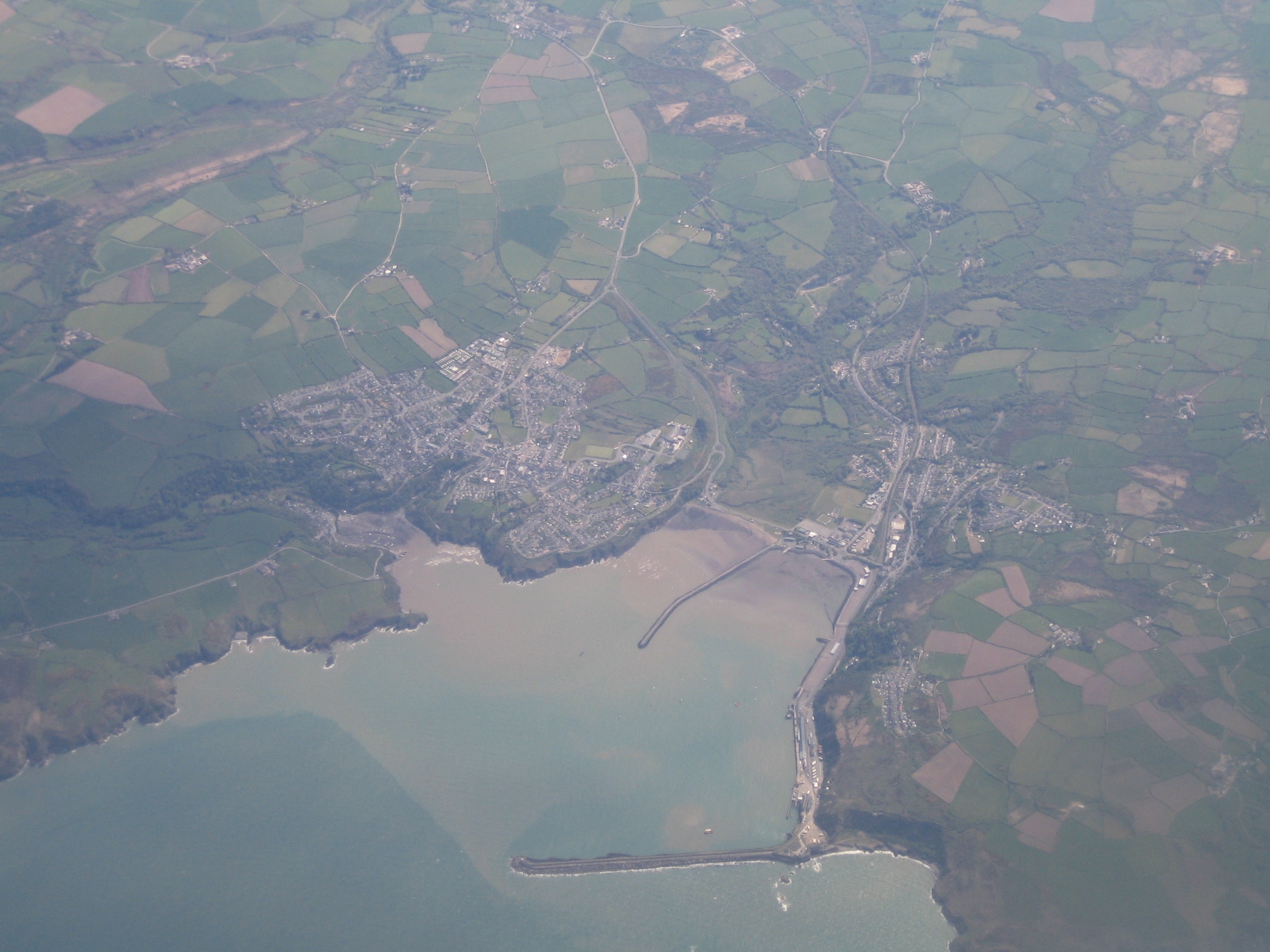
Fishguard (51.99N, 4.98W) lies on the coast of Pembrokeshire in southwest Wales. The nearest significant airport is Cardiff (EGFF), 150km east. Carregwastad Point, where the French landed, is 3km west of Fishguard. The terrain is hilly coastal farmland. The surrender took place on Goodwick Sands, now part of Fishguard harbour. Weather is maritime - mild, wet, often windy.