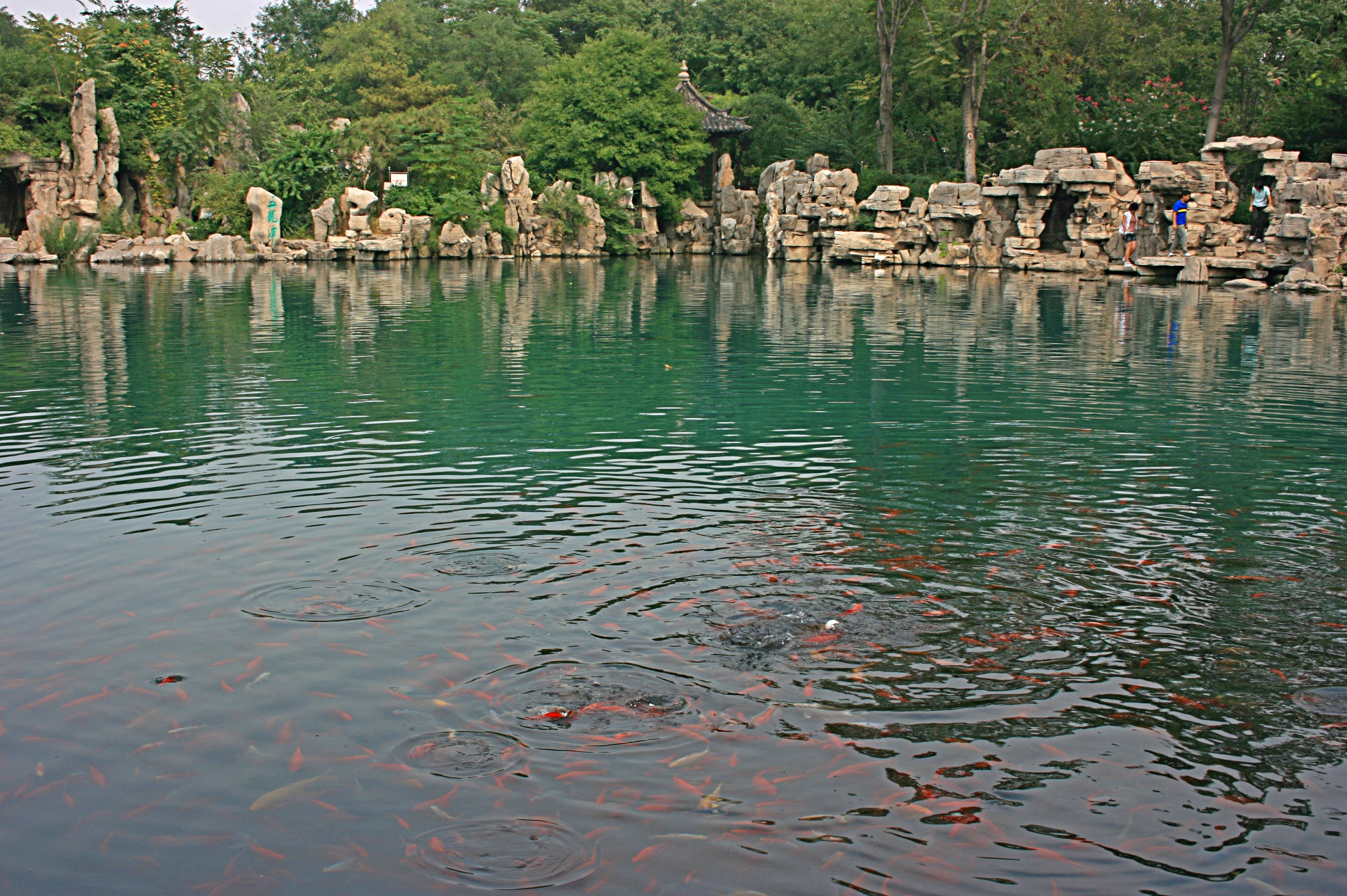
Five Dragon Pool
According to Jinan legend, the Tang dynasty general Qin Shubao once had his residence on this very spot. Then the rains came -- torrential, relentless -- and the ground swallowed the house whole. Where the building had stood, water welled up from the deepest circulation of any spring in the city, forming a broad pool that locals named for five dragons. Whether the story is geology dressed in mythology or pure invention, the Five Dragon Pool draws from the lowest reaches of the Ordovician karst aquifer that gives Jinan its identity as China's Spring City.
The Deepest Water in the Spring City
Jinan is famous for its 72 named springs, and the Five Dragon Pool -- or Wulongtan -- ranks among the best known. What sets it apart from the more celebrated Baotu Spring or the dramatic Black Tiger Spring is depth. Hydrogeological studies have established that the water feeding Five Dragon Pool originates from the deepest circulation of all Jinan's springs. It rises through the same Ordovician karst system that underlies the entire city, but from layers that other springs do not reach. The pool belongs to a group of 29 springs that includes the Tianjing Spring, Yueya Spring, Ximizhi Spring, Dongmizhi Spring, and the wonderfully named Congming Spring -- the "Clever Spring." Together, these springs form a neighborhood of water, each with its own character but all sharing the same ancient aquifer.
A General's Ghost in the Water
The connection to Qin Shubao gives the Five Dragon Pool a narrative weight that pure hydrology cannot provide. Qin Shubao was a real historical figure -- a general who served under the founder of the Tang dynasty and became one of the most celebrated door gods in Chinese folk religion, his image painted on doors to ward off evil spirits. The idea that his home was consumed by the earth and replaced by a spring pool ties the mundane fact of artesian water to the mythic dimension of Chinese history. In 1985, the Five Dragon Pool Public Park was established, and the garden landscape surrounding the springs was carefully restored. Pavilions now stand at the edges of the pool, reflected in water that has been rising from bedrock since long before any general built his house here.
Where Springs Gather
The park sits west of Jinan's historical city center and north of the Baotu Spring, placing it squarely within the densest concentration of springs in the city. Walk a few blocks in any direction and you encounter another named spring -- Gu Wen, Xianqing, Guanjiachi, Huima, Jade, Lian. The area around the Five Dragon Pool is less a park with springs than a spring system with a park built around it. Water surfaces in unexpected places: from cracks in stone, through garden beds, along channels that have been flowing since before the earliest written records of the city. The address on Kuangshi Street in Shizhong District marks a location that is technically a public park, but functionally it is a window into the aquifer -- a place where the underground rivers that define Jinan break the surface and remind the city what lies beneath.
From the Air
Located at 36.67N, 117.01E in central Jinan, just north of Baotu Spring Park. Jinan Yaoqiang International Airport (ZSJN) is approximately 30 km northeast. The Five Dragon Pool park is a small green space within the dense urban grid. From the air, it is close to the larger Baotu Spring Park and Daming Lake, which provide better visual reference points.