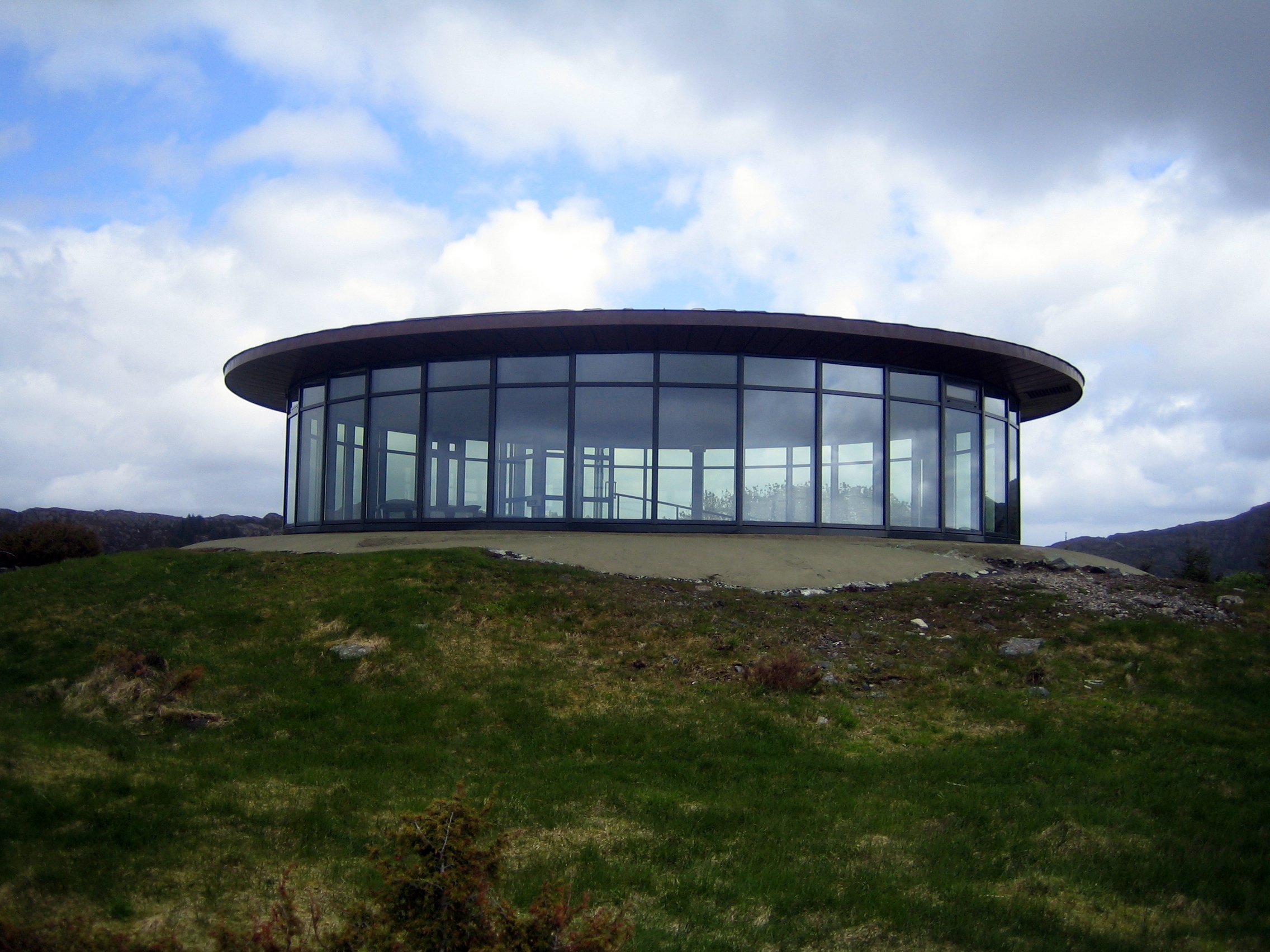
Fjell Fortress
The first time they fired the guns at full charge, the blast shattered every window in the village and flattened several barns. They never fired at full power again. Fjell Fortress sits on the island of Sotra, west of Bergen, where the German occupation forces during World War II built one of Norway's most formidable coastal batteries. Its centerpiece was a triple-barreled 28-centimeter naval gun turret weighing a thousand tonnes, salvaged from the battleship Gneisenau and sunk seventeen meters into solid rock. The fortress was designed for a single purpose: to seal the seaward approach to Bergen against Allied attack.
From Battleship to Mountain
The gun turret that defines Fjell Fortress had already seen war before it arrived on Sotra. It came from battery Bruno of the German battleship Gneisenau, one of the Kriegsmarine's capital ships. After the Gneisenau was damaged beyond practical repair, her turrets were repurposed for coastal defense. Mounting the turret at Fjell required excavating seventeen meters vertically into the mountain -- a task the Germans considered too slow to accomplish by tunnel-blasting alone. Instead, they carved an open ditch and capped it with concrete afterward, a shortcut that left the tunnel system permanently vulnerable to water infiltration. The three barrels, each 28.3 centimeters in bore, had a theoretical range of 41 kilometers at maximum charge, covering the sea from Fedje in the north to Stolmen in the south. At reduced charge, the effective range dropped to around 37 kilometers. The guns originally weighed 600 tonnes; additional armor brought the total to a full 1,000 tonnes.
Built by Prisoners, Guarded by Mountains
Construction began in late summer 1942, and the guns were ready to fire by June or July 1943. The labor that made this possible came overwhelmingly from prisoners -- men from eastern Europe and Norway forced to work in brutal conditions on an exposed Atlantic island. Twenty-five prisoners died during construction from frostbite, exhaustion, or execution. The fortress they built extends both above and below ground, connected by a network of tunnels stretching two miles through the rock and across the surface. Beyond its primary mission of intercepting naval threats to Bergen, the main gun also served an anti-aircraft role, firing on Allied bombing raids against the city. The fortress was designated Marine-Kusten-Batterie 11./504, one link in the chain of Atlantic Wall defenses stretching from Norway to France.
A Fortress Without a Future
The war ended without the guns of Fjell ever engaging an Allied fleet in the decisive naval battle they were built for. After 1945, the fortress passed to the Norwegian Armed Forces, which maintained ownership of the site while the foundation Stiftelsen Fjell festning took responsibility for preservation and maintenance. The fortress became an unlikely tourist attraction: visitors can walk the tunnel network and see the massive gun emplacement, now topped with a protective cover that houses a cafe. But the site's long-term fate has been uncertain. The Norwegian Armed Forces offered to transfer ownership to the municipal authorities without compensation, but the municipality rejected the offer. As of recent years, the question of who bears ultimate responsibility for this enormous concrete and steel relic remained unresolved.
Iron Memory on Sotra
Fjell Fortress is both a monument to military engineering and a scar on the landscape. The tunnels that prisoners carved into the mountain at the cost of their lives still wind through the rock, damp with the water that seeps through the construction shortcuts the Germans took in their hurry to arm the coast. The gun emplacement, stripped of its barrels but still massive, sits in its concrete cradle like a piece of the Gneisenau embedded in Norwegian granite. From the hilltop, the view stretches across the same seaward approaches the battery was meant to defend -- a sweep of islands, channels, and open water leading to Bergen. On a clear day, the scale of what the occupation forces built here becomes apparent: not just a gun position, but an underground complex designed to function as a self-contained fighting unit. That it never fought the battle it was designed for does not diminish the weight of what it cost to build.
From the Air
Located at 60.33N, 5.08E on the island of Sotra in Oygarden Municipality, west of Bergen. The fortress sits on high ground with clear sightlines across the seaward approaches. Nearest airport: Bergen Flesland (ENBR), approximately 20 km to the east. Fly at 1,500-2,500 ft to see the gun emplacement and tunnel complex on the hilltop. The island chain of Sotra provides dramatic coastal scenery with the fortress commanding a panoramic view of the channels and open North Sea beyond.