Flagler College
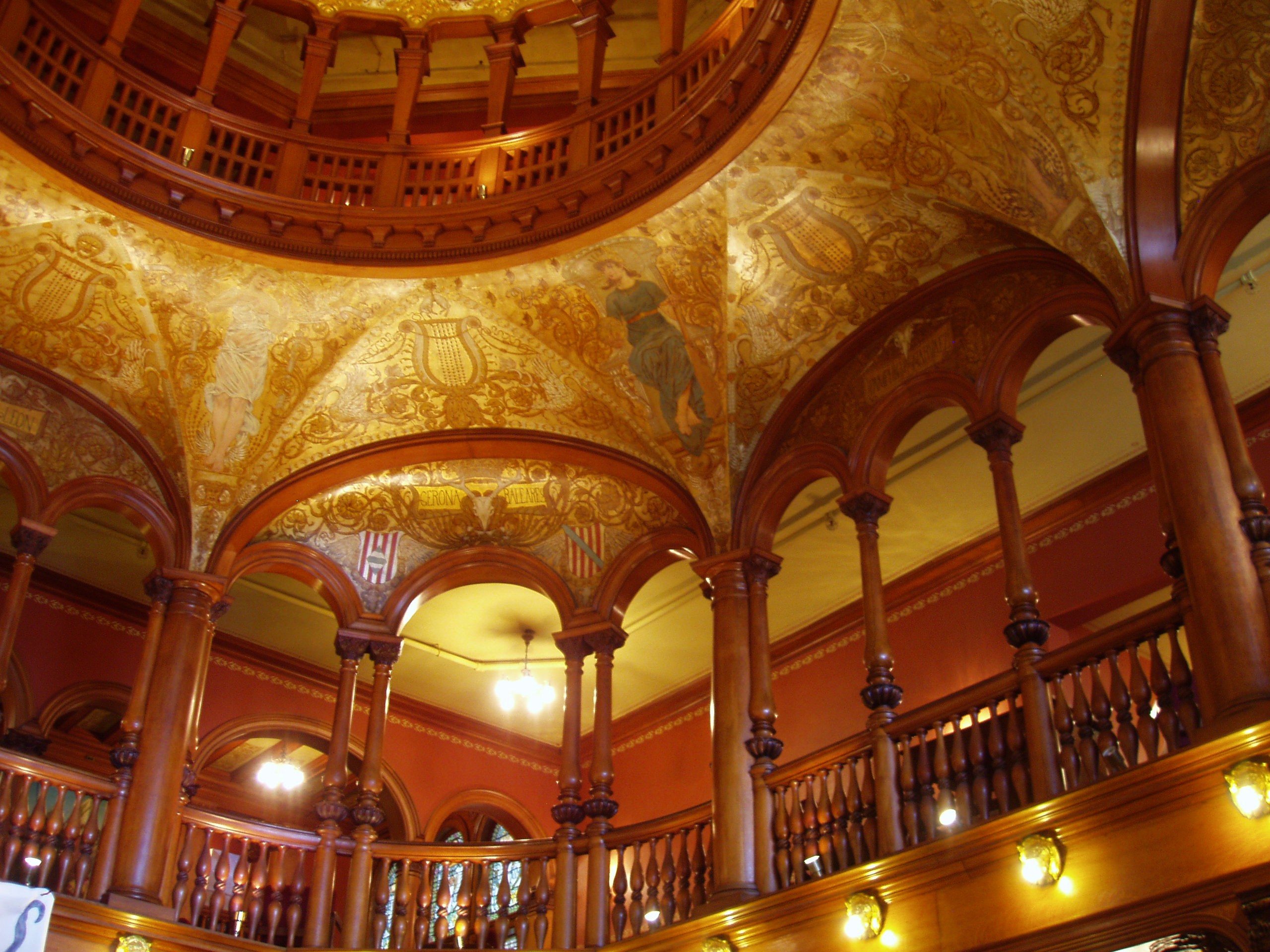
Students at Flagler College eat breakfast in a dining hall lit by Louis Comfort Tiffany stained glass windows. They cross a courtyard where Austrian crystal chandeliers once dazzled Gilded Age socialites, and they study in rooms where railroad barons and oil magnates once slept off extravagant dinners. The building they call home was never meant to be a college. It was meant to be the most opulent hotel in America -- and for a time, it was. The Ponce de Leon Hotel opened in 1888 as the crown jewel of Henry Morrison Flagler's Florida empire, and the fact that it survives today as a working campus in St. Augustine is one of the more improbable preservation stories in the American South.
An Oil Baron's Paradise
Henry Flagler made his fortune as a co-founder of Standard Oil alongside John D. Rockefeller, then turned his attention south. Convinced that Florida's northeast coast could become a winter playground for the wealthy, he hired the young architectural firm of Carrere and Hastings -- who would later design the New York Public Library -- to build something unprecedented. The Ponce de Leon Hotel rose in poured concrete (one of the first buildings in America to use the material structurally), clad in coquina shell aggregate that gave it the warm, textured look of old Spain. Flagler spared nothing on the interiors. Tiffany designed the stained glass windows and the elaborate murals in the dining room. Thomas Edison personally installed the electrical system, and an ornate onyx clock he provided became one of the first electric clocks used in a public building. The hotel opened on January 10, 1888, and for decades it drew the Rockefellers, the Vanderbilts, and presidents to its Spanish Renaissance halls.
From Grand Hotel to Grand Experiment
By the mid-twentieth century, the age of the great resort hotel was fading. Air conditioning made Florida a year-round destination rather than a winter escape, and the Ponce de Leon could not compete with newer properties. The hotel closed in 1967. It might have been demolished, as so many Gilded Age landmarks were, except that Lawrence Lewis Jr. had a different vision. Lewis was Henry Flagler's great-grandnephew -- related through his mother, whose aunt Mary Lily Kenan had married Flagler in 1901. Lewis saw the shuttered hotel not as a relic but as the bones of a college campus. In 1968, Flagler College opened with its first class of students. Lewis served as chairman of the board of trustees for more than twenty years, directing millions of dollars from foundations and personal funds into restoring the historic buildings while converting them to academic use. The gamble worked. The Ponce de Leon Hotel was designated a National Historic Landmark, and the college grew into a respected liberal arts institution offering 44 undergraduate majors.
Gilded Classrooms
Walking the Flagler campus today is an exercise in architectural whiplash. The Grand Parlor, where hotel guests once sipped cocktails beneath hand-painted ceilings, is now the Flagler Room, used for receptions and events. The Dining Hall still functions as a dining hall -- students fill trays and sit beneath the same Tiffany windows that illuminated meals served on bone china over a century ago. A statue of Henry Flagler in bronze stands guard at the King Street entrance. The Proctor Library, built in 1994-95, echoes the Gilded Age style of its neighbors despite being a century younger. It replaced the home of artist Felix de Crano, which had been the last Shingle Style house in St. Augustine. Even the campus newspaper carries the building's Gothic DNA: it is called The Gargoyle, named for the ornamental figures that peer down from the hotel's roofline.
Saints and Scandals
Flagler College has never been without its complications. In 2014, Vice President of Enrollment Management Marc Williar resigned after investigators discovered he had been altering student test scores, GPAs, and rankings since 2004 to inflate the college's reputation with the U.S. Department of Education and various ranking organizations. A Jacksonville law firm's investigation confirmed the deception. The college weathered the scandal and rebuilt its credibility; by 2024, U.S. News and World Report ranked it number two among Most Innovative Schools and number three among Best Regional Colleges in the South. On the athletic side, the Saints compete in NCAA Division II as members of the Peach Belt Conference, fielding 19 varsity sports. The women's volleyball team reached the national championship in 2009, finishing in the top four in the country.
The View from Above
From the air, the Ponce de Leon Hotel's red terracotta roofline and twin bell towers are unmistakable against the low skyline of St. Augustine's historic district. The courtyard, with its formal gardens and central fountain, reads as a green rectangle amid the terra-cotta. Matanzas Bay glitters to the east, and the Castillo de San Marcos -- the coquina fort that has anchored this city since 1695 -- sits just a few blocks north. Together they form a corridor of Spanish colonial architecture that no other American city can match. Flagler's vision of a tropical paradise for the elite did not survive the twentieth century, but the buildings he raised endure -- repurposed, yes, but no less grand for the transformation.
From the Air
Flagler College occupies the former Ponce de Leon Hotel in downtown St. Augustine, at approximately 29.892N, 81.315W. The building's distinctive red terracotta roof, twin bell towers, and central courtyard are visible from moderate altitude. It sits just southwest of the Castillo de San Marcos on the western shore of Matanzas Bay. The Bridge of Lions is visible to the east. Nearest airports: St. Augustine Airport (KSGJ) approximately 4nm northwest, Jacksonville International (KJAX) 35nm north. Best viewed at 1,500-2,500 feet AGL to appreciate the roofline details and campus layout against the surrounding historic district.