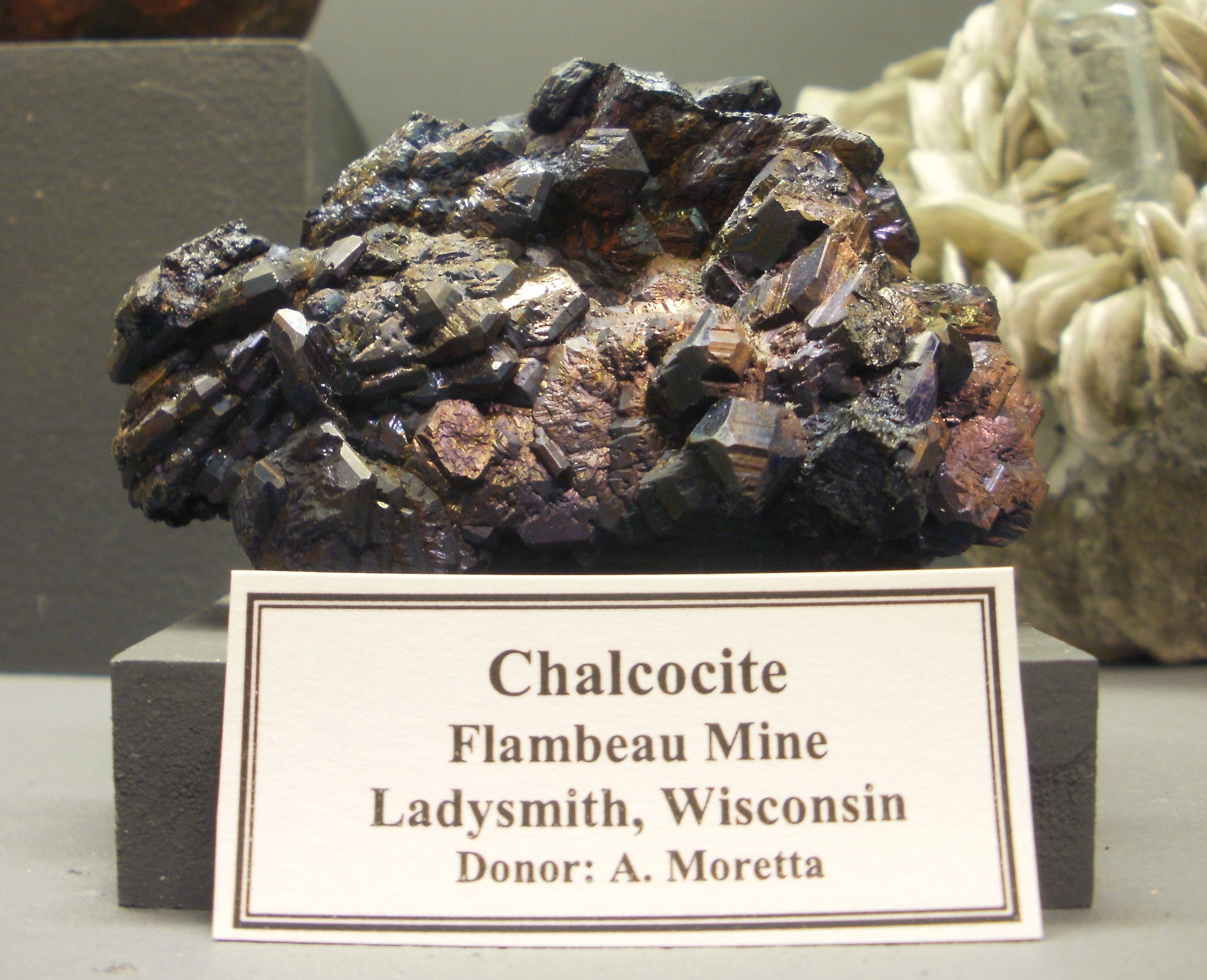
Flambeau Mine
An airborne survey in 1968 detected something valuable beneath the farmland south of Ladysmith, Wisconsin. Exploratory drilling confirmed a copper-gold deposit near the Flambeau River, a massive sulfide body that also held silver. What followed was not a rush to dig but a quarter-century argument about whether to dig at all. The state passed comprehensive mining regulations in 1974. Rusk County denied zoning approval in the mid-1970s. The deposit sat untouched while politicians, environmentalists, and mining executives debated what responsible extraction might look like in a state that valued its rivers and forests. When the Flambeau Mine finally opened in 1993, it was supposed to be the proof that modern mining and environmental stewardship could coexist. The answer turned out to be more complicated than anyone promised.
Four Years, Three Metals
Kennecott Minerals, operating through a subsidiary, ran the Flambeau Mine as an open pit operation from 1993 to 1997. The approach was deliberately scaled back from the original mid-1970s proposal, which had envisioned an open pit followed by underground mining, with ore processing on site and tailings disposed nearby. Instead, the company shipped 1.9 million tons of raw ore to smelters in Canada. The yield was substantial: 181,000 tons of copper, 334,000 ounces of gold, and 3.3 million ounces of silver. The deposit sat near the Flambeau River, a waterway known for its fishing that flows into the Chippewa River and ultimately the Mississippi. That proximity to valued waterways made every aspect of the operation a subject of intense scrutiny. When Kennecott finished extracting in 1997, the company began reclamation, restoring the site to what was described as a fairly natural state. As of 2022, the Flambeau Mine remained the only example of a metallic mine that was permitted, constructed, operated, and reclaimed under Wisconsin's existing regulatory framework.
The Poison in Stream C
The reclamation looked good on the surface. Prairie grasses grew where the pit had been. But underground, the chemistry told a different story. Water samples from wells in the former pit showed elevated levels of sulfate, copper, manganese, and iron for several years after 1999. Those levels eventually stabilized. More troubling was what happened to the surface water. Runoff from the mine site failed to meet Wisconsin's water quality standards. A stream designated as Stream C, flowing into the Flambeau River, showed copper concentrations approximately ten times the acute water quality standard between 2004 and 2008. Zinc levels ran at roughly twice the standard. Studies found the stream almost devoid of life -- no vegetation, no fish. Copper and zinc together proved more lethal to aquatic organisms than either metal alone. The river that had defined the region's identity was being quietly poisoned by the mine that was supposed to prove mining could be done responsibly.
Courtroom Reckoning
In January 2011, the Wisconsin Resources Protection Council filed a civil lawsuit against the Flambeau Mining Company in U.S. District Court, alleging ongoing violations of the Federal Clean Water Act. The charge was straightforward: the company was discharging copper, zinc, iron, and other pollutants to Stream C without a permit. In July 2012, a federal judge ruled that the mine was indeed the source of the pollution and that the company had violated the Clean Water Act. The ruling carried an unusual nuance -- the judge simultaneously praised Kennecott for its environmental practices, recognizing the genuine effort to clean up the pollution while acknowledging that effort had not been fully successful. After the lawsuit was filed, the company removed the liner from the water containment area that had been a source of the surface water pollution. The fix prevented further discharges to surface waters, but redirected contaminated water to seep into groundwater instead -- trading one problem for another.
Prairie Over the Pit
Visit the Flambeau Mine site today and you will find grassland where there was once a gaping hole in the earth. Native prairie plantings cover the reclaimed ground, part of a restoration effort that has become something of a local attraction. The Flambeau Mining Company has co-hosted Prairie Workshops with the Ladysmith Veterinary Clinic, offering tours and presentations on prairie ecology. The Lang Prairie Plot, a one-and-a-half-acre native planting developed by local residents in Grant Town south of Ladysmith, demonstrates the restoration techniques applied at the mine site. Monitoring wells continue to track groundwater chemistry, and Kennecott remains obligated to mitigate effects if contamination levels exceed permit conditions. The Flambeau Mine sits at the center of Wisconsin's ongoing debate about metallic sulfide mining -- a site that proves both that reclamation is possible and that the environmental costs of extraction persist long after the last truck of ore has left the pit.
From the Air
Located at 45.44°N, 91.12°W in Rusk County, Wisconsin, just south of the town of Ladysmith. The reclaimed mine site appears as an open grassland area adjacent to the Flambeau River, which is visible as a winding corridor running north-south. The site contrasts with the surrounding forest and farmland. Nearby airports include Rusk County Airport (KRCX) in Ladysmith and Chippewa Valley Regional (KCWA) in Eau Claire approximately 50 miles to the south. Best viewed at 2,000-4,000 feet AGL to see the reclaimed pit area and its relationship to the Flambeau River. The Chippewa River valley is a useful navigation reference to the south.