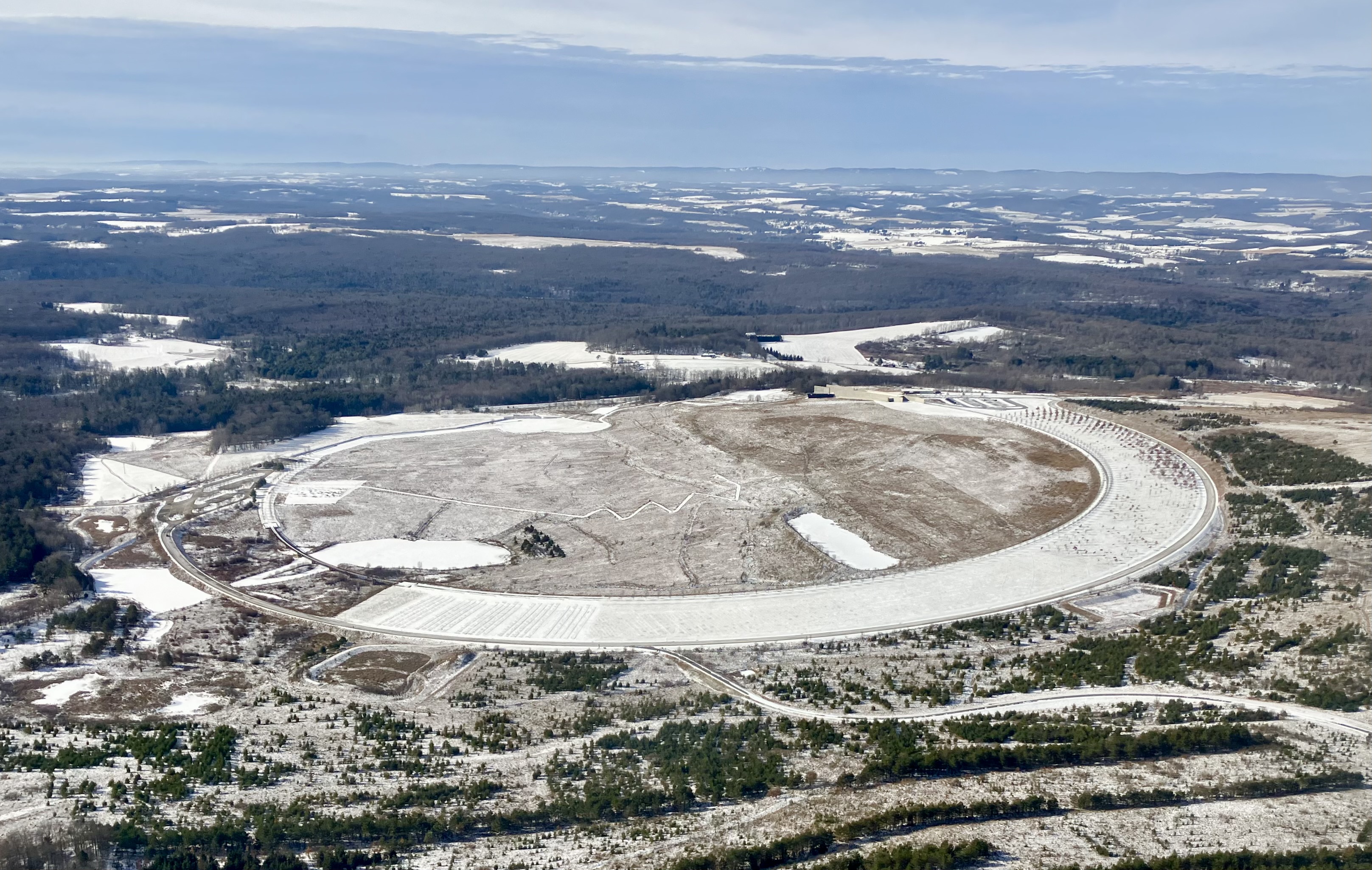
Flight 93 National Memorial
In a field near Shanksville, Pennsylvania, 40 people died on September 11, 2001. United Flight 93 was hijacked that morning, part of the coordinated terrorist attacks that destroyed the World Trade Center and struck the Pentagon. But Flight 93 never reached its target - likely the U.S. Capitol or White House. Passengers, learning of the other attacks through phone calls, organized a revolt. 'Let's roll,' said Todd Beamer. They stormed the cockpit. The hijackers crashed the plane into a field at 563 mph, killing everyone aboard. The passengers didn't save themselves, but they saved countless others. Flight 93 National Memorial honors their sacrifice with a Wall of Names, a visitor center, and a vast meadow where the plane came down - the impact site now marked by a boulder and surrounded by deliberate silence.
The Flight
United Flight 93 departed Newark at 8:42 AM on September 11, 2001, bound for San Francisco with 37 passengers, 7 crew, and 4 hijackers. The hijacking occurred 46 minutes into the flight; the hijackers stabbed a passenger and flight attendant, stormed the cockpit, and diverted toward Washington. But Flight 93 was late - the other hijacked planes had already struck their targets. Passengers and crew, calling family and ground contacts, learned what was happening. They understood their plane was a weapon. They voted to fight back. At 9:57 AM, the counterattack began. At 10:03 AM, the plane crashed into a field in Stonycreek Township, Pennsylvania, at 563 mph.
The Heroes
The 40 passengers and crew included corporate executives, students, retirees, and pilots - an ordinary cross-section of Americans on an ordinary flight. Todd Beamer's 'Let's roll' became a national phrase. Mark Bingham, a rugby player, was among those who charged the cockpit. Tom Burnett called his wife four times, the last to say 'Don't worry, we're going to do something.' Jeremy Glick described the plan to his wife, then said goodbye. CeeCee Lyles, a flight attendant, left a voicemail: 'I hope to be able to see your face again, baby.' None survived. The cockpit voice recorder captured the final moments - screams, crashes, 'Allah is the greatest,' then silence.
The Memorial
Flight 93 National Memorial was dedicated in 2011, ten years after the crash. The design, by Paul Murdoch Architects, uses the landscape itself. The Wall of Names lists all 40 passengers and crew on white marble, positioned so the sun illuminates each name on the person's birthday. The Memorial Plaza overlooks the crash site, now a meadow. The boulder marking the impact point is visible but inaccessible - the field remains a cemetery, bodies never fully recovered. The visitor center tells the story through artifacts, recordings, and exhibits. A Tower of Voices, completed in 2018, holds 40 wind chimes representing the lost.
The Question
What would you have done? The passengers had minutes to decide, incomplete information, and no training. They knew they would likely die either way - the hijackers weren't going to land safely. They chose to fight. The decision wasn't unanimous (some passengers remained in their seats), but enough joined the revolt to make a difference. The cockpit voice recorder suggests the hijackers were losing control when they crashed. We'll never know if the passengers would have retaken the plane. We know they tried. The memorial asks visitors to consider that question - not to celebrate violence, but to honor the courage of ordinary people facing impossible circumstances.
Visiting Flight 93 National Memorial
Flight 93 National Memorial is located near Shanksville, Pennsylvania, about 80 miles southeast of Pittsburgh. The memorial is free and open daily. The visitor center provides context through exhibits, films, and recorded phone calls. The Wall of Names is the emotional center of the site. The Tower of Voices is accessible via a separate trail. The crash site is visible from the Memorial Plaza but not accessible - it remains a grave. Johnstown is 20 miles north. Pittsburgh International Airport is 80 miles northwest. Allow at least two hours. The memorial is deliberately quiet; the landscape absorbs the tragedy. Bring tissues.
From the Air
Located at 40.05°N, 78.90°W in Somerset County, Pennsylvania. From altitude, the memorial appears as a designed landscape in rural terrain - the curved walkway, the meadow covering the crash site, the Tower of Voices visible as a white structure. The surrounding terrain is Appalachian - forested ridges, farms, small towns. The crash site was a reclaimed strip mine when the plane impacted. Pittsburgh is 80 miles northwest. The Pentagon, the likely target, is 130 miles southeast. Washington, D.C., is 150 miles southeast. The plane fell short of its target by 20 minutes.