Florence Stockade
The prisoners were told they were being paroled. In September 1864, with Sherman's army bearing down on Georgia, Confederate authorities decided to evacuate the thirty thousand Union soldiers crammed into Andersonville Prison. Thousands of emaciated men, many too weak to walk, were loaded onto trains and told they were heading toward freedom. Instead, they were shipped ninety miles inland from Charleston to a patch of South Carolina farmland where a new stockade was still under construction. The men who stumbled off those trains at Florence had already survived the most notorious prison camp in American history. What awaited them, by many accounts, was worse.
A Prison Built in Desperation
Florence was chosen for one reason: railroads. Three lines converged at the town, making it a practical transit point far enough from the front lines to feel secure. Lieutenant Colonel John Iverson of the 5th Georgia Infantry held overall command, but the man who ran the stockade day to day was Lieutenant James Barrett, also of the 5th Georgia. Barrett's role was analogous to that of Henry Wirz at Andersonville, and survivors would later write accounts of his cruelty and the murders he committed against defenseless prisoners. The stockade was not ready when the first several thousand captives arrived. Men who had endured months of starvation and disease at Andersonville now found themselves penned in an unfinished enclosure surrounded by a trench dug to prevent tunneling, with no shelter, no blankets, and almost no food.
Worse Than Andersonville
Within a month of opening, the Florence Stockade held roughly twelve thousand prisoners, and twenty to thirty were dying every day. Supplies were scarce for guards and captives alike. Men slept nearly naked on bare ground through the South Carolina autumn. John McElroy, a Union soldier who endured captivity in both camps, wrote in his 1879 memoir that "all who experienced confinement in the two places are united in pronouncing Florence to be, on the whole, much the worse place and more fatal to life." Government records confirmed his assessment: approximately one in every three men imprisoned at Florence died there. The arithmetic of suffering was compounded by the fact that these prisoners arrived already weakened. Months of malnutrition, dysentery, and exposure at Andersonville had stripped them of any reserves. Florence simply finished what Andersonville had started.
A Brief Window of Mercy
In mid-October 1864, the United States Sanitary Commission managed to deliver supplies to the stockade. It was a rare act of organized relief in a situation defined by neglect. But the supplies could not reverse months of accumulated damage to men whose bodies had already begun to fail. The stockade continued to operate through the winter, holding as many as eighteen thousand prisoners at its peak. By the time the camp was finally closed in February 1865, with the Confederacy collapsing around it, 2,802 Union soldiers had perished within its walls. Most were buried in unmarked trenches, their identities lost to the haste and chaos of a dying rebellion.
From Trenches to Headstones
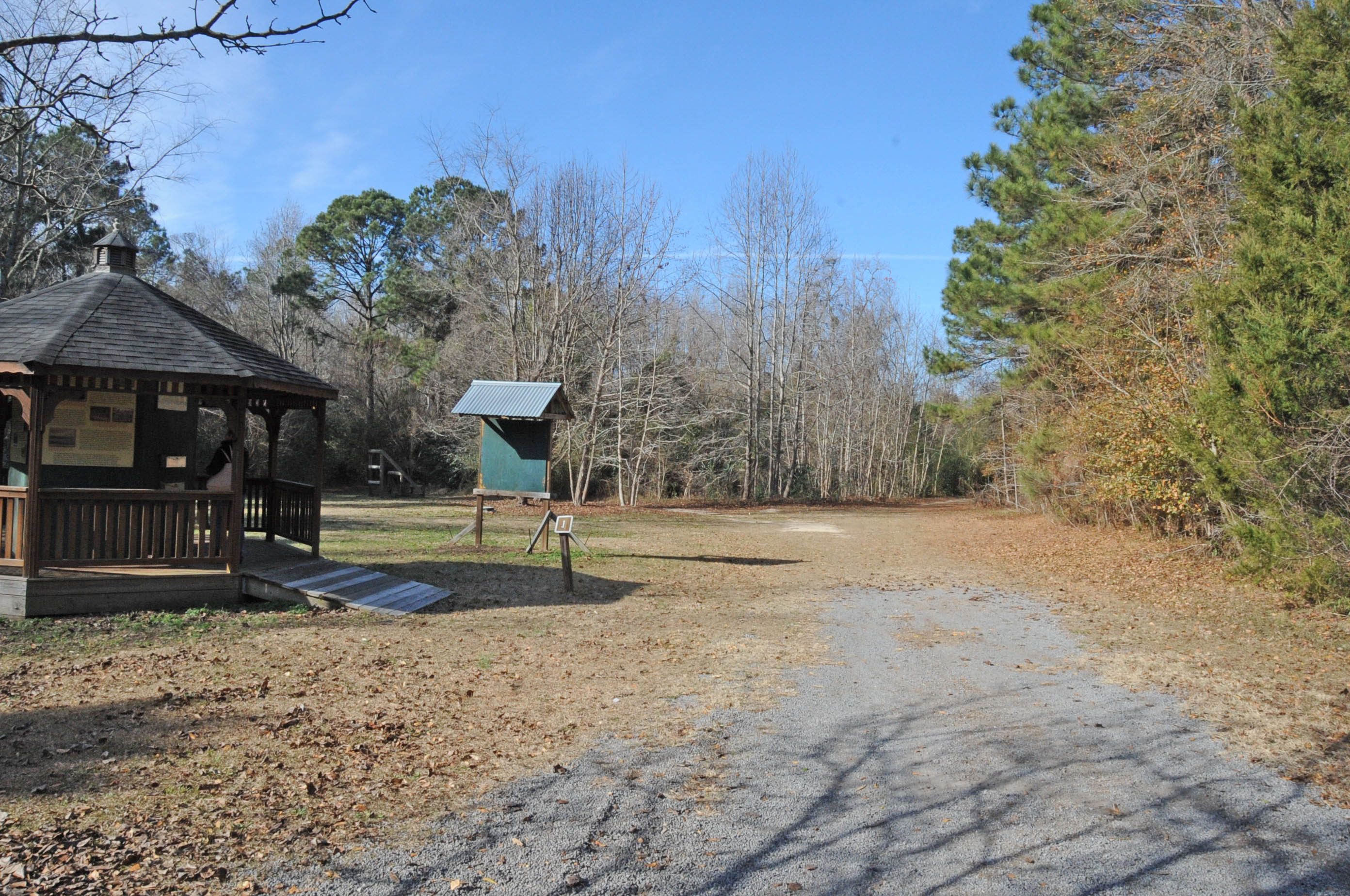
After the war, the federal government transformed the burial trenches at Florence into a national cemetery. The Florence National Cemetery now holds the remains of the men who died in the stockade, their graves marked where identification was possible and left anonymous where it was not. The stockade site itself was listed on the National Register of Historic Places in 1980. Today, an informational gazebo stands on the grounds with a permanent display explaining what happened on this quiet piece of land. The site is maintained by the Friends of the Florence Stockade, who work to preserve both the physical remains and the memory of a place that most Americans have never heard of. Andersonville dominates the public imagination when it comes to Civil War prisons, but Florence -- smaller, shorter-lived, and arguably deadlier per capita -- carries its own terrible weight.
The Ground Remembers
The Florence Stockade operated for barely five months, from September 1864 to February 1865. In that sliver of time, it consumed nearly three thousand lives. Today, the outskirts of Florence, South Carolina, show little trace of what happened here. The railroad junction that made the town strategically useful still exists, but the farmland where thousands of men suffered and died has been reclaimed by grass and quiet. Standing on the site, there is nothing to hear but wind and birds. The trench that once ringed the stockade has long since filled in. But the ground holds what the surface does not show: the remains of men who were promised parole and given a death sentence, whose only crime was wearing the wrong uniform in the final desperate months of a war the Confederacy had already lost.
From the Air
Located at 34.173°N, 79.746°W on the outskirts of Florence, South Carolina. The stockade site is near the railroad junction that originally made Florence strategically important. Florence Regional Airport (KFLO) is approximately 3 miles to the southeast. The Florence National Cemetery, where the stockade's dead are buried, is a distinct green rectangle visible from the air near the city center. Recommended viewing altitude: 2,000-4,000 feet AGL. The Pee Dee River flows east of the city.